The Basics of SOC Reports: A Practical Guide to Security and Compliance
[
10 Dec 2025
]
By
Orit Benzaquen
This article, part 1 of Penti’s “Knowledge Base Series,” provides a brief overview of SOC reports, including what is a SOC report, who creates them, and how they benefit organizations. Already familiar with SOC Reports? You can hop into our article about determining what kind of SOC report your organization needs "SOC 1 vs SOC 2").
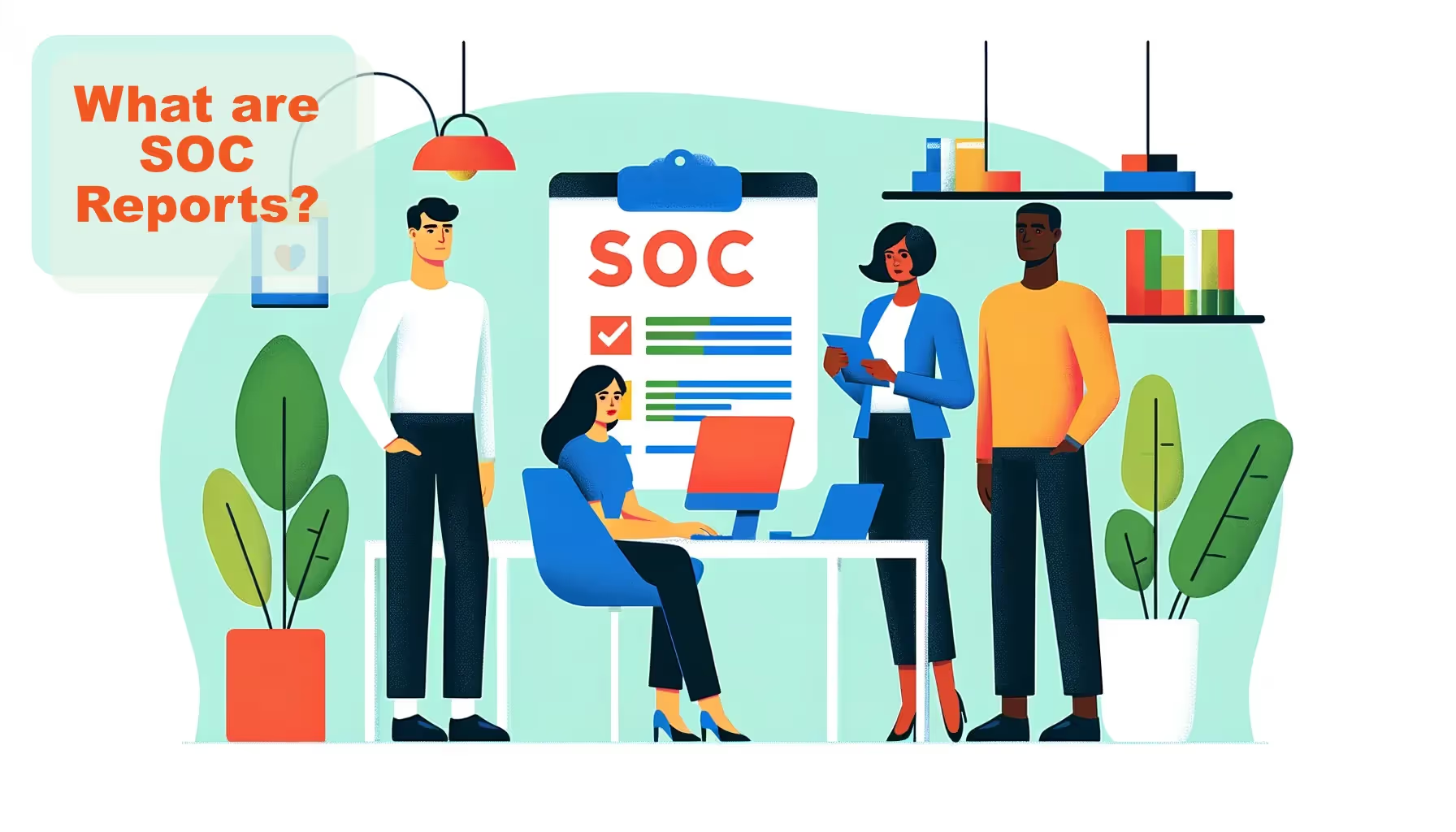
What are SOC Reports?
To start with the basics, SOC (pronounced “sock”) stands for System and Organization Controls, also known as service organization controls report or service organization control. In business, a SOC document is used to provide assurance about an organizations internal controls, SOC compliance report, and SOC report security. Organizations do not generate SOC reports themselves; they are created after a third-party auditor conducts a financial audit and evaluates the operating effectiveness of controls.
Auditors examine SOC controls, including soc 1 service organization and soc 2 security, organization controls, and security controls that protect customer data and organization data protection controls. The SOC report summarizes the results of attestation, testing, and assessment over a period of time or at a point in time, depending on the types of SOC reports requested. SOC reports meaning and definition are clarified in this section to help organizations understand the purpose of these reports.
If an organization wants to achieve SOC compliance, they must first meet “trust services criteria.” These criteria, established by the American Institute of Certified Public Accounts, include the following:
Security
Availability
Processing Integrity
Confidentiality
Privacy
Penti helps organizations meet trust services criteria by assessing and strengthening their “cybersecurity posture” with AI-enabled automated scans, manual penetration testing, and preparation for various compliance frameworks. (“Cybersecurity posture” refers to the overall strength of an organizations controls, protocols, and defense against cyberattacks.) Organizations receive guidance on best practices, SOC report controls, and organization's controls for service financial data to ensure internal controls and financial reporting are accurate and secure. This also helps users understand the organization's controls and provides additional assurance to management and customers. (See how Disco, acquired by Culture Amp, achieved continuous compliance with Penti.)
Why are SOC Reports Valuable?
Understanding what is SOC report used for is essential: SOC reporting helps demonstrate SOC integrity, effectiveness of controls, and organization data protection controls to customers, management, and stakeholders. It also mitigates risk by ensuring internal controls, financial audit processes, and SOC compliance are followed.
If your organization has encountered more companies requiring compliance certification, here’s why: data breaches, including identity theft, ransomware, and hacker attacks, hit an all-time high in 2023 for U.S. organizations. The statistics are staggering: “98% of organizations have a relationship with a vendor that experienced a data breach within the last two years.” A SOC report provides a document that shows how an organizations controls protect relevant financial statements, customer data, and organizations controls. So, it is not a matter of “if” your company will get targeted, but “when.” And it’s possible that it already happened.
Organizations that value responsibility and accountability should be proactive about protecting themselves and their customers. But how does an organization go about doing this? One option is to undergo a third-party audit (described above), which would generate a SOC report. The yield of such an assessment could help organizations identify and address any systemic inconsistencies and vulnerabilities, potentially avoiding data breaches and significant financial losses. This process also allows a specific auditor to evaluate effectiveness of controls and compliance.
A more immediate option, which you can try right now, is Penti’s free website header scan which can help test for SOC controls, enhancing SOC compliance and organization data protection controls. This scan checks the seven most common website header vulnerabilities that hackers can exploit to inject malicious code, disable your website, and steal your customers’ data.
According to the aforementioned report, “The number of ransomware attacks was two and a half times higher in September 2023 compared to September 2022,” and this upward trend will continue in 2024. The best course of action is to be proactive rather than reactive to lessen the risk of jeopardizing your business, customers, and reputation.
FAQ About SOC Reports
What is a SOC report?
A SOC report is a system and organization controls report used to assess organization controls, SOC compliance, and SOC report security.
What is SOC 1, SOC 2, and SOC 3?
SOC 1 report focuses on financial reporting, SOC 2 report evaluates security, availability, processing integrity, confidentiality, and privacy, while SOC 3 is a public-friendly summary.
What does SOC stand for in audit?
SOC stands for System and Organization Controls, also referred to as service organization control or service organization controls report.
Who needs a SOC report?
Organizations handling customer data, financial data, or providing services where trust, security controls, and SOC compliance are required may need a SOC report.
What's the difference between a SOC 1 and SOC 2 report?
SOC 1 reports evaluate internal controls over financial reporting, while SOC 2 reports focus on security, availability, processing integrity, confidentiality, and privacy.
What are SOC controls?
SOC controls are internal controls used to ensure data security, financial reporting accuracy, compliance, and adherence to trust services criteria. SOC controls are also evaluated during user assessment and testing.
How long is a SOC report valid?
SOC reports may cover a point in time or a period of time, depending on the types of SOC reports and the auditor’s assessment.
When it comes to SOC 2 compliance, a common misconception is the necessity of penetration testing, or pentests, as part of the audit process. The truth is, pentests are not a formal requirement for SOC 2. However, this doesn't mean they should be overlooked. While SOC 2 focuses on the implementation of security policies and procedures, penetration testing offers a practical, real-world assessment of these security controls. Let's dive deeper into why pentesting, though not mandatory for SOC 2, can be a game-changer for your organization's cybersecurity posture.
Understanding SOC 2's Security Criteria
SOC 2's Security Trust Service Criterion is designed to ensure your organization manages and protects customer data adequately. This includes a range of controls from monitoring to change management. However, the effectiveness of these controls can often only be tested in a live-fire scenario – enter pentests.
Here's how penetration testing adds value to specific controls within the Security Trust Service Criterion:
1. Validating Control Environment (CC6.1)
While SOC 2 ensures you have the right controls documented and theoretically in place, penetration testing puts these controls to the test. It provides tangible proof that your security environment isn't just well-documented but also robust against actual cyber threats.
2. Ensuring Robust System Operations (CC6.6)
SOC 2 requires that your operational processes are secure. Penetration testing takes this a step further by simulating an attack to see how these processes hold up under pressure, revealing the true resilience of your system operations against potential breaches.
3. Assessing the Impact of Change (CC6.7)
In the dynamic world of IT, change is constant. However, every change carries the risk of new vulnerabilities. Penetration testing becomes critical after significant system changes, ensuring these alterations don't inadvertently weaken your cybersecurity defenses.
Beyond Compliance: The Strategic Value of Penetration Testing
A. Proactive Risk Management
Penetration testing allows you to identify vulnerabilities and address them before they are exploited, significantly reducing the risk of a data breach, which could be far more costly than the test itself.
B. Building Trust
Demonstrating that you've gone beyond the minimum requirements of SOC 2 penetration testing can strengthen the trust of clients and partners in your commitment to security.
C. Staying Ahead of Cyber Threats
The cybersecurity landscape is constantly evolving. Regular penetration testing ensures your organization is not just compliant but also equipped to face new and emerging threats.
Conclusion
In conclusion, while penetration tests might not be a checkbox requirement for SOC 2 compliance, they bring immense value to the table. They provide a level of assurance and security that goes beyond compliance, addressing the practical effectiveness of your cybersecurity measures and preparing your organization for the real-world challenges of the digital age. By embracing penetration testing, you're not just ticking off a compliance requirement; you're taking a proactive, comprehensive approach to safeguard your data and that of your customers. Remember, in cybersecurity, it's often the unrequired steps that make the biggest difference.
Interested in learning more about how penetration testing can fortify your cybersecurity strategy? Book a call to explore how we can help you go beyond compliance towards true cyber resilience.
FAQ
What are the 5 criteria for SOC 2?
The five SOC 2 Trust Services Criteria include security, availability, processing integrity, confidentiality, and privacy. These principles guide how an organization’s security controls are designed and evaluated through ongoing and separate evaluations, control testing, and internal audit assessments. SOC 2 emphasizes data protection measures, monitoring procedures, and a strong security program to maintain compliance, address security risks, and ensure adequate security measures are consistently applied across all organization’s systems.
What are SOC 2 compliance requirements?
SOC 2 compliance requires organizations to implement security controls aligned with specified security objectives, reinforce internal control structures, and conduct continuous monitoring to spot security weaknesses early. Controls must protect sensitive customer data, ensure system availability, and promote strong security practices. SOC 2 also demands monitoring activities, data protection, and the ability to remediate identified deficiencies through updated processes aligned with the security principle and the criteria an entity selects for its audit.
What are the 5 stages of penetration testing?
The five stages of penetration testing include reconnaissance, scanning, gaining access, maintaining access, and analysis/reporting. During this testing process, pen testers use techniques such as vulnerability scanning, simulating real world attacks, and exploiting security weaknesses to identify potential vulnerabilities. These actions help reveal newly discovered vulnerabilities, evaluate the organization’s security posture, and support security assessment efforts aimed at improving operating effectiveness and reducing data breach risk across critical systems.
Does ISO 27001 cover penetration testing?
ISO 27001 does not explicitly require penetration testing, but it strongly encourages security assessment activities such as vulnerability assessments, regular vulnerability scanning, and thorough evaluation of security threats. Many organizations choose to conduct comprehensive penetration testing to validate security measures, identify unknown weaknesses, and support security compliance. While not mandated, pentesting aligns well with ISO’s expectations for continuous monitoring and strengthening organization’s security controls across all environments.
Does SOC 2 require MFA?
While SOC 2 doesn’t mandate specific technologies, it expects adequate security measures such as strict access controls that often include multi-factor authentication (MFA). MFA enhances data security, helps prevent security incidents, and ensures organization’s security controls meet the criteria an entity selects for protecting sensitive data. Implementing MFA strengthens security practices, reduces security risks, and supports monitoring procedures aimed at maintaining compliance and defending against unauthorized access.
How much should a penetration test cost?
Penetration testing costs vary widely depending on scope, the penetration testing services provider, complexity of organization’s systems, and depth of security assessment required. Prices often reflect the amount of simulating real world attacks, the expertise of pen testers, and the need to uncover newly discovered vulnerabilities across critical systems. Higher-quality testing helps organizations identify vulnerabilities, strengthen data protection, and maintain compliance with industry expectations, ultimately reducing long-term data breach risk.
What are the criteria for SOC 2 Type 1?
SOC 2 Type 1 focuses on evaluating the design of organization’s security controls at a specific point in time. It examines whether controls meet established specifications, support security objectives, and align with the security principle. This includes reviewing access controls, data backup processes, monitoring procedures, and how the organization manages security risks. Type 1 also evaluates internal processes like separate evaluations, internal control documentation, and the ability to remediate identified deficiencies effectively.
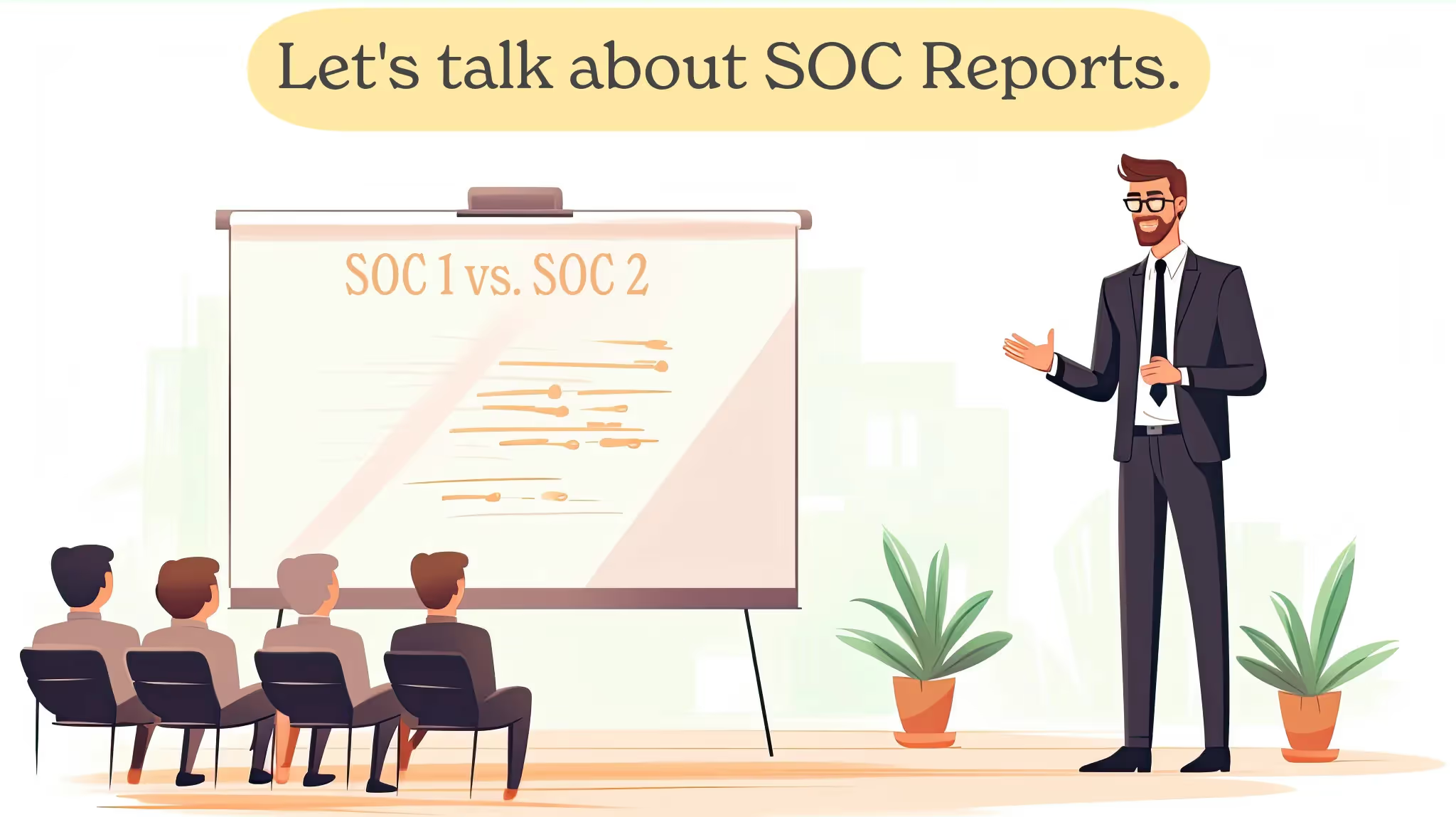
Many people scour the internet using the search term “SOC 1 vs. SOC 2 reports” when trying to understand compliance requirements for service organizations. To clarify, what is a SOC 1 and SOC 2 report? Broadly speaking, the difference between SOC1 and SOC2 lies in their focus areas and control objectives. SOC 1 Reports are designed for financial statement audits and focus on internal controls related to financial reporting. SOC 2 Reports are designed to evaluate a service organization's controls over non-financial information, such as data security, privacy, and confidentiality.
Key Differences Between SOC 1 and SOC 2
Understanding SOC 1 versus SOC 2 is critical for technology-based service organizations, cloud service providers, and HR management services. A SOC 1 report addresses financial controls, focusing on the design and operating effectiveness of service organization’s internal controls that impact a user entity’s financial statements. In contrast, a SOC 2 report examines trust services criteria—security, availability, confidentiality, privacy, and processing integrity—to ensure appropriate organization controls over customer data and information security.
The difference between SOC1 and SOC2 also extends to their use cases. SOC 1 is typically required when a company’s systems influence clients financial reporting, such as financial reporting software or financial operations systems. SOC 2 applies to a broader range of industries where demonstrating strong security controls, risk management processes, and data protection are key to regulatory compliance.
SOC 1 vs SOC 2 Audit Scope
A SOC 1 vs SOC 2 audit is performed to provide independent assurance of a service organization’s compliance status. External auditors assess whether appropriate controls are in place and operating effectively. A SOC 1 audit evaluates key control objectives related to financial reporting, while a SOC 2 audit measures a company’s information technology processes and adherence to the AICPA’s trust services criteria. Both a SOC audit performed for financial statements and a SOC 2 audit for organization’s security controls help service providers demonstrate compliance and provide digital assurance to their customers.
SOC 2 Deep Dive
However, it’s likely that if you’re searching “SOC 1 vs. SOC 2,” you are actually looking for the difference between the two types of SOC 2 Reports (i.e., “SOC 2 Type 1 vs. SOC 2 Type 2”). Because of this likelihood, we'll focus primarily on SOC 2 reports in this article, which is the second entry in Penti Knowledge Base Series.
SOC 2 reports assess compliance with the five Trust Services Criteria, namely: security, availability, processing integrity, confidentiality, and privacy. Every organization must comply with the first criterion, security, while compliance with the remaining criteria are dependent on how a business uses and processes data (You can learn more about choosing an appropriate framework in our partner Vanta's Trust Services Criteria Guide
There are two types of SOC 2 Reports that an organization may need: a Type 1 Report and a Type 2 Report. Both types assess how an organization aligns with the security controls and policies required by SOC 2, but the differences are as follows:
SOC 2 Type 1 Reports measure an organization’s compliance at a single point in time.
SOC 2 Type 2 Reports demonstrate ongoing compliance with SOC 2 controls; certification can only be granted after a 6-month observation period.
Choosing the right report will likely depend on the client (or partner) who has requested a report from your organization. However, many organizations begin with a Type 1 report and then enter the observation period for a Type 2 report. Proactive organizations do not wait for potential business to hinge on the completion of a SOC 2 Report, because doing so can stall sales cycles and result in lost business.
When Should I Get SOC 2 Certified?
In 2023, the average cost of a data breach in the United States was 9.48 million dollars, nearly twice the global average. Many companies — especially SMB's — are unprepared for cybersecurity attacks and find themselves in reactive positions regarding compliance when security issues inevitably occur. This lack of preparedness is usually attributed to a lack of resources or ignorance regarding cybersecurity posture. (For example, as of 2022, only 50% of SMB's had any formal cybersecurity plan, and some small businesses erroneously believed they were "too small to be a target." But regardless of whether a company has 5 employees or 500, the absence of cybersecurity measures not only makes the company more vulnerable to attack, the would-be attackers can succeed at a much higher speed and level of efficiency .
There is no excuse for a lack of compliance, especially now that the SEC has put forth a series of rules regarding cybersecurity risk management for publicly traded as well as private organizations. Additionally, many potential customers now require SOC 2 certification from vendors because 98% of businesses have a vendor that has been compromised within the last two years. Vendors should follow their own security protocols to reduce risk and protect themselves from malicious attacks that could also harm their clients.
It is best to get SOC 2 certified before you are faced with losing business opportunities due to lack of certification, or worse, before your own systems are compromised because of unprotected vulnerabilities in your cybersecurity posture. Becoming compliant ensures that your organization has taken the necessary precautions to protect its systems and data from unauthorized access.
How Long Does It Take to Get Certified?
The time required to become SOC 2 certified depends on several factors, including:
The quality of controls already in place
The type of report you are seeking (Type 1 or Type 2)
Your team's expertise, availability, and resources
Organizations that take a "do-it-yourself" approach to compliance may spend up to 12 months (or longer) preparing themselves for an audit. A readiness assessment can help identify related control objectives and gaps in service organization’s controls relevant to compliance.Penti specializes in jump-starting your compliance journey and getting you to an audit-ready state in 1-to-3 months. If you want your compliance journey simplified and expedited, be sure to book a call with us It’s important to estimate and budget for both becoming compliant and the ongoing maintenance of your certification. Here are some costs to consider:* Compliance software* Security tools and services* Penetration tests* Engineers to remediate issues* Administrative cost of drafting new policies* Background checks for new employeesMany of the above costs can be bundled by providers (like Penti and can save as much as 50% of your budget as compared to utilizing multiple vendors. But regardless of the cybersecurity strategy you choose, it is the ethical responsibility of every organization to prioritize security. It is vital to protect your data as well as your customer's data. Not doing so can result in significant losses that could damage your reputation, your customers, and your business. Achieving and maintaining SOC 2 compliance can send a clear message that security is a pillar of your organization and that you are a trustworthy company.
FAQ
What are SOC 1 and SOC 2 reports?
SOC 1 reports focus on financial focus and internal controls affecting a user entity’s financial statements, while SOC 2 reports evaluate service organization’s controls over security, privacy, and processing integrity.
What is the difference between SOC 1 and SOC 2?
The key differences include the control objectives: SOC 1 targets financial reporting and related control objectives, while SOC 2 addresses information security, availability, confidentiality, and data protection.
Do you need both SOC 1 and SOC 2?
Some companies, especially those providing financial reporting software or processing sensitive data, need both a SOC 1 and SOC 2 report to satisfy customers, meet regulatory compliance, and provide independent assurance.
What is a SOC 1 report used for?
A SOC 1 report provides an attestation report on controls impacting user entities’ financial statements, ensuring trust in financial operations and supporting external auditors’ opinions.
What are the 5 criteria for SOC 2?
The criteria include security, availability, confidentiality, privacy, and processing integrity, all of which safeguard customer data and maintain a company’s compliance status.
What is the difference between Type 1 and Type 2 reports?
A Type 1 report examines the design of controls at a specified date, while a Type 2 report verifies their operating effectiveness over a specified period.
Welcome to our comprehensive guide on implementing cybersecurity frameworks for cybersecurity in 2025. In today's digital age, cyber threats have become increasingly prevalent and sophisticated. With the rise of cybercrime and cybersecurity risks, it is crucial for companies to take proactive measures to protect their sensitive data and digital assets.
Implementing a security framework is one of the most effective ways to manage these risks and ensure the security of your business. In this guide, we will explore the top cyber security frameworks, including the Center for Internet Security (CIS) Controls, the International Electrotechnical Commission (IEC) 27001, and others, that can help you strengthen your security posture and minimize the likelihood of a cyberattack.
We'll also discuss the importance of risk management and how to use artificial intelligence to identify and mitigate potential security threats. By the end of this guide, you'll have a better understanding of why implementing a security framework is crucial for your business's cybersecurity, and how to choose the best framework to meet your unique needs.
An Overview of Security Frameworks for Cybersecurity: A Comprehensive Guide for Businesses
Understanding the Importance of Security Frameworks in Cybersecurity
Implementing a strong cybersecurity framework is critical for businesses today. With the increasing number of cyber threats and attacks, it is imperative to have a comprehensive plan in place to protect sensitive information and systems. A cybersecurity framework is a set of guidelines, best practices, and standards that help organizations effectively manage and mitigate cyber risks.
There are several common cybersecurity frameworks that organizations can adopt, including control frameworks such as the Center for Internet Security (CIS) Controls and compliance frameworks such as the International Electrotechnical Commission (IEC 27001). These frameworks provide a structured approach to cybersecurity and help organizations establish security controls and risk management processes.
By implementing a security framework, businesses can ensure that they are protecting their assets, minimizing cyber risks, and complying with industry regulations. It also helps organizations build a culture of cybersecurity, where employees understand the importance of protecting sensitive information and are empowered to take action to prevent cyber threats.
Top Cybersecurity Frameworks You Need to Know in 2025
As cyber risks continue to evolve, it's critical for organizations to implement effective security frameworks to protect their sensitive data. In this section, we'll explore the top cyber security frameworks you'll need to know about in 2025. These frameworks provide guidelines and standards for managing cyber risk and protecting your organization from data breaches.
NIST Cybersecurity Framework: The National Institute of Standards and Technology (NIST) Cybersecurity Framework is a comprehensive set of guidelines for managing and reducing cyber risk. The Framework has five core functions: Identity, Protect, Detect, Respond, and Recover. By following these functions, organizations can improve their overall cybersecurity posture and effectively manage cyber risk.
GDPR: The General Data Protection Regulation (GDPR) is a European Union regulation that requires organizations to protect the privacy and personal data of EU citizens. The regulation includes strict requirements for data protection and breach notification, and organizations that fail to comply can face significant fines. Implementing the GDPR framework can help organizations meet these requirements and ensure that they're protecting their customers' sensitive information. Learn more about cybersecurity requirements in our related article.
CIS Controls: The Center for Internet Security (CIS) Controls are a set of guidelines for protecting critical assets and sensitive data. The controls provide specific recommendations for securing hardware, software, and networks, and they're organized into three categories: Basic, Foundational, and Organizational. Implementing CIS controls can help organizations build a strong cybersecurity foundation and reduce the risk of data breaches.
ISO 27001: ISO 27001 is an international standard for information security management. The framework provides a systematic approach to managing and protecting sensitive information and includes specific requirements for risk assessment and risk management. Organizations that implement ISO 27001 can ensure that they're effectively managing their cyber risks and complying with international standards for information security.
In summary, the top cybersecurity frameworks you need to know about in 2025 include the NIST Cybersecurity Framework, GDPR, CIS Controls, ISO 27001, and other common cybersecurity frameworks. By implementing these frameworks, organizations can establish a strong cybersecurity foundation, manage cyber risks, and protect sensitive data from potential breaches.
A Deep Dive into Different Types of Cybersecurity Frameworks
When it comes to cybersecurity frameworks, there are several types that organizations should be aware of. Each type focuses on different aspects of security and can help businesses identify and address potential cyber threats. Here are the main types of cybersecurity frameworks to consider:
Security Framework: This is a comprehensive framework that covers all aspects of cybersecurity, including risk management, information security, and IT security.
Risk Framework: This framework focuses on identifying and mitigating cyber risks, such as the NIST Cybersecurity Framework, which provides guidelines for reducing cyber risks to critical infrastructure.
IT Security Framework: This framework specifically addresses the security of IT systems and infrastructure, such as ISO/IEC 27001, which provides a framework for implementing an information security management system.
Information Security Framework: This framework focuses on protecting sensitive information and data, such as the General Data Protection Regulation (GDPR), which establishes rules for data protection and privacy in the European Union.
By understanding the different types of cybersecurity frameworks, organizations can choose the best one for their specific needs and ensure they are adequately protected against cyber threats.
How to Choose the Right Cybersecurity Framework for Your Business
When it comes to choosing the right cybersecurity framework for your organization, there are several factors to consider. First, you need to be aware of the different cybersecurity standards that exist and choose a framework that aligns with your organization's goals and objectives. Second, you need to understand the common security frameworks and evaluate the best cybersecurity framework for your organization.
To make the selection process easier, we have compiled a cybersecurity framework list of widely adopted models. The list includes the NIST CSF, ISO 27001, CIS Critical Security Controls, the HITRUST Common Security Framework, and other top cybersecurity frameworks recognized by cybersecurity standards organizations. Reviewing these options and performing a cybersecurity frameworks comparison will help determine which framework best supports your organization’s risk management strategies and protects your organization's digital assets.
When evaluating each framework, consider whether it supports a cybersecurity risk assessment framework, offers guidance for information security management, and provides security measures for both network security standards and system components. For example, the cybersecurity authority framework within the NIST model helps federal agencies and private sector companies implement security controls to defend against cyber attacks and maintain critical infrastructure cybersecurity.
It’s important to note that selecting a cybersecurity policy framework is only the first step. Implementing the chosen model, conducting regular risk assessments, and maintaining extensive auditing processes are critical to ensuring compliance and reducing cybersecurity risks over time. A well-chosen framework allows organizations to identify, protect, detect, and respond to incidents, strengthen their security posture, and maintain a continuous cycle of improving critical infrastructure cybersecurity.
By carefully comparing popular cybersecurity frameworks, applying a risk based IT security framework, and considering factors such as defense security awareness and existing practices, businesses can implement a comprehensive framework that supports regulatory compliance, protects sensitive data, and enhances overall information security management.
The Role of AI in Implementing Cybersecurity Frameworks
As technology advances, so do the methods used by cybercriminals to infiltrate organizations' digital assets. In response, organizations are increasingly turning to cybersecurity frameworks to protect their sensitive data and mitigate risk. But what role can artificial intelligence (AI) play in implementing these frameworks?
AI can provide several benefits to organizations implementing cybersecurity frameworks. For example, AI can automate security activities such as threat detection and incident response, reducing the burden on IT teams. In addition, AI can be used to identify and prioritize cybersecurity risks based on factors such as the value of digital assets and the likelihood of cyberattacks.
Furthermore, AI can support compliance efforts by ensuring that security controls are implemented in accordance with cybersecurity standards and program frameworks. This can help organizations avoid common compliance pitfalls and ensure that their security measures are effective in protecting against cyber threats.
Overall, incorporating AI into cybersecurity frameworks can help organizations stay ahead of potential breaches and protect their valuable digital assets. However, it is important to carefully consider the potential risks and benefits of using AI in security programs and ensure that the appropriate information security controls are in place.
The Ultimate List of Cybersecurity Frameworks for 2025: A Comprehensive Guide
NIST Cybersecurity Framework: What You Need to Know
As cyber attacks become more frequent and sophisticated, it's essential for organizations to adopt a robust cybersecurity framework to protect their digital assets. One such framework is the National Institute of Standards and Technology (NIST) Cybersecurity Framework, which is widely used by organizations of all sizes and industries as a cybersecurity authority framework. In this section, we will explore what the NIST Cybersecurity Framework is, its components, and how it can benefit your organization. We will also discuss other relevant cybersecurity standards organizations and regulations, such as the Federal Information Security Modernization Act (FISMA Framework), Critical Infrastructure Protection, and how they relate to the NIST framework. By the end of this section, you will have a clear understanding of how the NIST CSF can help your organization build a resilient cybersecurity policy framework and enhance managing cybersecurity risk strategies.
ISO 27001: The International Standard for Information Security
In the world of cybersecurity standards, ISO 27001 is a widely recognized benchmark for information security management. This international standard provides a comprehensive framework for establishing, implementing, maintaining, and continuously improving an organization's information security management system. It covers critical areas such as risk assessments, security controls, and regulatory compliance for protecting sensitive data and cardholder data. By adopting ISO 27001 security standards, organizations can implement strong security measures, ensure compliance with existing practices, and mitigate cybersecurity risks across IT infrastructure and technical infrastructures.
ISO 27001 is particularly valuable for industries handling healthcare providers information or client data, providing guidance for maintaining secure configuration and defending critical infrastructure cybersecurity. Though implementing this framework requires extensive effort and extensive auditing processes, it offers a proven way to improve security posture and meet regulatory requirements.
CIS Controls: The Critical Security Controls for Effective Cyber Defense
The CIS Critical Security Controls, also known as the Common Security Framework, are a set of best practices designed to help organizations prioritize their security efforts. Developed by the Center for Internet Security, these controls serve as a cybersecurity controls framework that addresses the most common and critical cybersecurity risks.
They help organizations conduct risk assessments, maintain secure systems, and protect enterprise assets inventory while aligning with cybersecurity industry standards. By following these controls, businesses can reduce identified risks, improve defense security awareness, and build a strong information security framework capable of protecting system components and digital assets.
The Cybersecurity Capability Maturity Model (C2M2): A Roadmap for Improvement
As cyber threats continue to evolve, organizations must implement comprehensive security programs that include a wide range of security measures to protect their organization's digital assets. The Cybersecurity Capability Maturity Model (C2M2) is a cybersecurity methodologies framework that provides a roadmap for improving security posture over time. It includes multiple maturity levels and control objectives that help enterprises assess existing practices, identify gaps, and implement a risk based security architecture for continuous improvement.
Following the C2M2 model can also support compliance with cybersecurity standards organizations such as SOC 2 and international security compliance standards, ensuring that organizations can demonstrate compliance and reduce cybersecurity risks effectively.
The Open Web Application Security Project (OWASP) Framework: Securing Web Applications
The Open Web Application Security Project (OWASP) Framework is a widely recognized framework focused on web application security. It provides organizations with the tools and resources they need to identify and remediate vulnerabilities in their web applications, which can help prevent cyber-attacks and protect sensitive data.
The OWASP framework is designed to be flexible and scalable, making it an excellent choice for organizations of all sizes and types. It provides a comprehensive set of guidelines and best practices that can be customized to meet the unique needs of an organization's information systems. By following the OWASP Framework, organizations can establish a strong information security risk management program, implement effective cybersecurity risk management strategies, and ensure the overall security of their information systems.
How to Implement a Cybersecurity Framework: A Step-by-Step Guide
Defining Security Goals and Objectives for Your Business
Defining clear security goals and objectives is critical for any organization looking to implement a cybersecurity framework. Here are some examples of goals and objectives to consider:
Protecting critical infrastructure cybersecurity: This goal involves protecting the organization's most important and sensitive assets from cyber threats.
Compliance with security standards: Compliance with a security standard, such as NIST or ISO 27001, can help ensure that the organization meets necessary security requirements and avoids legal and regulatory consequences.
Control and risk frameworks: Implementing control and risk frameworks, such as CIS controls and the NIST Cybersecurity Framework, can help the organization proactively manage cyber risks and reduce the likelihood of a cyber attack.
Cybersecurity Risk Management: Establishing a cybersecurity risk management program that identifies, assesses, and prioritizes risks can help the organization make informed decisions and allocate resources effectively.
Comprehensive security program: Developing a comprehensive security program that includes security policies, standards, and procedures can help ensure that the organization has a clear and consistent approach to cybersecurity.
By defining clear security goals and objectives, organizations can create a roadmap for implementing a cybersecurity framework that is tailored to their specific needs and priorities.
Identifying Threats and Vulnerabilities: A Crucial Step in Implementing a Framework
Before implementing a cybersecurity framework, it's important to identify the potential threats and vulnerabilities to your organization's information systems. Here are a few key areas to consider:
Malware and phishing attacks: Malware is a type of malicious software designed to damage computer systems, while phishing attacks use deceptive tactics to trick individuals into revealing sensitive information. Implementing proper security measures and training your employees to recognize and avoid these threats is critical to preventing cyberattacks.
Weak passwords and access controls: Passwords are often the first line of defense against cyber threats, so it's important to ensure that all employees follow best practices when creating and storing passwords. In addition, access controls should be properly managed to prevent unauthorized access to sensitive data.
Outdated software and systems: Outdated software and systems can pose a significant risk to your organization's security. Regularly updating your systems and software can help mitigate potential vulnerabilities and reduce the risk of cyberattacks.
Insider threats: Insider threats, whether intentional or unintentional, can pose a significant risk to your organization's cybersecurity. Implementing proper security policies and training your employees on those policies can help reduce the risk of insider threats.
By identifying and addressing potential threats and vulnerabilities, you can take the necessary steps to mitigate the risk of cyberattacks and protect your organization's information systems.
Developing Policies and Procedures for Your Cyber Security Framework
When implementing a cybersecurity framework, it's important to establish policies and procedures that support your goals and objectives. Developing cybersecurity policies can help guide employees in making safe decisions and provide a clear understanding of what is expected of them. Procedures provide the specific steps that need to be taken to implement those policies. A comprehensive cybersecurity program should include policies and procedures for access control, incident response, data classification, and more.
To develop effective policies and procedures, it's important to have a deep understanding of cybersecurity regulations and standards. The HITRUST CSF is a widely recognized security framework that provides a comprehensive approach to compliance and risk management. It covers a variety of regulations, including HIPAA, PCI DSS, and the NIST Cybersecurity Framework, and can serve as a valuable guide for creating policies and procedures that meet industry standards. With the help of AI, organizations can identify areas that need improvement and make adjustments to their policies and procedures to ensure they are effective in mitigating cybersecurity risks.
Assessing and Monitoring Your Cybersecurity Framework: Best Practices
Assessing and monitoring your cybersecurity framework is an essential part of maintaining the security of your organization's information systems. To effectively assess your cybersecurity framework, it's important to have a thorough understanding of cybersecurity frameworks, information security frameworks, and the NIST CSF. In addition, understanding the maturity of your organization's cybersecurity program is critical to identifying areas that need improvement.
One of the best practices for assessing and monitoring your cybersecurity framework is to involve security professionals in the process. These professionals can provide valuable insight into the current state of your organization's cybersecurity posture, as well as identify areas that need improvement. It's also important to consider using standards and technology frameworks, such as the Federal Information Security Management Act (FISMA) and the International Organization for Standardization (ISO), to guide your cybersecurity efforts. Finally, regularly assessing information security risks can help identify vulnerabilities and threats before they can be exploited.
In summary, evaluating and monitoring your cybersecurity framework is critical to maintaining the security of your organization's information systems. Understanding cybersecurity frameworks, engaging security professionals, using standards and technology frameworks, and regularly assessing information security risks are all best practices that can help ensure that your organization's cybersecurity framework is effective in identifying and addressing cyber threats.
The Importance of Regular Updates and Maintenance in Your Cybersecurity Framework
Regular updates and maintenance are critical components of any effective cybersecurity framework. The threat landscape is constantly evolving, and cybercriminals are finding new ways to breach security defenses. By updating and maintaining your cybersecurity framework, you can ensure that your organization is equipped to handle the latest threats and vulnerabilities. This means regularly reviewing and updating security policies and procedures, patching vulnerabilities, and monitoring the security of your systems and networks.
Keeping up with the latest security standards and guidelines is also critical to maintaining a strong cybersecurity framework. Standards such as the NIST Cyber Security Framework and common security frameworks provide best practices for mitigating cyber risks and ensuring compliance with industry regulations. Regularly reviewing and updating your cybersecurity framework to incorporate new standards and guidelines can help ensure that your organization remains secure and compliant.
Finally, regular updates and maintenance can also help improve the overall maturity of your cybersecurity program. Cybersecurity maturity refers to an organization's level of preparedness and effectiveness in responding to cyber threats. By regularly reviewing and updating your cybersecurity framework, you can identify areas for improvement and take steps to strengthen your defenses. This can help ensure that your organization is well prepared to mitigate cyber risks and respond to cyber incidents in a timely and effective manner.
Building a Cybersecurity Framework: The Key to Protecting Your Business from Cyber Threats
Establishing a cybersecurity framework is critical to protecting your organization from cyber threats. With the increasing complexity and frequency of cyberattacks, a comprehensive cybersecurity program is essential to prevent and mitigate potential risks. Cybersecurity Frameworks 101 provides a comprehensive guide to help organizations build a strong cybersecurity program. It provides a step-by-step approach that includes identifying potential threats, implementing controls, and monitoring and responding to incidents.
Cybersecurity regulations and standards continue to evolve, with new guidelines and best practices emerging frequently. Organizations must stay abreast of the latest developments to ensure they remain compliant and their cybersecurity frameworks remain effective. Standards and technology frameworks, such as the Common Security Framework, and control frameworks, such as the NIST Cybersecurity Framework, provide a solid foundation for building a robust cybersecurity program.
Implementing a cybersecurity framework is not a one-time event. It requires ongoing updates and maintenance to remain effective. Regular assessments and audits can help identify potential vulnerabilities and risks that need to be addressed. Cybersecurity experts recommend that organizations adopt a continuous improvement approach to their cybersecurity framework. This ensures that the program remains current and relevant in the face of new threats and challenges.
Conclusion
In summary, implementing a strong cybersecurity framework is critical to protecting your organization from cyber threats. Adhering to security standards and regulations, such as the HITRUST CSF and NIST, is essential to maintaining a secure infrastructure and ensuring your organization meets compliance requirements. Leveraging cybersecurity programs and risk management strategies can help improve your organization's security posture and reduce the risk of cyber-attacks.
To successfully implement a cybersecurity framework, it is important to have a comprehensive understanding of the essential guide, standards, and technology frameworks. This includes establishing clear policies and procedures for cybersecurity risk management, and regularly monitoring and updating your cybersecurity framework to ensure it remains effective against evolving threats. By prioritizing the development of a strong cybersecurity framework, your organization can protect its critical infrastructure and sensitive data from potential cyber threats.
In today's digital age, cybersecurity is a critical component of any organization's success. By implementing a robust cybersecurity framework and adhering to security standards and compliance requirements, your organization can build a strong security posture and protect itself from potential cyber threats. So take the time to assess your organization's cybersecurity needs, identify potential vulnerabilities, and develop a comprehensive cybersecurity framework that will help keep your business safe.
This is some text inside of a div block.
[
15 Dec 2025
]
By
Orit Benzaquen
/ BOOK A DEMO
[ 10 / 10 ]
Goodbye long scoping sessions.Hello frictionless pentesting.
-White.avif)
-Color.avif)