-White.avif)
-Color.avif)
Penti's Blog
Welcome to Penti’s space for practical guidance on security risks, compliance best practices, pentesting automation strategies, and team-friendly security tips. Our goal: cut through the noise and provide signals that matter for modern tech teams.
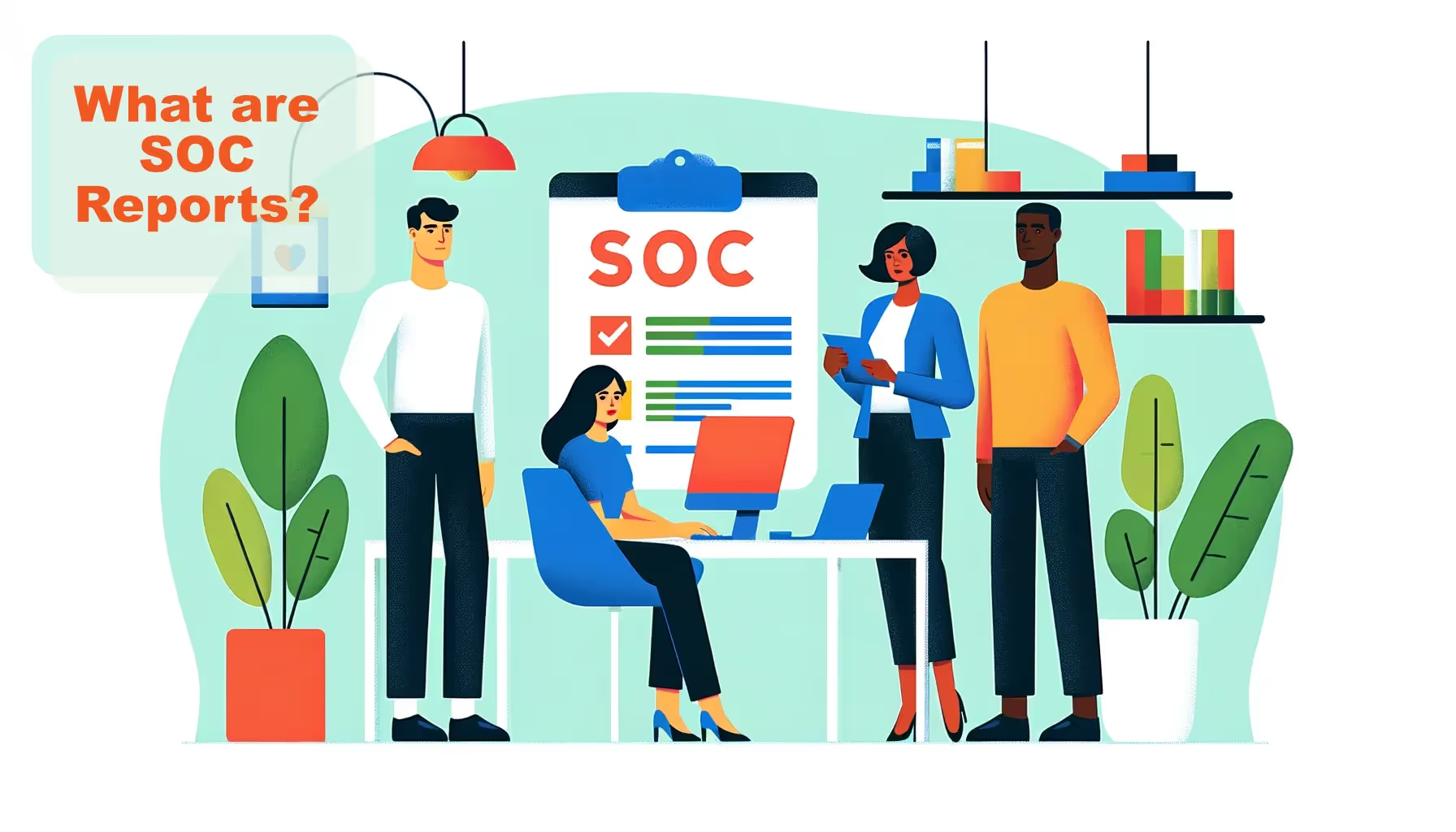
The Basics of SOC Reports: A Practical Guide to Security and Compliance
This article, part 1 of Penti’s “Knowledge Base Series,” provides a brief overview of SOC reports, including what is a SOC report, who creates them, and how they benefit organizations. Already familiar with SOC Reports? You can hop into our article about determining what kind of SOC report your organization needs "SOC 1 vs SOC 2").
What are SOC Reports?
To start with the basics, SOC (pronounced “sock”) stands for System and Organization Controls, also known as service organization controls report or service organization control. In business, a SOC document is used to provide assurance about an organizations internal controls, SOC compliance report, and SOC report security. Organizations do not generate SOC reports themselves; they are created after a third-party auditor conducts a financial audit and evaluates the operating effectiveness of controls.
Auditors examine SOC controls, including soc 1 service organization and soc 2 security, organization controls, and security controls that protect customer data and organization data protection controls. The SOC report summarizes the results of attestation, testing, and assessment over a period of time or at a point in time, depending on the types of SOC reports requested. SOC reports meaning and definition are clarified in this section to help organizations understand the purpose of these reports.
If an organization wants to achieve SOC compliance, they must first meet “trust services criteria.” These criteria, established by the American Institute of Certified Public Accounts, include the following:
- Security
- Availability
- Processing Integrity
- Confidentiality
- Privacy
Penti helps organizations meet trust services criteria by assessing and strengthening their “cybersecurity posture” with AI-enabled automated scans, manual penetration testing, and preparation for various compliance frameworks. (“Cybersecurity posture” refers to the overall strength of an organizations controls, protocols, and defense against cyberattacks.) Organizations receive guidance on best practices, SOC report controls, and organization's controls for service financial data to ensure internal controls and financial reporting are accurate and secure. This also helps users understand the organization's controls and provides additional assurance to management and customers. (See how Disco, acquired by Culture Amp, achieved continuous compliance with Penti.)
Why are SOC Reports Valuable?
Understanding what is SOC report used for is essential: SOC reporting helps demonstrate SOC integrity, effectiveness of controls, and organization data protection controls to customers, management, and stakeholders. It also mitigates risk by ensuring internal controls, financial audit processes, and SOC compliance are followed.
If your organization has encountered more companies requiring compliance certification, here’s why: data breaches, including identity theft, ransomware, and hacker attacks, hit an all-time high in 2023 for U.S. organizations. The statistics are staggering: “98% of organizations have a relationship with a vendor that experienced a data breach within the last two years.” A SOC report provides a document that shows how an organizations controls protect relevant financial statements, customer data, and organizations controls. So, it is not a matter of “if” your company will get targeted, but “when.” And it’s possible that it already happened.
Organizations that value responsibility and accountability should be proactive about protecting themselves and their customers. But how does an organization go about doing this? One option is to undergo a third-party audit (described above), which would generate a SOC report. The yield of such an assessment could help organizations identify and address any systemic inconsistencies and vulnerabilities, potentially avoiding data breaches and significant financial losses. This process also allows a specific auditor to evaluate effectiveness of controls and compliance.
A more immediate option, which you can try right now, is Penti’s free website header scan which can help test for SOC controls, enhancing SOC compliance and organization data protection controls. This scan checks the seven most common website header vulnerabilities that hackers can exploit to inject malicious code, disable your website, and steal your customers’ data.
According to the aforementioned report, “The number of ransomware attacks was two and a half times higher in September 2023 compared to September 2022,” and this upward trend will continue in 2024. The best course of action is to be proactive rather than reactive to lessen the risk of jeopardizing your business, customers, and reputation.
FAQ About SOC Reports
What is a SOC report?
A SOC report is a system and organization controls report used to assess organization controls, SOC compliance, and SOC report security.
What is SOC 1, SOC 2, and SOC 3?
SOC 1 report focuses on financial reporting, SOC 2 report evaluates security, availability, processing integrity, confidentiality, and privacy, while SOC 3 is a public-friendly summary.
What does SOC stand for in audit?
SOC stands for System and Organization Controls, also referred to as service organization control or service organization controls report.
Who needs a SOC report?
Organizations handling customer data, financial data, or providing services where trust, security controls, and SOC compliance are required may need a SOC report.
What's the difference between a SOC 1 and SOC 2 report?
SOC 1 reports evaluate internal controls over financial reporting, while SOC 2 reports focus on security, availability, processing integrity, confidentiality, and privacy.
What are SOC controls?
SOC controls are internal controls used to ensure data security, financial reporting accuracy, compliance, and adherence to trust services criteria. SOC controls are also evaluated during user assessment and testing.
How long is a SOC report valid?
SOC reports may cover a point in time or a period of time, depending on the types of SOC reports and the auditor’s assessment.

ISO 27001 Internal vs External Audits Explained: Roles & Process
In the world of information security, ISO 27001 stands as a hallmark of excellence, demonstrating an organization's commitment to safeguarding sensitive data and maintaining robust information security management systems (ISMS). To achieve ISO 27001 certification, organizations must undergo a thorough audit process. However, here's where the journey diverges into two distinct paths: internal audits and external audits.
Understanding these differences is essential for anyone embarking on the ISO 27001 compliance journey or seeking to gain insights into how information security is upheld within an organization.
In this blog post, we'll delve into the critical distinctions between internal and external ISO 27001 audits, shedding light on their unique purposes, the roles of auditors, and the scope of assessments. Whether you're a seasoned information security professional or just beginning to explore the world of ISO 27001, this guide will provide valuable clarity on the intricacies of these vital assessments.
Why is ISO/IEC 27001 important?
As cyber threats continue to evolve and increase in frequency, managing information security risks has become more complex for organizations of all sizes. ISO/IEC 27001 supports a risk-based approach to security by helping organizations identify vulnerabilities early and take proactive steps to reduce exposure.
The standard encourages a comprehensive view of information security by addressing people, processes, and technology together. When implemented effectively, an ISO/IEC 27001–aligned information security management system (ISMS) serves as a structured framework for ongoing risk management, improved cyber resilience, and stronger operational practices. (2)
Purpose for ISO 27001 Audits:
Internal Audit (ISO 27001):
Internal ISO 27001 audits are designed to evaluate and enhance an organization’s information security management system (ISMS), ensuring compliance with ISO 27001 standards and highlighting areas for improvement, whether conducted by internal staff or an independent third party (1).
External Audit (ISO 27001):
External ISO 27001 audits are typically conducted by certification bodies or registrars to provide an independent assessment of an organization's ISMS and determine its eligibility for ISO 27001 certification.
Auditor Independence for ISO 27001 Audits:
Internal Auditor Independence (ISO 27001)
Internal ISO 27001 auditors should be independent and impartial within the organization, but they are still employees or contractors of the organization.
External Auditor Independence (ISO 27001)
External ISO 27001 auditors are completely independent of the organization and are hired by certification bodies to assess compliance with ISO 27001.
Scope for ISO 27001 Audits:
Internal Audit Scope (ISO 27001)
The scope of internal ISO 27001 audits includes assessing all relevant aspects of the organization's ISMS, such as policies, procedures, controls, and risk management practices.
External Audit Scope (ISO 27001):
External ISO 27001 audits focus on evaluating the organization's ISMS in accordance with ISO 27001 requirements and determining whether it meets the standard's criteria for certification.
Steps in an Internal ISO 27001 Audit
An internal ISO 27001 audit is a key part of maintaining an effective information security management system (ISMS) and preparing for certification. Following a structured process ensures all controls are reviewed, gaps are identified, and compliance is continuously improved. Below is a practical guide to the main steps in an internal audit.
1) Plan the Internal Audit
Careful planning sets the foundation for a successful audit.
Audit Plan Creation: Begin by drafting a detailed audit plan that defines the scope, objectives, and methodology. This blueprint guides the audit and ensures a systematic review of your ISMS.
Plan Updates: Regularly revisit the plan to account for changes in processes, risks, or regulatory requirements. Keeping the plan flexible ensures the audit stays relevant and effective.
2) Conduct the Internal Audit
This is the execution phase where controls and processes are evaluated.
Identify Control Owners: Determine who is responsible for specific ISMS controls and establish clear communication channels.
Audit Approach: Choose the methods to use interviews, document reviews, or observations—based on audit objectives and organizational context.
Audit Meetings: Schedule and conduct meetings with control owners to clarify scope, timeline, and expectations.
Evidence Collection: Review documentation and observe processes to gather evidence of compliance. Highlight gaps, risks, and areas for improvement.
3) Report Audit Findings
Sharing results ensures transparency and supports decision-making.
Report to Stakeholders: Provide clear findings to the auditee and management review team, including strengths, weaknesses, and recommended corrective actions.
4) Update Incident and Corrective Action Logs
Maintain a central log for all identified issues and follow-up actions. This supports continuous improvement and proactive risk management.
5) Refine the Audit Schedule
Adjust future audits based on current findings, shifting risks, and changes in organizational priorities. A dynamic schedule ensures ongoing compliance and strengthens the ISMS over time.
ISO 27001 External Audit Steps
External ISO 27001 audits are performed by certification bodies or independent parties to provide assurance that an organization’s ISMS is effective and compliant. These audits are critical for gaining, maintaining, and renewing ISO 27001 certification. While interested parties may observe or request audits, only an accredited certification body can formally certify an organization.
1) Plan the External Audit
Before the audit, external auditors coordinate with the organization to finalize an audit plan.
Audit Preparation: Resources are allocated, dates and times are set, and the scope is defined. This ensures that both auditors and the organization are aligned and prepared for the assessment.
2) Stage 1 Audit – Documentation Review
This initial review checks that the ISMS is properly established and documented.
Documentation Verification: External auditors assess whether all relevant policies, procedures, and records are in place, providing a foundation for the full certification audit.
3) Stage 2 Audit – Certification Audit
A detailed, fact-based audit evaluates whether the ISMS operates in accordance with ISO 27001 standards.
Operational Assessment: Auditors examine a representative sample of processes, observe implementation of controls, and verify that documented procedures are followed effectively.
4) Surveillance Audit
Periodic audits are conducted between certification and recertification to monitor ongoing compliance.
Focused Assessment: These audits review specific areas of the ISMS, ensuring corrective actions are maintained and risks are controlled.
5) Recertification Audit
A comprehensive audit performed before the end of the certification cycle, typically every three years.
Full ISMS Review: This stage covers all standard requirements, confirming that the organization continues to meet ISO 27001 standards and maintain a robust information security posture.
In conclusion, mastering ISO 27001 internal audits is not just about ticking boxes; it's about ensuring the robustness of your Information Security Management System and safeguarding the digital assets your organization holds dear. By adhering to the principles and best practices outlined in this blog post, you're not only meeting compliance requirements but also fortifying your defenses against the ever-evolving landscape of cyber threats.
Frequently Asked Questions (FAQ)
What is an ISO 27001 risk assessment?
An ISO 27001 risk assessment is a core part of the ISMS audit and helps organizations identify, analyze, and prioritize information security risks. It evaluates threats to information assets, the effectiveness of existing security controls, and potential impacts on business processes. The results feed directly into a risk treatment plan, supporting risk reduction and maintaining information security over time.
Who can perform an ISO 27001 audit?
ISO 27001 audits may be performed by different parties depending on the audit type. Internal audits are typically conducted by qualified internal auditors, consultants, or members of an audit team who are independent from the processes being reviewed. Certification audits, including the initial certification audit and recertification audits, must be conducted by an accredited certification body, often overseen by organizations such as the ANSI National Accreditation Board.
How often should ISO 27001 audits be conducted?
Organizations undergo internal audits at planned intervals, usually at least once per year, to support ongoing compliance and continual improvement. External audits follow a structured certification process that includes the initial certification audit, followed by periodic surveillance audits and recertification audits every three years to verify compliance and operating effectiveness.
What is included in an ISO 27001 internal audit report?
An internal audit report documents audit findings, evidence collection, and results of the internal audit process. It typically includes an executive summary, audit scope, document review outcomes, identified gaps, corrective actions, and recommendations for improvement. Audit logs and audit results help management review performance and strengthen the organization’s security posture.
How should organizations prepare for an ISO 27001 audit?
Effective audit preparation includes conducting a gap analysis, defining an audit plan, assigning process owners, and ensuring relevant organizational processes are documented. Regular internal audits, security awareness training, and strong security practices improve audit readiness and help prove compliance during audit execution, including remote audits where applicable.
How does ISO 27001 support long-term compliance?
ISO 27001 is designed to support maintaining compliance through continual improvement rather than one-time certification. Activities such as internal review, management review, audit programs, and monitoring contractual requirements help organizations maintain compliance, adapt to new security risks, and align information security with business strategy over time.
Why is ISO 27001 considered a key component of information security?
ISO 27001 provides a structured framework for managing information security risks across people, technology, and processes. By improving security posture, preventing data breaches, and strengthening operating effectiveness, it helps organizations achieve certification and demonstrate commitment to information security management over the long term.
Sources:
- Vanta, ISO 27001 internal audit, https://www.vanta.com/glossary/iso-27001-internal-audit
- ISO, ISO/IEC 27001: Information security management, https://www.iso.org/standard/27001

Choosing the Right SOC Report for Your Business: A Guide to SOC 1 vs SOC 2 and AI-Powered Risk Assessments
Welcome to our guide to choosing the right SOC report for your business. In today's world, where security breaches and cyber threats are on the rise, it has become increasingly important for companies to take steps to protect themselves. SOC reports are an important tool for organizations looking to assess their security controls and provide customers with confidence in their security practices. This guide focuses on the two main types of SOC reports: SOC 1 vs SOC 2, and how AI-powered risk assessments can further enhance your security measures. So if you're an organization looking to choose the right type of SOC report or improve your existing controls, this article in this blog is for you.
SOC 1 vs SOC 2 Compliance
Understanding the basics of SOC reports and audit requirements given for the AICPA
If you want to achieve and maintain SOC compliance and understand what are SOC 1 and SOC 2 reports, it's important to understand the basics of SOC audits and reports requirements. The International Organization for Standardization ISO 27001 provides a framework for information security practices and risk mitigation, and the American Institute of Certified Public Accountants (AICPA) issues SOC reports for service organizations to assess their internal controls. SOC 1 reports focus on controls related to financial reporting and financial data, while SOC 2 reports evaluate controls related to trust services criteria, including processing integrity, security, availability, confidentiality, and privacy. A SOC examination provides information about the control environment and processes in place at a service organization, which can help enterprise customers and user entities assess the risks associated with outsourcing certain functions. By using AI-powered readiness assessment and risk assessments to supplement SOC reports, cloud service providers, financial services companies, and other service providers can gain a deeper understanding of their security practices and make necessary improvements to their appropriate controls.
How service organizations can benefit from type SOC compliance
When it comes to SOC 1 vs SOC 2 compliance, service organizations have a lot to consider. Understanding the difference between the two types of reports is critical to making the right decision.
Service organizations can benefit greatly from achieving SOC compliance, as this can be an important differentiator for service providers as they seek to demonstrate that their internal controls and processes meet certain trust services criteria established by the American Institute of Certified Public Accountants (AICPA). This can provide enterprise customers with an additional level of assurance that their customer data is handled securely, ultimately leading to greater customer trust and credibility. In addition, SOC readiness assessment and compliance can help service organizations identify and address potential risks related to the confidentiality and privacy of financial information and confidential information, which is vitally important in today's digital age. By taking proactive steps to address these risks, service organizations can not only ensure their compliance program is operating effectively but also enhance their reputation and gain a competitive advantage in markets with strong regulatory oversight.
The key difference between the SOC 1 and SOC 2 reports
When it comes to SOC 1 vs SOC 2, one of the most significant key differences between the two is the type of attestation report generated. SOC 1 reports are designed for financial services companies, payroll processors, or other entities needing assurance over financial reporting and processing accuracy. In contrast, SOC 2 reports are designed to evaluate a service organization relevant to security, availability, processing integrity, confidentiality, and privacy. These different types of SOC reports assess compliance with the trust services criteria and help identify any security gaps or weaknesses in security controls.
Service organizations need to understand the key differences between SOC 1 and SOC 2 reports to determine which is most appropriate for their specific needs. While SOC 1 is ideal for organizations that provide services related to financial reporting, SOC 2 is better suited for organizations that provide services related to data management and security. By choosing the right SOC report, service organizations can ensure that their internal controls and information security measures are accurately and effectively evaluated.
SOC 1 vs SOC 2: Which is right for your organization?
When deciding on a SOC report, there are several factors to consider to ensure that you select the appropriate report for your organization. For example, you should consider the nature and scope of your services and the level of risk associated with them. It is also important to consider the types of SOC reports for the service organizations that your organization handles and the level of risk that its disclosure could pose to your business partners. In addition, you should consider the size and complexity of your organization, your business model, and the control environment and entity level controls in which it operates. By considering all of these factors, you can make an informed decision about which SOC 1 vs SOC 2 report will best meet your organization's specific needs, support your risk mitigation efforts, and help ensure that you remain in compliance with relevant regulations and industry standards.
The importance of SOC certification for cybersecurity
When it comes to protecting your company and your clients from cybersecurity risks, SOC certification is critical. The Statement on Standards for Attestation Engagements No. 18 (SSAE 18) establishes guidelines for SOC examination and reporting, including SOC for cybersecurity report. By obtaining SOC 1 vs SOC 2 certification, organizations can demonstrate to enterprise customers, business partners, and regulators that they take data security and information security practices seriously and have appropriate controls in place to protect customer data and other confidential information. This can not only help build customer trust but also make the company more attractive to potential clients who prioritize security availability processing integrity. In today's digital age, SOC compliance is becoming increasingly important for service organizations of all sizes.
Related Article: Cybersecurity Requirements
Pros and cons of SOC 1 and SOC 2 compliance
Advantages of SOC 1 certification for service organizations
When it comes to service providers, SOC 1 certification can provide several benefits. For one, it demonstrates your commitment to meeting industry-recognized system and organization controls standards for internal controls over financial reporting (ICFR). This can instill confidence in your clients and help you win new business, especially if you provide cloud service providers solutions or other outsourced services. In addition, obtaining a type II report under SOC 1 can streamline the audit process and reduce the burden on your internal teams, as auditors can rely on the auditor's opinion in the final report rather than performing extensive testing themselves. Overall, SOC 1 certification can help service organizations improve their operations, enhance their credibility, and gain a competitive advantage in sectors with strong regulatory oversight.
Limitations of SOC 1 reports for user entities
When it comes to SOC 1 reports, it's important for user organizations to understand their limitations. SOC 1 reports only provide information on controls within the service organization that are relevant to financial reporting. This means that other areas, such as data security or privacy, may not be covered. In addition, SOC 1 reports may not be sufficient for organizations subject to regulations such as HIPAA. In such cases, a SOC 2 report may be required to demonstrate compliance with information security and privacy regulations. It's important for user organizations to carefully consider their needs and regulatory requirements before selecting a SOC report type.
Advantages of SOC 2 certification for service organizations
When it comes to SOC 2, there are several benefits that service organizations can leverage. One of the primary benefits is that SOC 2 reports provide a broader range of assurance by evaluating security controls, operational effectiveness, and trust services criteria beyond financial reporting.
SOC 2 vs SOC 1 offers flexibility, allowing a service organization relevant to security and privacy to demonstrate its unique control environment, continuous monitoring, and operating effectiveness. In addition, SOC 2 compliance can assure clients that their customer data and financial data are being handled securely and that the organization maintains same controls across key areas of data hosting and data protection. Achieving this certification requires a third party auditor and a SOC audit, which together provide valuable insight into an organization's security practices, cybersecurity report posture, and risk mitigation strategies.
Limitations of SOC 2 reports for user entities
One of the major limitations of SOC 2 reporting is that it is not a one-size-fits-all attestation report. Each service organization has unique internal controls, and SOC 2 reports are limited to the specified date and to the controls relevant to the services provided. Another limitation of SOC 2 reports is that they do not cover all types of internal controls, such as those related to financial reporting.
When relying on a service organization's SOC 2 report, user entities should keep in mind that the report is designed to provide a snapshot of the control environment and operating effectiveness at a point in time. Therefore, if enterprise customers need assurance about the entire process throughout the year, they may need to perform additional continuous monitoring, request a type II report, or require ongoing oversight by the independent certified public accountant. In addition, a SOC 2 vs SOC 3 analysis might reveal the need for additional reports for marketing purposes or to address customer requirements. Overall, it is important for user entities to carefully review and consider the limitations of SOC 2 reports and take appropriate steps to ensure that they receive adequate assurance regarding the service organization's appropriate controls.
Navigating the entire process of SOC certification with ease
Achieving SOC certification can be a time-consuming and complex process, but it is an important step for service organizations looking to provide assurance to clients and management. To navigate the process with ease, it is important to have a solid understanding of SOC standards and the service organization's control.
- First, it is critical to determine which type I or type II attestation report is most appropriate for your organization based on your specific needs and the confidential information you handle.
- Next, it is important to work closely with your third party auditor to identify and address any potential issues or security gaps in your controls prior to the audit. This will help streamline the entire process and ensure that you are able to achieve SOC certification in a timely manner.
- Throughout the audit, maintain open and transparent communication with your independent certified public accountant, providing all documentation for the attestation report to ensure the final report accurately reflects your operating effectively posture.
By following these best practices and working closely with your auditor, you can easily navigate the SOC certification entire process and achieve a certification that assures your clients and management that your services meet trusted common criteria.
Effective Strategies for Achieving and Maintaining SOC 1 and SOC 2 Compliance
How to build an effective SOC compliance program
As organizations strive to achieve SOC 1 and SOC 2 compliance, it is important to establish a comprehensive SOC compliance program. Such a program should address key areas such as financial statements, internal controls, and regulatory oversight, among others.
To create an effective SOC compliance program, organizations should begin by creating a detailed plan that outlines the specific requirements for SOC compliance. This plan should include steps to identify risks and assess internal controls, as well as establish policies and procedures for ongoing monitoring and testing.
Another important aspect of a SOC compliance program is to ensure that person receives appropriate training and education. This may include training on key topics such as the SOC standards, SSAE 18, and other relevant regulations and guidelines.
Finally, organizations should periodically review and update their SOC compliance program to ensure that it remains current and effective. This may include conducting periodic internal audits and assessments, as well as monitoring and updating industry developments through resources such as this blog.
By following these steps and creating a comprehensive SOC compliance program, organizations can ensure that they are well-positioned to achieve and maintain SOC 1 and SOC 2 compliance.
Implementing best Practices for SOC reports and audits
When it comes to SOC reports and audits, it's important to implement best practices to ensure your organization achieves and maintains compliance. A key best practice is to work with a certified public accountant (CPA) who has experience with SOC audits and can provide guidance throughout the process. In addition, using a simple yet complete guide, such as the one provided by the American Institute of Certified Public Accountants (AICPA), can be helpful in understanding the requirements and expectations for SOC compliance.
Other best practices include regularly reviewing and updating internal controls, maintaining accurate and current financial statements, and staying abreast of changes in SOC standards, such as the recent transition to the SSAE 18 standard. By following these best practices and remaining proactive in their SOC compliance efforts, organizations can achieve and maintain their SOC attestation with greater ease and confidence.
How to address common SOC compliance challenges
Achieving and maintaining compliance with SOC 1 and SOC 2 standards can be a difficult process for service organizations. However, by addressing common challenges, organizations can ensure they meet the necessary criteria for trusted services and provide assurance to their customers.
One of the common challenges is implementing effective internal controls to address information and control risks. This requires a thorough understanding of the type of SOC reporting appropriate for the organization and ensuring that the controls in place are compliant with SOC standards. In addition, understanding the major difference between SOC 1 and SOC 2 reports and their respective audit requirements can be complicated. By working with a qualified CPA and using a simple but comprehensive guide, service organizations can overcome these challenges and create an effective SOC compliance program that meets their specific needs.
Read more about compliance challenges in our Cybersecurity and Compliance: Best Practices, Frameworks, and Tips
Overcoming limitations of SOC reports for your organization
To effectively navigate the SOC compliance process, it's important to understand the limitations of SOC reports and how they may impact your organization. A common limitation is that SOC reports may not fully address all of your organization's specific needs and requirements. This is where the SOC for Service Organizations comes in, as it provides guidance and criteria specifically designed for service organizations.
Another limitation to be aware of is the potential for internal control deficiencies that may result in noncompliance with SOC standards. To address this, it's important to establish strong internal controls and regularly monitor and test them to ensure their effectiveness.
Ultimately, while there are limitations to SOC reports, they still provide valuable assurance to clients and stakeholders about the effectiveness of a service organization's controls. By understanding these limitations and taking steps to address them, organizations can successfully achieve and maintain SOC compliance.
Tips for achieving and maintaining SOC certification
Achieving and maintaining SOC certification can be a challenging and time-consuming process, but it is essential for service organizations that handle sensitive customer information. Here are some tips to help streamline the process and ensure successful certification:
- Understand the difference between SOC 1 and SOC 2: Understanding the key differences between SOC 1 and SOC 2 can help your organization determine which type of report is most appropriate for your needs.
- Become familiar with the SSAE 18 standard: Understanding the requirements of the SSAE 18 standard can help you prepare for the SOC audit and ensure that your internal controls meet the necessary criteria.
- Document your internal controls: Clear and comprehensive documentation of your internal controls is essential to SOC compliance. Make sure your documentation is up-to-date and readily available to auditors.
- Regularly evaluate and update your controls: Internal controls should be regularly assessed and updated to ensure that they effectively address potential risks and vulnerabilities. This ongoing process is critical to maintaining SOC certification.
- Work with an experienced SOC auditor: Working with an experienced auditor familiar with SOC compliance can help ensure a smoother audit process and increase the likelihood of successful certification.
By following these tips, service organizations can navigate the SOC certification process with greater ease and confidence, ultimately providing clients with the assurance they need to entrust their sensitive information to the organization.
Understanding the Role of Artificial Intelligence in SOC Compliance

How AI can help detect security breaches and mitigate risks
Artificial intelligence (AI) has become an important tool for organizations seeking to achieve SOC compliance. By leveraging AI, organizations can detect breaches and mitigate risk more efficiently and effectively than ever. When it comes to SOC compliance, AI can be particularly helpful in differentiating between SOC 1 vs SOC 2 audits. By analyzing data from a company's financial statements and internal controls, AI can provide insight into which type of audit is best suited for that organization.
AI can also help organizations achieve ongoing compliance by constantly monitoring systems and data for potential risks. By analyzing data in real-time, AI can detect and respond to security breaches faster than traditional methods. This can help ensure the availability and reliability of critical systems and services, minimizing downtime and reducing the risk of data loss.
Overall, AI is an important tool for any organization seeking to meet SOC standards. By leveraging its capabilities, organizations can better understand the differences between SOC 1 and SOC 2 audits, ensure the availability and reliability of critical systems and services, and more effectively detect and mitigate security risks.
Enhancing your SOC compliance with AI-powered risk assessments
Artificial intelligence has revolutionized the way organizations approach security and risk management. By leveraging machine learning algorithms, organizations can now identify potential security breaches and mitigate risks before they become major problems. This technology can be especially helpful for organizations seeking to achieve SOC compliance.
One way AI can improve SOC compliance is through the use of risk assessments. With AI-powered risk assessments, organizations can identify potential risks and vulnerabilities in their systems and take proactive steps to mitigate them. This is especially important when it comes to meeting trust services criteria, as these criteria require companies to demonstrate that they have effective controls in place to protect their customers' information.
AI can also help organizations streamline their SOC compliance efforts. By automating certain tasks, such as data collection and analysis, organizations can save time and reduce the risk of human error. This can be especially beneficial for smaller organizations, which may not have the resources to hire a dedicated team of auditors.
In short, AI-powered risk assessments can be a valuable tool for organizations seeking to achieve and maintain SOC compliance. By identifying potential risks and vulnerabilities, companies can take proactive steps to protect their customers' information and demonstrate their commitment to security.
Best practices for integrating AI into your SOC compliance program
Integrating artificial intelligence (AI) into your SOC compliance program can help improve the accuracy and efficiency of risk assessments, but it's important to do so in a thoughtful and strategic way. Here are some best practices for incorporating AI into your SOC compliance program:
- Define Your Goals: Before integrating AI into your SOC compliance program, it's important to clearly define your objectives. What specific tasks or processes do you want AI to improve? What types of risks do you want AI to help identify and mitigate? Defining your objectives upfront will help ensure that the AI is properly aligned with your overall SOC compliance program.
- Ensure data quality: AI relies heavily on data, so it's important to ensure that your data is of high quality. This includes ensuring that your data is accurate, complete, and up-to-date. If your data is of poor quality, it can negatively impact the accuracy and effectiveness of your AI-driven risk assessments
- Incorporate Appropriate Trust Service Criteria: When integrating AI into your SOC compliance program, it's important to incorporate appropriate trust service criteria (TSC). TSC is a set of criteria used to evaluate whether a service organization's internal controls are adequate and effective. By incorporating appropriate TSC into your AI-based risk assessments, you can help ensure that your SOC compliance program is aligned with industry standards.
- Establish Controls and Processes: Integrating AI into your SOC compliance program requires establishing appropriate controls and processes. This includes establishing controls over data input, processing, and output, as well as establishing processes for ongoing monitoring and review. By establishing appropriate controls and processes, you can help ensure the accuracy, integrity, and security of your AI-based risk assessments.
- Continuously Monitor and Refine: It's important to continuously monitor and refine your AI-powered risk assessments. This includes monitoring the accuracy and effectiveness of the AI, as well as refining the AI as needed to improve its performance. By continuously monitoring and refining your AI-powered risk assessments, you can help ensure that your SOC compliance program remains effective and current.
Using AI to address SOC report criteria and standards
As an AI-powered tool, it's important to understand how artificial intelligence can help organizations meet SOC reporting criteria and standards. With AI, organizations can improve process integrity by automating key aspects of their SOC compliance program, such as data collection and analysis, risk assessment, and continuous monitoring.
AI can also help identify potential areas of non-compliance and suggest remediation steps, enabling organizations to proactively address SOC reporting criteria and standards. In addition, AI can provide real-time insights into the effectiveness of internal controls, helping organizations improve their trust service criteria and ultimately achieve SOC compliance more efficiently and effectively.
Integrating AI into your SOC compliance program can be a daunting task, but with the right guidance and best practices, organizations can use AI to their advantage. Some key tips include selecting an AI solution that is designed specifically for SOC compliance, training staff on the new technology, and regularly evaluating the effectiveness of AI-based risk assessments to ensure they are aligned with SOC reporting criteria and standards.
Achieving greater efficiency and accuracy in SOC compliance with AI
In today's rapidly changing business landscape, organizations are challenged to maintain robust SOC compliance programs while keeping pace with the latest technological advancements. This is where artificial intelligence (AI) can play an important role. By leveraging AI-powered tools and techniques, service organizations can achieve greater efficiency and accuracy in SOC compliance reporting, reducing the time and cost associated with the process.
AI can help organizations address SOC reporting criteria and standards, including processing integrity and other trust service criteria. By automating the collection and analysis of large amounts of data, AI-powered tools can identify potential risks and vulnerabilities faster and more accurately than traditional methods. This can lead to more effective risk management and a better understanding of internal controls.
The American Institute of Certified Public Accountants (AICPA) recognizes the importance of AI in SOC compliance and has provided guidance on how to integrate AI into SOC reporting. By following best practices for AI integration, professional services firms can enhance their SOC compliance programs, achieve greater efficiency and accuracy, and stay ahead of the competition.
Choosing the Right SOC Report for your business
Understanding the different types of SOC reports and criteria
When it comes to SOC compliance, there are several types of reports that service organizations can obtain, depending on their specific needs. The American Institute of Certified Public Accountants (AICPA) has established criteria for each type of report to ensure that service organizations meet certain standards.
The most common SOC reports are SOC 1 and SOC 2. SOC 1 reports are designed for service organizations that provide services that affect the financial statements of their clients, while SOC 2 reports are designed for service organizations that provide services related to security, availability, processing integrity, confidentiality, or privacy.
It's important to carefully consider your organization's needs and the types of service organization information you handle before deciding which SOC report pursuing. Working with a trusted assessor can also help ensure that you're meeting the appropriate criteria for SOC compliance.
How to prepare for a successful SOC audit and report
When it comes to preparing for a SOC audit and report, there are several steps that organizations can take to ensure a successful outcome. Here are a few best practices to consider:
- Understand the reporting requirements: It's important to understand the specific reporting requirements for the type of SOC report you are pursuing. This will help ensure that you are gathering the right information and documentation.
- Identify your risks: Conduct a risk assessment to identify any potential risks to your internal controls. This will help you address any weaknesses or gaps before the audit.
- Implement and document controls: Implement and document internal controls to address identified risks. Ensure that all controls are properly documented and tested.
- Engage a qualified auditor: Working with a qualified auditor who has experience with SOC audits can help ensure a successful outcome. Look for auditors who are knowledgeable in your industry and can provide valuable insights and recommendations.
- Leverage technology: Consider leveraging technology, such as AI-powered risk assessments, to help identify and address potential risks and control gaps. This can help improve the efficiency and accuracy of your SOC compliance program.
By following these best practices and leveraging technology and expertise, organizations can be better prepared for a successful SOC audit and report.
Conclusion: Key takeaways for achieving SOC compliance
In conclusion, achieving SOC compliance is critical for organizations that want to demonstrate their commitment to information security and meet customer expectations. When choosing between SOC 1 and SOC 2 reporting, it is important to follow these key points to help your organization achieve SOC compliance and provide assurance to customers and stakeholders regarding the security, availability, processing integrity, confidentiality, and privacy of your services.
It is important to consider the types of services you provide and the specific needs of your organization. Whether you are seeking SOC 1 or SOC 2 certification, it is essential to establish strong internal controls over financial reporting (ICFR) and work with qualified auditors to ensure a successful audit and report. Leveraging AI-based risk assessments can also improve the effectiveness and accuracy of your SOC compliance program. By following best practices and staying current with the latest SOC standards and criteria, your organization can achieve SOC compliance and build trust with your customers.
Choosing the Right SOC Report for Your Business: A Guide to SOC 1 vs SOC 2 and AI-Powered Risk Assessments
Welcome to our guide to choosing the right SOC report for your business. In today's world, where security breaches and cyber threats are on the rise, it has become increasingly important for companies to take steps to protect themselves. SOC reports are an important tool for organizations looking to assess their security controls and provide customers with confidence in their security practices. This guide focuses on the two main types of SOC reports: SOC 1 vs SOC 2, and how AI-powered risk assessments can further enhance your security measures. So if you're an organization looking to choose the right type of SOC report or improve your existing controls, this article in this blog is for you.
SOC 1 vs SOC 2 Compliance
Understanding the basics of SOC reports and audit requirements given for the AICPA
If you want to achieve and maintain SOC compliance and understand what are SOC 1 and SOC 2 reports, it's important to understand the basics of SOC audits and reports requirements. The International Organization for Standardization ISO 27001 provides a framework for information security practices and risk mitigation, and the American Institute of Certified Public Accountants (AICPA) issues SOC reports for service organizations to assess their internal controls. SOC 1 reports focus on controls related to financial reporting and financial data, while SOC 2 reports evaluate controls related to trust services criteria, including processing integrity, security, availability, confidentiality, and privacy. A SOC examination provides information about the control environment and processes in place at a service organization, which can help enterprise customers and user entities assess the risks associated with outsourcing certain functions. By using AI-powered readiness assessment and risk assessments to supplement SOC reports, cloud service providers, financial services companies, and other service providers can gain a deeper understanding of their security practices and make necessary improvements to their appropriate controls.
How service organizations can benefit from type SOC compliance
When it comes to SOC 1 vs SOC 2 compliance, service organizations have a lot to consider. Understanding the difference between the two types of reports is critical to making the right decision.
Service organizations can benefit greatly from achieving SOC compliance, as this can be an important differentiator for service providers as they seek to demonstrate that their internal controls and processes meet certain trust services criteria established by the American Institute of Certified Public Accountants (AICPA). This can provide enterprise customers with an additional level of assurance that their customer data is handled securely, ultimately leading to greater customer trust and credibility. In addition, SOC readiness assessment and compliance can help service organizations identify and address potential risks related to the confidentiality and privacy of financial information and confidential information, which is vitally important in today's digital age. By taking proactive steps to address these risks, service organizations can not only ensure their compliance program is operating effectively but also enhance their reputation and gain a competitive advantage in markets with strong regulatory oversight.
The key difference between the SOC 1 and SOC 2 reports
When it comes to SOC 1 vs SOC 2, one of the most significant key differences between the two is the type of attestation report generated. SOC 1 reports are designed for financial services companies, payroll processors, or other entities needing assurance over financial reporting and processing accuracy. In contrast, SOC 2 reports are designed to evaluate a service organization relevant to security, availability, processing integrity, confidentiality, and privacy. These different types of SOC reports assess compliance with the trust services criteria and help identify any security gaps or weaknesses in security controls.
Service organizations need to understand the key differences between SOC 1 and SOC 2 reports to determine which is most appropriate for their specific needs. While SOC 1 is ideal for organizations that provide services related to financial reporting, SOC 2 is better suited for organizations that provide services related to data management and security. By choosing the right SOC report, service organizations can ensure that their internal controls and information security measures are accurately and effectively evaluated.
SOC 1 vs SOC 2: Which is right for your organization?
When deciding on a SOC report, there are several factors to consider to ensure that you select the appropriate report for your organization. For example, you should consider the nature and scope of your services and the level of risk associated with them. It is also important to consider the types of SOC reports for the service organizations that your organization handles and the level of risk that its disclosure could pose to your business partners. In addition, you should consider the size and complexity of your organization, your business model, and the control environment and entity level controls in which it operates. By considering all of these factors, you can make an informed decision about which SOC 1 vs SOC 2 report will best meet your organization's specific needs, support your risk mitigation efforts, and help ensure that you remain in compliance with relevant regulations and industry standards.
The importance of SOC certification for cybersecurity
When it comes to protecting your company and your clients from cybersecurity risks, SOC certification is critical. The Statement on Standards for Attestation Engagements No. 18 (SSAE 18) establishes guidelines for SOC examination and reporting, including SOC for cybersecurity report. By obtaining SOC 1 vs SOC 2 certification, organizations can demonstrate to enterprise customers, business partners, and regulators that they take data security and information security practices seriously and have appropriate controls in place to protect customer data and other confidential information. This can not only help build customer trust but also make the company more attractive to potential clients who prioritize security availability processing integrity. In today's digital age, SOC compliance is becoming increasingly important for service organizations of all sizes.
Related Article: Cybersecurity Requirements
Pros and cons of SOC 1 and SOC 2 compliance
Advantages of SOC 1 certification for service organizations
When it comes to service providers, SOC 1 certification can provide several benefits. For one, it demonstrates your commitment to meeting industry-recognized system and organization controls standards for internal controls over financial reporting (ICFR). This can instill confidence in your clients and help you win new business, especially if you provide cloud service providers solutions or other outsourced services. In addition, obtaining a type II report under SOC 1 can streamline the audit process and reduce the burden on your internal teams, as auditors can rely on the auditor's opinion in the final report rather than performing extensive testing themselves. Overall, SOC 1 certification can help service organizations improve their operations, enhance their credibility, and gain a competitive advantage in sectors with strong regulatory oversight.
Limitations of SOC 1 reports for user entities
When it comes to SOC 1 reports, it's important for user organizations to understand their limitations. SOC 1 reports only provide information on controls within the service organization that are relevant to financial reporting. This means that other areas, such as data security or privacy, may not be covered. In addition, SOC 1 reports may not be sufficient for organizations subject to regulations such as HIPAA. In such cases, a SOC 2 report may be required to demonstrate compliance with information security and privacy regulations. It's important for user organizations to carefully consider their needs and regulatory requirements before selecting a SOC report type.
Advantages of SOC 2 certification for service organizations
When it comes to SOC 2, there are several benefits that service organizations can leverage. One of the primary benefits is that SOC 2 reports provide a broader range of assurance by evaluating security controls, operational effectiveness, and trust services criteria beyond financial reporting.
SOC 2 vs SOC 1 offers flexibility, allowing a service organization relevant to security and privacy to demonstrate its unique control environment, continuous monitoring, and operating effectiveness. In addition, SOC 2 compliance can assure clients that their customer data and financial data are being handled securely and that the organization maintains same controls across key areas of data hosting and data protection. Achieving this certification requires a third party auditor and a SOC audit, which together provide valuable insight into an organization's security practices, cybersecurity report posture, and risk mitigation strategies.
Limitations of SOC 2 reports for user entities
One of the major limitations of SOC 2 reporting is that it is not a one-size-fits-all attestation report. Each service organization has unique internal controls, and SOC 2 reports are limited to the specified date and to the controls relevant to the services provided. Another limitation of SOC 2 reports is that they do not cover all types of internal controls, such as those related to financial reporting.
When relying on a service organization's SOC 2 report, user entities should keep in mind that the report is designed to provide a snapshot of the control environment and operating effectiveness at a point in time. Therefore, if enterprise customers need assurance about the entire process throughout the year, they may need to perform additional continuous monitoring, request a type II report, or require ongoing oversight by the independent certified public accountant. In addition, a SOC 2 vs SOC 3 analysis might reveal the need for additional reports for marketing purposes or to address customer requirements. Overall, it is important for user entities to carefully review and consider the limitations of SOC 2 reports and take appropriate steps to ensure that they receive adequate assurance regarding the service organization's appropriate controls.
Navigating the entire process of SOC certification with ease
Achieving SOC certification can be a time-consuming and complex process, but it is an important step for service organizations looking to provide assurance to clients and management. To navigate the process with ease, it is important to have a solid understanding of SOC standards and the service organization's control.
- First, it is critical to determine which type I or type II attestation report is most appropriate for your organization based on your specific needs and the confidential information you handle.
- Next, it is important to work closely with your third party auditor to identify and address any potential issues or security gaps in your controls prior to the audit. This will help streamline the entire process and ensure that you are able to achieve SOC certification in a timely manner.
- Throughout the audit, maintain open and transparent communication with your independent certified public accountant, providing all documentation for the attestation report to ensure the final report accurately reflects your operating effectively posture.
By following these best practices and working closely with your auditor, you can easily navigate the SOC certification entire process and achieve a certification that assures your clients and management that your services meet trusted common criteria.
Effective Strategies for Achieving and Maintaining SOC 1 and SOC 2 Compliance
How to build an effective SOC compliance program
As organizations strive to achieve SOC 1 and SOC 2 compliance, it is important to establish a comprehensive SOC compliance program. Such a program should address key areas such as financial statements, internal controls, and regulatory oversight, among others.
To create an effective SOC compliance program, organizations should begin by creating a detailed plan that outlines the specific requirements for SOC compliance. This plan should include steps to identify risks and assess internal controls, as well as establish policies and procedures for ongoing monitoring and testing.
Another important aspect of a SOC compliance program is to ensure that person receives appropriate training and education. This may include training on key topics such as the SOC standards, SSAE 18, and other relevant regulations and guidelines.
Finally, organizations should periodically review and update their SOC compliance program to ensure that it remains current and effective. This may include conducting periodic internal audits and assessments, as well as monitoring and updating industry developments through resources such as this blog.
By following these steps and creating a comprehensive SOC compliance program, organizations can ensure that they are well-positioned to achieve and maintain SOC 1 and SOC 2 compliance.
Implementing best Practices for SOC reports and audits
When it comes to SOC reports and audits, it's important to implement best practices to ensure your organization achieves and maintains compliance. A key best practice is to work with a certified public accountant (CPA) who has experience with SOC audits and can provide guidance throughout the process. In addition, using a simple yet complete guide, such as the one provided by the American Institute of Certified Public Accountants (AICPA), can be helpful in understanding the requirements and expectations for SOC compliance.
Other best practices include regularly reviewing and updating internal controls, maintaining accurate and current financial statements, and staying abreast of changes in SOC standards, such as the recent transition to the SSAE 18 standard. By following these best practices and remaining proactive in their SOC compliance efforts, organizations can achieve and maintain their SOC attestation with greater ease and confidence.
How to address common SOC compliance challenges
Achieving and maintaining compliance with SOC 1 and SOC 2 standards can be a difficult process for service organizations. However, by addressing common challenges, organizations can ensure they meet the necessary criteria for trusted services and provide assurance to their customers.
One of the common challenges is implementing effective internal controls to address information and control risks. This requires a thorough understanding of the type of SOC reporting appropriate for the organization and ensuring that the controls in place are compliant with SOC standards. In addition, understanding the major difference between SOC 1 and SOC 2 reports and their respective audit requirements can be complicated. By working with a qualified CPA and using a simple but comprehensive guide, service organizations can overcome these challenges and create an effective SOC compliance program that meets their specific needs.
Read more about compliance challenges in our Cybersecurity and Compliance: Best Practices, Frameworks, and Tips
Overcoming limitations of SOC reports for your organization
To effectively navigate the SOC compliance process, it's important to understand the limitations of SOC reports and how they may impact your organization. A common limitation is that SOC reports may not fully address all of your organization's specific needs and requirements. This is where the SOC for Service Organizations comes in, as it provides guidance and criteria specifically designed for service organizations.
Another limitation to be aware of is the potential for internal control deficiencies that may result in noncompliance with SOC standards. To address this, it's important to establish strong internal controls and regularly monitor and test them to ensure their effectiveness.
Ultimately, while there are limitations to SOC reports, they still provide valuable assurance to clients and stakeholders about the effectiveness of a service organization's controls. By understanding these limitations and taking steps to address them, organizations can successfully achieve and maintain SOC compliance.
Tips for achieving and maintaining SOC certification
Achieving and maintaining SOC certification can be a challenging and time-consuming process, but it is essential for service organizations that handle sensitive customer information. Here are some tips to help streamline the process and ensure successful certification:
- Understand the difference between SOC 1 and SOC 2: Understanding the key differences between SOC 1 and SOC 2 can help your organization determine which type of report is most appropriate for your needs.
- Become familiar with the SSAE 18 standard: Understanding the requirements of the SSAE 18 standard can help you prepare for the SOC audit and ensure that your internal controls meet the necessary criteria.
- Document your internal controls: Clear and comprehensive documentation of your internal controls is essential to SOC compliance. Make sure your documentation is up-to-date and readily available to auditors.
- Regularly evaluate and update your controls: Internal controls should be regularly assessed and updated to ensure that they effectively address potential risks and vulnerabilities. This ongoing process is critical to maintaining SOC certification.
- Work with an experienced SOC auditor: Working with an experienced auditor familiar with SOC compliance can help ensure a smoother audit process and increase the likelihood of successful certification.
By following these tips, service organizations can navigate the SOC certification process with greater ease and confidence, ultimately providing clients with the assurance they need to entrust their sensitive information to the organization.
Understanding the Role of Artificial Intelligence in SOC Compliance
How AI can help detect security breaches and mitigate risks
Artificial intelligence (AI) has become an important tool for organizations seeking to achieve SOC compliance. By leveraging AI, organizations can detect breaches and mitigate risk more efficiently and effectively than ever. When it comes to SOC compliance, AI can be particularly helpful in differentiating between SOC 1 vs SOC 2 audits. By analyzing data from a company's financial statements and internal controls, AI can provide insight into which type of audit is best suited for that organization.
AI can also help organizations achieve ongoing compliance by constantly monitoring systems and data for potential risks. By analyzing data in real-time, AI can detect and respond to security breaches faster than traditional methods. This can help ensure the availability and reliability of critical systems and services, minimizing downtime and reducing the risk of data loss.
Overall, AI is an important tool for any organization seeking to meet SOC standards. By leveraging its capabilities, organizations can better understand the differences between SOC 1 and SOC 2 audits, ensure the availability and reliability of critical systems and services, and more effectively detect and mitigate security risks.
Enhancing your SOC compliance with AI-powered risk assessments
Artificial intelligence has revolutionized the way organizations approach security and risk management. By leveraging machine learning algorithms, organizations can now identify potential security breaches and mitigate risks before they become major problems. This technology can be especially helpful for organizations seeking to achieve SOC compliance.
One way AI can improve SOC compliance is through the use of risk assessments. With AI-powered risk assessments, organizations can identify potential risks and vulnerabilities in their systems and take proactive steps to mitigate them. This is especially important when it comes to meeting trust services criteria, as these criteria require companies to demonstrate that they have effective controls in place to protect their customers' information.
AI can also help organizations streamline their SOC compliance efforts. By automating certain tasks, such as data collection and analysis, organizations can save time and reduce the risk of human error. This can be especially beneficial for smaller organizations, which may not have the resources to hire a dedicated team of auditors.
In short, AI-powered risk assessments can be a valuable tool for organizations seeking to achieve and maintain SOC compliance. By identifying potential risks and vulnerabilities, companies can take proactive steps to protect their customers' information and demonstrate their commitment to security.
Best practices for integrating AI into your SOC compliance program
Integrating artificial intelligence (AI) into your SOC compliance program can help improve the accuracy and efficiency of risk assessments, but it's important to do so in a thoughtful and strategic way. Here are some best practices for incorporating AI into your SOC compliance program:
- Define Your Goals: Before integrating AI into your SOC compliance program, it's important to clearly define your objectives. What specific tasks or processes do you want AI to improve? What types of risks do you want AI to help identify and mitigate? Defining your objectives upfront will help ensure that the AI is properly aligned with your overall SOC compliance program.
- Ensure data quality: AI relies heavily on data, so it's important to ensure that your data is of high quality. This includes ensuring that your data is accurate, complete, and up-to-date. If your data is of poor quality, it can negatively impact the accuracy and effectiveness of your AI-driven risk assessments
- Incorporate Appropriate Trust Service Criteria: When integrating AI into your SOC compliance program, it's important to incorporate appropriate trust service criteria (TSC). TSC is a set of criteria used to evaluate whether a service organization's internal controls are adequate and effective. By incorporating appropriate TSC into your AI-based risk assessments, you can help ensure that your SOC compliance program is aligned with industry standards.
- Establish Controls and Processes: Integrating AI into your SOC compliance program requires establishing appropriate controls and processes. This includes establishing controls over data input, processing, and output, as well as establishing processes for ongoing monitoring and review. By establishing appropriate controls and processes, you can help ensure the accuracy, integrity, and security of your AI-based risk assessments.
- Continuously Monitor and Refine: It's important to continuously monitor and refine your AI-powered risk assessments. This includes monitoring the accuracy and effectiveness of the AI, as well as refining the AI as needed to improve its performance. By continuously monitoring and refining your AI-powered risk assessments, you can help ensure that your SOC compliance program remains effective and current.
Using AI to address SOC report criteria and standards
As an AI-powered tool, it's important to understand how artificial intelligence can help organizations meet SOC reporting criteria and standards. With AI, organizations can improve process integrity by automating key aspects of their SOC compliance program, such as data collection and analysis, risk assessment, and continuous monitoring.
AI can also help identify potential areas of non-compliance and suggest remediation steps, enabling organizations to proactively address SOC reporting criteria and standards. In addition, AI can provide real-time insights into the effectiveness of internal controls, helping organizations improve their trust service criteria and ultimately achieve SOC compliance more efficiently and effectively.
Integrating AI into your SOC compliance program can be a daunting task, but with the right guidance and best practices, organizations can use AI to their advantage. Some key tips include selecting an AI solution that is designed specifically for SOC compliance, training staff on the new technology, and regularly evaluating the effectiveness of AI-based risk assessments to ensure they are aligned with SOC reporting criteria and standards.
Achieving greater efficiency and accuracy in SOC compliance with AI
In today's rapidly changing business landscape, organizations are challenged to maintain robust SOC compliance programs while keeping pace with the latest technological advancements. This is where artificial intelligence (AI) can play an important role. By leveraging AI-powered tools and techniques, service organizations can achieve greater efficiency and accuracy in SOC compliance reporting, reducing the time and cost associated with the process.
AI can help organizations address SOC reporting criteria and standards, including processing integrity and other trust service criteria. By automating the collection and analysis of large amounts of data, AI-powered tools can identify potential risks and vulnerabilities faster and more accurately than traditional methods. This can lead to more effective risk management and a better understanding of internal controls.
The American Institute of Certified Public Accountants (AICPA) recognizes the importance of AI in SOC compliance and has provided guidance on how to integrate AI into SOC reporting. By following best practices for AI integration, professional services firms can enhance their SOC compliance programs, achieve greater efficiency and accuracy, and stay ahead of the competition.
Choosing the Right SOC Report for your business
Understanding the different types of SOC reports and criteria
When it comes to SOC compliance, there are several types of reports that service organizations can obtain, depending on their specific needs. The American Institute of Certified Public Accountants (AICPA) has established criteria for each type of report to ensure that service organizations meet certain standards.
The most common SOC reports are SOC 1 and SOC 2. SOC 1 reports are designed for service organizations that provide services that affect the financial statements of their clients, while SOC 2 reports are designed for service organizations that provide services related to security, availability, processing integrity, confidentiality, or privacy.
It's important to carefully consider your organization's needs and the types of service organization information you handle before deciding which SOC report pursuing. Working with a trusted assessor can also help ensure that you're meeting the appropriate criteria for SOC compliance.
How to prepare for a successful SOC audit and report
When it comes to preparing for a SOC audit and report, there are several steps that organizations can take to ensure a successful outcome. Here are a few best practices to consider:
- Understand the reporting requirements: It's important to understand the specific reporting requirements for the type of SOC report you are pursuing. This will help ensure that you are gathering the right information and documentation.
- Identify your risks: Conduct a risk assessment to identify any potential risks to your internal controls. This will help you address any weaknesses or gaps before the audit.
- Implement and document controls: Implement and document internal controls to address identified risks. Ensure that all controls are properly documented and tested.
- Engage a qualified auditor: Working with a qualified auditor who has experience with SOC audits can help ensure a successful outcome. Look for auditors who are knowledgeable in your industry and can provide valuable insights and recommendations.
- Leverage technology: Consider leveraging technology, such as AI-powered risk assessments, to help identify and address potential risks and control gaps. This can help improve the efficiency and accuracy of your SOC compliance program.
By following these best practices and leveraging technology and expertise, organizations can be better prepared for a successful SOC audit and report.
Conclusion: Key takeaways for achieving SOC compliance
In conclusion, achieving SOC compliance is critical for organizations that want to demonstrate their commitment to information security and meet customer expectations. When choosing between SOC 1 and SOC 2 reporting, it is important to follow these key points to help your organization achieve SOC compliance and provide assurance to customers and stakeholders regarding the security, availability, processing integrity, confidentiality, and privacy of your services.
It is important to consider the types of services you provide and the specific needs of your organization. Whether you are seeking SOC 1 or SOC 2 certification, it is essential to establish strong internal controls over financial reporting (ICFR) and work with qualified auditors to ensure a successful audit and report. Leveraging AI-based risk assessments can also improve the effectiveness and accuracy of your SOC compliance program. By following best practices and staying current with the latest SOC standards and criteria, your organization can achieve SOC compliance and build trust with your customers.
Cybersecurity and Compliance: Best Practices, Frameworks, and Tips
Cybersecurity and compliance are essential components of any modern business strategy. With cyber threats on the rise, companies must take proactive measures to protect themselves and their customers from cybersecurity risks, security breaches, and other threats to the organization's sensitive data.
At the same time, information security compliance and adherence to cybersecurity regulatory compliance standards such as SOC 2 compliance, penetration testing, and vulnerability management are critical for maintaining trust with customers and avoiding costly fines.
In this comprehensive guide, we'll explore everything you need to know about cyber security compliance, including best practices, frameworks, and tips for staying ahead of the curve. We'll cover topics such as SOC 2 compliance, pen tests, continuous monitoring, vulnerability scanning, data encryption, and data protection, as well as the importance of automation and the role of blue team and red team exercises.
By the end of this article, you'll have a better understanding of what is cybersecurity compliance, how to protect your business from cyber attacks, stay compliant with compliance requirements, and accelerate sales while maintaining the highest level of robust security measures.
So, whether you're new to the world of understanding cybersecurity compliance or an experienced professional looking to stay up-to-date on the latest trends and best practices, this guide has everything you need to know. Let's get started!
What are cybersecurity and compliance?
Cybersecurity refers to the practice of protecting computer systems, networks, and data from unauthorized access, theft, or damage. It involves a range of strategies, tools, and technologies aimed at network security compliance, securing digital assets, and preventing security compliance incidents.
Compliance, on the other hand, refers to the process of ensuring that a company meets information security regulatory compliance and industry standards for security and data privacy. This includes adherence to regulatory frameworks, laws and regulations such as the General Data Protection Regulation (GDPR) and the [Payment Card Industry Data Security Standard PCI DSS), as well as industry-specific guidelines such as SOC 2 compliance for service providers.
Together, cybersecurity and compliance form the foundation of a strong and secure business strategy, helping companies accelerate their sales, protect client data, maintain customer trust, and avoid costly regulatory penalties.
Learn More about PCI DSS compliance.
Importance of cybersecurity and compliance
In today's digital age, why is cybersecurity compliance important cannot be overstated. Companies increasingly rely on digital technologies to store, manage, and process protected health information and other sensitive organization's data, making them more vulnerable to cybersecurity risks. Compliance obligations help ensure ongoing protection through cybersecurity policy compliance.
At the same time, customers are increasingly concerned about their privacy and expect companies to take active measures to protect their data. Failure to do so can result in a loss of trust and ultimately lead to a decline in sales and revenue. In today's business landscape, cybersecurity and compliance are critical components of any successful operation.
Failure to address these issues can have serious consequences, including lost sales and missed opportunities. Any customer can suddenly require a pen test or a compliance certification, and if you're not prepared, the results can be disastrous. Your deals may fall through, and your business may suffer.
That's why it's crucial for businesses of all sizes to prioritize cybersecurity program implementation and compliance. By implementing strong cyber security measures and adhering to compliance regulations such as SOC 2 compliance, companies can protect their digital assets, prevent security breaches, and maintain customer trust. Compliance can also serve as a sales accelerator, as customers are more likely to do business with companies that prioritize security and critical infrastructure protection.
Cybersecurity Compliance Frameworks
What is a compliance framework?
A compliance framework is a set of guidelines and best practices that organizations can follow to ensure they meet regulatory requirements and compliance requirements. These frameworks provide a structured approach, defining compliance gaps, outlining security policies, and helping companies demonstrate compliance to auditors.
Compliance frameworks can cover a range of areas, from data privacy and security to financial reporting and environmental regulations. Some examples of well-known compliance frameworks include the Payment Card Industry Data Security Standard (PCI DSS) for payment card data security, the General Data Protection Regulation (GDPR) for data privacy in the European Union, and SOC 2 compliance for service providers.
By implementing a compliance framework, companies can ensure that they are meeting all necessary requirements and mitigating risk. Compliance frameworks often include regular audits and assessments to ensure ongoing adherence to regulations, as well as the establishment of policies and procedures for managing compliance-related issues.
Overall, a compliance framework is a critical component of any comprehensive cybersecurity and compliance strategy, helping companies maintain trust with customers, avoid costly fines and penalties, and stay ahead of emerging threats and challenges.
Overview of common cybersecurity compliance frameworks
With the increasing importance of cybersecurity and compliance, several industry-specific frameworks and standards have emerged to help companies ensure that they are meeting all necessary requirements. Here are some of the most common cybersecurity compliance frameworks:
- Payment Card Industry Data Security Standard (PCI DSS): This framework outlines requirements for companies that store, process, or transmit payment card data, with the goal of ensuring that sensitive data is protected from unauthorized access or theft.
- General Data Protection Regulation (GDPR): This regulation sets standards for data privacy and security in the European Union and applies to any organization that handles the personal data of EU residents.
- ISO 27001: This international standard outlines requirements for an information security management system (ISMS), covering areas such as risk management, access controls, and incident response.
- SOC 2 compliance: This framework is specific to service providers and outlines requirements for managing customer data, with a focus on security, availability, processing integrity, confidentiality, and privacy.
- HIPAA: This regulation sets standards for protecting the privacy and security of personal health information (PHI) in the United States, with specific requirements for covered entities such as healthcare providers and health plans.
To effectively address cybersecurity and compliance concerns, businesses must often adhere to multiple frameworks, depending on their industry and target market. By preparing in advance and proactively addressing these requirements, businesses can gain a strategic advantage and position themselves for success in their respective markets.
Learn more about Cybersecurity Frameworks
Understanding compliance requirements
The specific requirements can vary depending on the industry and the regulatory environment. By staying up-to-date on the latest regulations and best practices, your company can ensure that it is meeting all necessary compliance requirements and maintaining the highest level of security for your digital assets and customer data.
- Data protection: Companies are required to take appropriate measures to protect sensitive data, such as personal information, financial data, and intellectual property, from unauthorized access, theft, or misuse. This can include implementing access controls, encryption, and other security measures.
- Risk assessments: Companies must perform regular risk assessments to identify potential vulnerabilities and threats to their digital assets and infrastructure, and take steps to mitigate those risks.
- Incident response: Companies must have a plan in place for responding to security incidents such as data breaches, including protocols for notifying affected parties and taking steps to prevent future incidents.
- Compliance reporting: Companies must regularly report on their compliance with industry regulations and standards, including submitting reports to regulatory bodies and undergoing regular audits and assessments.
- Employee training: Companies must provide regular training and education to employees on topics such as security best practices, data privacy, and compliance requirements.
Besides, it’s important to understand that compliance certifications can vary also depending on the region in which a business operates. For businesses selling in the EU, LATAM, USA, and Asia, the specific compliance certifications that apply can vary depending on factors such as the industry, the type of data that is handled, and the regulations that apply in each region.
What are the benefits of compliance?
Compliance is an essential component of any comprehensive cybersecurity strategy, helping businesses mitigate risk, protect sensitive data, accelerate your sales, and maintain customer trust. While the process of achieving compliance without expert advice can be complex and time-consuming, the benefits of compliance are numerous, from reducing risk and improving customer trust to accelerating sales and improving operational efficiency.
- Reduced risk: Compliance frameworks provide a structured approach to managing risk, helping businesses identify and mitigate potential vulnerabilities and threats to their digital assets and infrastructure.
- Increased customer trust: Compliance certifications demonstrate a commitment to security and data privacy, helping to build trust with customers and improving brand reputation.
- Competitive advantage: Compliance certifications can serve as a competitive differentiator, helping businesses stand out from the competition and win new customers.
- Sales acceleration: Compliance certifications can also accelerate sales, as customers are more likely to do business with companies that prioritize security and data privacy.
- Cost savings: By implementing a compliance framework, businesses can avoid costly fines and penalties for non-compliance, as well as reduce the costs associated with security incidents and data breaches.
- Improved operational efficiency: Compliance frameworks often include policies and procedures for managing compliance-related issues, helping businesses improve operational efficiency and reduce the risk of downtime or disruptions.
Overall, compliance can bring significant benefits to businesses of all sizes, from reducing risk and improving customer trust to accelerating sales and improving operational efficiency.
Cybersecurity Risk Assessment
A cybersecurity risk assessment is a critical step in understanding cybersecurity risks, identifying potential vulnerabilities, and implementing robust security measures. This process is integral to compliance efforts and ensures that third-party service providers also meet compliance frameworks.
This process involves a thorough examination of the business's systems, networks, and data, as well as an analysis of potential risks and their potential impact. In this section, we'll explore the key components of a cybersecurity risk assessment, as well as best practices for conducting a comprehensive risk assessment that can help businesses stay ahead of potential threats and maintain a secure and compliant business environment.
What are the most common cybersecurity risks?
Cybersecurity risks can take many forms, and businesses must be aware of the most common threats to their digital assets and infrastructure. Some of the most common cybersecurity risks include:
- Malware: Malware refers to any type of software designed to harm a computer system or steal sensitive data. Malware can take many forms, including viruses, worms, and Trojan horses.
- Phishing: Phishing is a type of social engineering attack in which hackers use email or other communication methods to trick users into revealing sensitive information or downloading malware.
- Password attacks: Password attacks are a common type of cyber attack in which hackers attempt to steal login credentials or use brute force attacks to guess passwords.
- Insider threats: Insider threats can come from current or former employees or contractors who have access to sensitive data and may have malicious intent.
- Denial-of-service (DoS) attacks: A DoS attack is a type of cyber attack in which hackers flood a network or system with traffic, rendering it unusable.
- Advanced persistent threats (APTs): APTs are sophisticated cyberattacks that are designed to remain undetected for an extended period, allowing hackers to gain access to sensitive data over time.
While cybersecurity and risk management may seem daunting, it's essential for businesses to be aware of potential dangers and take proactive measures to address them. With the help of experts like Penti, an end-to-end platform designed to protect your assets, you can establish a comprehensive plan that addresses your specific needs and minimizes your risks.
You don't have to be an expert to ensure the security of your assets - you just need to partner with the right team to guide you along the way.
Importance of cybersecurity risk assessment
Conducting a cybersecurity risk assessment is an essential component of any effective cybersecurity program, helping your company identify potential vulnerabilities and threats, mitigate risk, and maintain compliance with industry regulations and standards.
A cybersecurity risk assessment helps businesses identify potential vulnerabilities in their digital assets and infrastructure, enabling them to take proactive measures to address these issues before malicious actors can exploit them. Compliance requirements mandate that businesses conduct regular risk assessments, making them an essential component of maintaining compliance.
Additionally, cybersecurity risk assessments help businesses protect customer data by identifying potential vulnerabilities and securing data against potential breaches.
Ultimately, conducting a cybersecurity risk assessment and implementing recommended security controls and measures can improve a business's overall security posture and reduce the risk of cyberattacks and other security incidents.
Best practices for conducting a cybersecurity risk assessment
Conducting a thorough cybersecurity risk assessment is critical to identifying potential vulnerabilities and weaknesses in your digital infrastructure. By following some best practices, businesses can ensure they are adequately prepared for potential security threats. Some best practices for conducting a cybersecurity risk assessment include:
- Penetration testing: Regularly conducting a pen test can help identify potential weaknesses in your network and systems.
- Findings prioritizing: After identifying vulnerabilities, prioritize them based on severity and potential impact.
- Remediation plan: Develop a remediation plan to address identified vulnerabilities and weaknesses.
- Security awareness training: Train your employees to recognize and report potential security threats to reduce the risk of cyber attacks.
- Preparation for compliance: Be aware of compliance requirements and ensure you are prepared to meet them.
- Audit: Regularly conduct audits to ensure that your security measures are effective and up-to-date.
- Continuous improvement: Cybersecurity threats are constantly evolving, so it's important to continuously assess and improve your security posture to stay ahead of potential threats.
By following these best practices, businesses can proactively address potential security threats and maintain a strong cybersecurity posture to protect their digital assets.
Penetration Tests and Vulnerability Scanning

Penetration testing and vulnerability management are core activities of security compliance. They help identify and remediate potential vulnerabilities, supporting ongoing compliance and organization's commitment to cybersecurity regulatory compliance.
From using best-in-breed security scans to developing remediation plans, we'll cover the key elements of effective penetration testing and vulnerability scanning that businesses should consider to protect their digital assets and maintain customer trust.
What is a penetration test?
A penetration test, also known as a pen test, is a simulated cyber attack that is conducted on a business's systems and applications to identify potential vulnerabilities and weaknesses. The goal of a penetration test is to identify any vulnerabilities that could be exploited by a malicious actor and to provide recommendations for addressing these weaknesses.
Typically, stages of Pen testing include:
- Planning and reconnaissance: In this stage, testers gather information about the business's systems and applications, including IP addresses, operating systems, and other details that can be used to identify potential vulnerabilities.
- Scanning: In this stage, testers use automated tools to scan the business's systems and applications for vulnerabilities, including open ports and known vulnerabilities.
- Exploitation: In this stage, testers attempt to exploit vulnerabilities that have been identified to gain access to the business's systems and applications.
- Post-exploitation: In this stage, testers attempt to maintain access to the business's systems and applications to gather additional information or to conduct further attacks.
There are several types of pen testing or penetration testing methods, including:
- Black-box testing: Testers have no prior knowledge of the business's systems and applications.
- White-box testing: Testers have full access to the business's systems and applications.
- Gray-box testing: Testers have some knowledge of the business's systems and applications, but not full access.
By conducting a penetration test, businesses can identify potential vulnerabilities and weaknesses in their systems and applications and take proactive steps to address these issues before they can be exploited by a malicious actor.
What is a Vulnerability Scanning?
Vulnerability scanning or vulnerability assessment is a method of identifying potential security weaknesses in a business's systems and applications. The process typically involves using automated tools to scan for known vulnerabilities, misconfigurations, and other potential security risks.
Vulnerability scanning can be performed on a regular basis to identify new or emerging vulnerabilities, as well as on an as-needed basis in response to specific concerns or incidents.
During a vulnerability scan, automated tools are used to search for known vulnerabilities in a business's systems and applications. These tools can scan for a variety of potential issues, including missing security patches, open ports, and known vulnerabilities in software or applications.
Once the scan is complete, businesses receive a report detailing any identified vulnerabilities and recommended steps for remediation. This information can then be used to address potential security risks and protect the business's systems and data from potential attacks.
Vulnerability scanning is a critical component of any effective cybersecurity program, as it allows businesses to identify potential security risks and take proactive steps to address them before they can be exploited by malicious actors. By regularly scanning their systems and applications, businesses can stay ahead of emerging threats and maintain a secure and compliant digital environment.
Difference between penetration testing (pen testing) and vulnerability scanning
Penetration testing or pen testing and vulnerability scanning are both important tools for identifying potential weaknesses in a business's digital infrastructure. However, they differ in a few key ways:
- Scope: Pen testing typically involves a more comprehensive assessment of a business's systems and applications, while vulnerability scanning is typically more focused on identifying specific vulnerabilities.
- Timing: A penetration test is typically conducted less frequently than vulnerability scanning, as it is a more resource-intensive process that may require downtime for certain systems or applications.
- Methodology: Pen testing typically involves a more manual approach, with testers attempting to exploit vulnerabilities in real-time, while vulnerability scanning is often automated.
- Objectives: The objectives of penetration testing and vulnerability scanning also differ. Penetration testing is typically designed to identify potential weaknesses that could be exploited by a malicious actor, while vulnerability scanning is designed to identify specific vulnerabilities that can be addressed through remediation.
By understanding these key differences, businesses can determine which tool is best suited for their specific needs and goals, and develop an effective cybersecurity program that includes both penetration testing and vulnerability scanning as key components.
What is the importance of conducting pen testing?
Conducting regular pen tests is a critical component of any effective cybersecurity program. Here are a few key reasons why:
- Identify vulnerabilities: A pen test can help businesses identify potential vulnerabilities and weaknesses in their digital assets and infrastructure, allowing them to take proactive measures to address these issues before they can be exploited by malicious actors.
- Mitigate risk: By identifying potential threats and their potential impact, businesses can take steps to mitigate the risk of cyber attacks, data breaches, and other security incidents.
- Maintain compliance: Many industry regulations and standards require businesses to conduct regular penetration testing, making it a critical component of maintaining compliance with these requirements.
- Protect customer data: Penetration testing can help businesses protect sensitive customer data by identifying potential vulnerabilities and taking steps to secure data against potential breaches.
- Improve security posture: By conducting a penetration test and implementing recommended security controls and measures, businesses can improve their overall security posture, reducing the risk of cyber-attacks and other security incidents.
By regularly conducting penetration testing, businesses can identify potential security risks and take proactive steps to address these issues, protecting their systems and data from potential threats and maintaining a secure and compliant digital environment.
Best practices for pen testing and vulnerability scanning
By regularly testing systems and applications for vulnerabilities, your businesses can identify potential weaknesses and take steps to address them before they can be exploited by malicious actors. However, to ensure the most effective testing and scanning, businesses should follow some best practices, including:
- Use various best-in-breed security scans: Rather than relying on a single security scanner, combine multiple best-in-breed scans to ensure comprehensive coverage. Conducting a regular manual penetration test should also be included as part of the testing process.
- Stay current with new scans: It's important to stay current with new and better scans that are available. Conduct research to determine which scans are best for your company and use them regularly to ensure that you are always up-to-date.
- Have a remediation plan in place: After conducting penetration testing and vulnerability scanning, it's important to have a remediation plan in place to address any vulnerabilities that are identified. Without a plan, it can be easy to become overwhelmed and unable to address all identified issues effectively.
- Choose recognized pen testers: When selecting pen testers, it's important to choose a provider with a track record of delivering quality results. Look for providers with recognized certifications, such as Certified Ethical Hacker (CEH) or Offensive Security Certified Professional (OSCP), and consider their experience and expertise in your industry or business sector. A recognized pen tester can help ensure that your testing and scanning are effective and reliable.
Don't leave your vulnerability scans to chance. Ensure that you have a competent team and reliable partners and pen testers in place to professionally protect not only your business but also your customers' businesses.
Behind the Scenes: Blue Team vs Red Team - Who Will Win the Cybersecurity Battle?
What is a blue team?
A blue team is a group of cybersecurity professionals within an organization who are responsible for defending against cyber attacks and protecting the organization's assets. They work proactively to identify potential vulnerabilities in the organization's systems and applications and implement measures to mitigate the risk of cyber threats.
The blue team's objective is to maintain the organization's security posture and prevent successful attacks. They often work in collaboration with a red team, which is responsible for simulating cyber attacks and attempting to penetrate the organization's defenses.
What is a red team?
A red team is a group of cybersecurity professionals who are responsible for simulating cyber attacks against an organization in order to identify vulnerabilities and weaknesses in the organization's defenses. The goal of the red team is to act as a hacker would and attempt to penetrate the organization's systems and applications, while the blue team is responsible for defending against such attacks.
By simulating these attacks, the red team helps the organization identify potential weaknesses in its security measures and provides valuable feedback that can be used to improve its overall security posture. The red team's work is often conducted in close collaboration with the blue team to ensure a comprehensive and effective defense against cyber threats.
Why blue and red teams are important in your cybersecurity and compliance strategy?
By working together and combining their approaches, blue and red teams can help organizations identify and address potential vulnerabilities and weaknesses in their security measures, as well as ensure compliance with industry regulations and standards. This can help your organization protect its sensitive data, maintain the trust of its customers, and avoid costly security incidents.
SOC 2 Compliance: Securing Your Business with the Latest Standards
In today's digital age, protecting your business from cyber threats is more important than ever. This is where SOC compliance comes into play. SOC (System and Organization Controls) compliance is a set of standards that organizations must follow to ensure that their systems and data are secure. Achieving SOC compliance is crucial for businesses to maintain their reputation, ensure customer trust, and meet industry requirements.
To achieve SOC compliance, businesses need to follow a SOC compliance checklist and meet certain requirements. This includes implementing strict access controls, regularly monitoring systems for vulnerabilities, and conducting regular pen testing using the latest pen testing tools. These measures are designed to ensure that your organization's systems and data are protected against cyber threats and that you are able to quickly detect and respond to any potential security incidents.
Achieving SOC compliance can be a complex process, but it is vital to ensuring the security and reliability of your business operations.
Data Protection and Compliance
As the state of security continues to evolve, businesses need to take a proactive approach to protect their customers' sensitive information. With the latest cybersecurity topics making headlines and eCommerce in 2026 expected to continue growing, it's essential to stay on top of data protection requirements. Whether you're in the healthcare, finance, or retail industry, this information is essential for keeping your business secure and compliant.
Which are the most common data protection requirements?
It's crucial for businesses to stay up-to-date on the latest compliance requirements. Some of the most common data protection requirements include:
- General Data Protection Regulation (GDPR)
- California Consumer Privacy Act (CCPA)
- Health Insurance Portability and Accountability Act (HIPAA)
- Payment Card Industry Data Security Standard (PCI DSS)
- Gramm-Leach-Bliley Act (GLBA)
These compliance requirements vary in scope and applicability depending on the nature of the business and the type of data that is being handled. You need to thoroughly understand the requirements that apply to you and implement appropriate data protection measures to ensure compliance.
Revolutionizing Compliance: The Power of Artificial Intelligence - AI
Compliance Automation is a growing trend in the field of cybersecurity and compliance, and it is expected to continue to gain momentum in the coming years. With the rapid advancement of technology, the use of AI in compliance is becoming increasingly common, and businesses are beginning to realize the benefits of implementing AI-based compliance strategies.
One of the key benefits of using AI in compliance is the ability to automate certain tasks, such as vulnerability scanning, threat analysis, and risk assessments. This can significantly reduce the workload for compliance teams, allowing them to focus on more complex tasks that require human expertise.
Another advantage of using AI in compliance is the ability to develop an AI-based remediation strategy. By analyzing vast amounts of data and identifying patterns, AI algorithms can help businesses develop more effective remediation strategies that are tailored to their specific needs.
Finally, using AI in compliance can help businesses stay ahead of the curve in terms of the latest cybersecurity topics and threats. With the ability to analyze large amounts of data and identify potential threats in real-time, AI-based compliance strategies can help businesses stay up-to-date with the latest cyber threats and protect themselves against them.
As we move into 2026 and beyond, it is expected that AI-based compliance strategies will become increasingly important for businesses, particularly those in industries such as eCommerce that handle large amounts of sensitive customer data. With the state of security constantly evolving, businesses that embrace the latest technology and implement AI-based compliance strategies will be best positioned to protect themselves and their customers from cyber threats.
Ensuring Your Business is Audit-Ready: The Importance of Compliance Audits
Audits can be a time-consuming and often overwhelming process for businesses, especially those with limited resources. However, with proper preparation and execution, compliance audits can be an opportunity to demonstrate the effectiveness of your security and compliance programs, and even gain a competitive edge in your industry.
What are the most common compliance audits?
There are different types of compliance audits that businesses may be required to undergo, depending on their industry, the types of data they handle, and the regulations that apply to their operations. Here are some of the most common types of compliance audits:
- SOC 1 Audit: This audit assesses the controls and procedures that a company has in place to ensure the accuracy and reliability of financial reporting.
- SOC 2 Audit: This audit assesses the controls and procedures that a company has in place to ensure the security, availability, processing integrity, confidentiality, and privacy of customer data.
- HIPAA Audit: This audit assesses whether a healthcare organization is meeting the security and privacy requirements of the Health Insurance Portability and Accountability Act (HIPAA).
- PCI DSS Audit: This audit assesses whether a business that handles credit card information is meeting the requirements of the Payment Card Industry Data Security Standard (PCI DSS).
- ISO Audit: This audit assesses whether a business is meeting the requirements of the International Organization for Standardization (ISO) standards for information security management.
- GDPR Audit: This audit assesses whether a business is meeting the requirements of the General Data Protection Regulation (GDPR) for protecting the privacy and security of personal data of individuals within the European Union.
- FISMA Audit: This audit assesses whether a business that provides services to the federal government is meeting the security requirements of the Federal Information Security Management Act (FISMA).
Boost Your Sales: The Winning Combination of Compliance and Acceleration
In the highly competitive and rapidly growing SaaS landscape, it's important to be ahead of the game and ready to close deals at any time. With so many businesses entering the market, only the most competitive and prepared ones will survive. The key to success is being able to adapt quickly to changing market conditions, including complying with industry regulations and standards.
Being compliant not only demonstrates your commitment to security and privacy, but it can also give you a competitive advantage in the market. Customers are increasingly aware of the risks associated with data breaches and cyber attacks, and they are more likely to do business with companies that prioritize security and compliance.
By being proactive and taking steps to ensure that your business is compliant with the latest industry regulations and standards, you can position yourself as a leader in the industry and attract more customers. Don't wait until it's too late - be audit-ready and stay ahead of the game in the ever-changing SaaS landscape.
Conclusion
- Conduct regular cybersecurity risk assessments to identify potential vulnerabilities and weaknesses in your digital assets and infrastructure. This will allow you to take proactive measures to address these issues before they can be exploited by malicious actors.
- Use best-in-breed security scans instead of relying on a single security scanner. Combine multiple scans to ensure comprehensive coverage in all penetration testing stages and regularly conduct manual penetration testing.
- Stay current with new scans: It's important to stay current with new and better scans that are available. Conduct research to determine which scans or penetration testers are best for your company and use them regularly to ensure that you are always up-to-date.
- Have a remediation plan in place to address any vulnerabilities that are identified after conducting penetration testing and vulnerability scanning.
- Follow recognized compliance frameworks and regulations that apply to your business and target market to ensure that you are maintaining the required standards.
- Conduct regular compliance audits to ensure that your business is audit-ready at all times.
- Use AI-based compliance automation tools to streamline your compliance processes and achieve more efficient compliance management.
- Prioritize data protection in compliance by following best practices such as regular security awareness training, having secure backup and recovery procedures, and maintaining up-to-date cybersecurity measures.
- Be ahead of the game in the competitive SaaS landscape by being compliance-ready and having a remediation plan in place. This will ensure that you can close deals and stay ahead of the competition.

Top 10 Questions Companies Have About PCI Compliance Checklist
Welcome to our discussion on the important topic of the PCI Compliance Checklist. Meeting the requirements of the Payment Card Industry Data Security Standard (PCI DSS) is a critical part of ensuring the security of sensitive customer data, especially for companies that store, process, or transmit cardholder data. PCI compliance questions often arise when companies are unsure how to meet these standards. PCI compliance is a mandatory requirement for any organization that handles card data and credit card payments, and failure to comply can result in severe consequences, including financial penalties and reputational damage. Conducting a regular PCI audit and adhering to PCI DSS compliance requirements are essential steps in maintaining payment security and protecting your business from data breaches. In this article, we will explore the critical elements of a PCI compliance checklist, including cardholder data functions, payment application systems connected, and electronic cardholder data storage, and how organizations can leverage artificial intelligence (AI) to identify security risks, detect breaches, create a remediation plan, and achieve PCI DSS compliance. So let's dive in and explore the world of PCI compliance and how it can be achieved using AI-based tools and techniques.
1. What is a PCI compliance checklist, and why is it important for companies?
A PCI compliance checklist is a comprehensive list of PCI DSS requirements that companies must meet to ensure a secure payment environment and protect cardholder data. The checklist includes security measures for electronic data storage, payment processing, and payment transaction integrity, covering everything from PTS approved payment terminals to third-party service providers.
By using a PCI compliance checklist, organizations can streamline PCI DSS compliance efforts, identify vulnerabilities in merchant's systems, and ensure compliance with regulatory requirements set by the PCI Security Standards Council. This is crucial for organizations that store cardholder data electronically, process credit card data, or transmit cardholder data across networks.
The checklist helps ensure that payment application systems and cardholder data functions follow industry data security standards (PCI DSS) and mitigate the risk of data breaches, unauthorized card processing, or mishandling of payment card information.
2. What are the PCI DSS compliance requirements, and how can companies meet them?
The Payment Card Industry Data Security Standard (PCI DSS) compliance requirements are a set of guidelines and best practices that companies must follow to ensure the security of sensitive customer data, such as credit card information. The PCI DSS requirements are divided into six main categories, including building and maintaining a secure network, protecting cardholder data, implementing strong access control measures, regularly monitoring and testing security systems, maintaining an information security policy, and achieving compliance with other PCI DSS requirements.
To meet PCI DSS compliance requirements, companies must take several steps, such as implementing a secure network by installing a firewall, encrypting data, and limiting access to sensitive information. They must also protect cardholder data by storing it securely, masking it when displayed, and encrypting it when transmitted. Access control measures such as two-factor authentication and password policies must also be implemented to ensure that only authorized personnel can access sensitive data.
Regular monitoring and testing of security systems are also an important aspect of PCI DSS compliance. This includes regularly scanning for vulnerabilities, reviewing system logs, and conducting regular penetration tests to identify any weaknesses in the security system. Organizations must also maintain an information security policy that outlines the security measures they have implemented and their compliance with PCI DSS requirements.
AI-powered tools and techniques can help organizations meet PCI DSS compliance requirements more efficiently by identifying potential breaches, detecting risks, and creating a remediation plan. By leveraging AI, organizations can streamline the compliance process, automate security audits, and ensure that their security systems are up-to-date. In summary, meeting PCI DSS compliance requirements is critical to maintaining information security and protecting sensitive customer data, and AI can help organizations achieve compliance more efficiently.
Learn more about protecting your assets with Blue Teams.
3. What is a PCI audit, and how can companies prepare for it using a PCI compliance checklist?
A PCI audit is a thorough assessment of an organization’s adherence to PCI DSS standards and PCI compliance requirements, often conducted by a Qualified Security Assessor (QSA). The audit examines merchant's systems, cardholder data functions, electronic data storage, payment application systems, and operational processes that store, process, or transmit cardholder data.
To prepare for a PCI audit, companies can use a PCI compliance checklist to ensure that they are meeting the PCI DSS compliance requirements for each stage. The checklist should include all the necessary security controls and measures required by the PCI standards, such as ensuring that default passwords are changed, securing applications, and implementing new requirements.
Organizations can also use AI-powered tools and techniques to more efficiently prepare for a PCI audit. By leveraging AI, organizations can identify potential security risks and vulnerabilities in their information security systems, automate compliance checks, and generate reports to demonstrate PCI compliance. AI can also help organizations remediate identified security risks and vulnerabilities by creating a prioritized remediation plan that ensures the most critical issues are addressed first.
Overall, preparing for a PCI audit is a critical component of maintaining information security and protecting sensitive customer data. By using a PCI compliance checklist and leveraging AI-powered tools and techniques, organizations can ensure they meet PCI standards and requirements and demonstrate compliance with industry regulations.
4. How can artificial intelligence (AI) help companies achieve PCI compliance and identify security breaches?
Artificial intelligence (AI) can play a critical role in helping organizations achieve PCI compliance and identify breaches in their information security systems. AI-powered tools and techniques can automate many of the security checks required by the Payment Card Industry Data Security Standard (PCI DSS), such as identifying cardholder data, ensuring proper firewall configuration, and implementing encryption.
AI can also help organizations assess their unique security needs and identify potential vulnerabilities in their systems. By analyzing vast amounts of data, AI-powered tools can identify patterns and anomalies that may indicate a breach or other risks. This allows organizations to proactively address potential security threats before they result in a data breach.
Another way AI can help organizations achieve PCI compliance is by streamlining the process of completing the PCI Self-Assessment Questionnaire (SAQ). By leveraging AI, organizations can automate many of the tasks required to complete the SAQ, such as identifying the scope of the assessment and the necessary security controls required by PCI DSS. This can save organizations time and resources while ensuring that they are compliant with PCI standards and requirements.
Finally, AI can help organizations meet the PCI DSS requirement for the encryption of cardholder data. AI-powered encryption tools can help organizations ensure that sensitive customer data is encrypted at all times, reducing the risk of data breaches and ensuring compliance with industry regulations.
In summary, AI assists in maintaining a secure payment environment, monitoring service providers, and ensuring compliance with PCI standards across all merchant services, including e-commerce and card-not-present transactions.
5. What are the essential components of a PCI compliance checklist, and how often should companies update it?
The essential components of a PCI compliance checklist are critical to ensuring that companies meet the requirements of the Payment Card Industry Security Standards (PCI DSS) and protect cardholder data.
The following are the essential components of a PCI compliance checklist that companies must consider:
- Protecting Cardholder Data: Protecting cardholder data is a critical component of PCI DSS compliance. Organizations must implement appropriate security measures such as encryption, data masking, and tokenization to protect sensitive information.
- Securing Networks and Systems, including IP connection security and dial-out terminals: Organizations must secure their networks and systems by implementing appropriate firewall configurations, monitoring for security breaches, and limiting physical access to sensitive systems.
- Access Control Measures: Access control measures for cardholder data functions such as two-factor authentication, password policies, and restricted access to sensitive data must be implemented to ensure that only authorized personnel have access to sensitive information.
- Physical Security of hardware payment terminals and imprint machines: Organizations must implement appropriate physical security measures to protect sensitive authentication data and prevent unauthorized access to sensitive areas where cardholder data is stored.
- Regular Monitoring and Testing: Regular monitoring and testing of security systems are essential to ensure that they are functioning properly and are updated with the latest security patches.
- Compliance Requirements: Organizations must ensure that they meet all PCI DSS compliance requirements, including completing the PCI SSC SAQ, meeting the compliance deadline, and ensuring that their security systems are compliant in 2025 and beyond.
In terms of updating the PCI Compliance Checklist, organizations should review and update it on a regular basis, typically at least annually, or whenever there are changes to their IT environment or business operations. It is important to ensure that the checklist is up to date with the latest security measures and compliance requirements to protect sensitive customer data and maintain industry compliance. By using an AI-powered PCI compliance checklist, organizations can streamline the compliance process, identify potential security risks, and ensure that their security systems are up to date.
The checklist should be reviewed at least annually or when changes occur in merchant's systems, payment application systems, or business processes that store, process, or transmit cardholder data electronically.
6. What are the consequences of non-compliance with PCI DSS requirements, and how can companies avoid them using a PCI compliance checklist?
The Payment Card Industry Data Security Standards (PCI DSS) and Consequences of Non-Compliance
The Payment Card Industry Data Security Standards (PCI DSS) are designed to protect sensitive cardholder data from security breaches and theft. Failure to comply with the PCI DSS requirements can have severe consequences for companies.
Consequences of Non-Compliance:
1. Fines and Penalties: Non-compliance can result in significant fines, ranging from thousands to millions of dollars.
2. Data Breaches and Theft of Cardholder Data: Non-compliance can lead to data breaches and theft of sensitive information, causing financial losses and damage to reputation.
3. Lawsuits and Legal Action: Non-compliant companies may face lawsuits from customers, regulatory bodies, and stakeholders.
4. Loss of Business and Revenue: Non-compliance can result in a loss of business due to damaged reputation and loss of customer trust.
How Can Companies Avoid Non-Compliance Using a PCI Compliance Checklist?
To avoid non-compliance, companies should follow a step-by-step PCI DSS compliance process and use a PCI standards checklist to ensure they meet all necessary requirements. By using an AI-powered PCI compliance checklist, companies can identify potential vulnerabilities, implement security parameters, and achieve compliance in 2025 and beyond. Compliance helps companies avoid fines, protect cardholder data, and maintain a trusted and secure business.
7. Differences Between PCI DSS Compliance Checklist and PCI DSS Compliance Requirements
PCI DSS Compliance Requirements: Established by the PCI Security Standards Council, these are mandatory industry-standard security requirements. Companies must undergo PCI compliance audits.
PCI DSS Compliance Checklist: A voluntary tool that helps companies streamline compliance efforts and ensure they meet all necessary requirements. It identifies potential gaps in information security systems.
8. Essential Steps to Becoming PCI DSS Compliant and How AI Can Help
Becoming PCI DSS compliant involves several essential steps:
1. Determine your PCI compliance requirements.
2. Identify sensitive data and access points.
3. Implement security controls.
4. Regularly monitor and test security systems.
5. Maintain compliance by updating security systems and meeting the latest standards.
AI can assist in identifying security risks, automating compliance tasks, staying updated with the latest standards, and streamlining the compliance process.
9. Benefits of Using an AI-Powered PCI Compliance Checklist
1. Identify potential security risks within your network.
2. Automate compliance tasks to save time and reduce errors.
3. Ensure compliance with the latest standards and requirements.
4. Streamline compliance processes, making them more efficient and cost-effective.
10. Key Challenges Companies Face When Implementing PCI DSS Compliance Requirements and How AI Can Help
Key Challenges:
1. The Complexity of Requirements
2. Cost of Compliance
3. Lack of Expertise
4. Human Error
AI can help overcome these challenges by simplifying the compliance process, reducing costs, providing expertise and guidance, and minimizing human error.
Conclusion
A PCI compliance checklist is essential for protecting credit card payments, payment card industry data, and electronic storage of cardholder data. By leveraging AI-powered tools, organizations can streamline PCI DSS compliance efforts, reduce risks, maintain secure payment environments, and ensure regulatory compliance. Remember to check our ultimate guide for Cybersecurity Tips and Guidelines for additional resources on PCI compliance and payment security.

The Importance of HIPAA Compliance: Ensuring the Security for your Business
In today's technology-driven business environment, protecting the privacy and security of sensitive information is essential. This is especially critical for healthcare organizations that must comply with the federal Health Insurance Portability and Accountability Act (HIPAA). HIPAA in healthcare establishes national standards for protecting individually identifiable health information and applies to covered health care providers, health plans, and health care clearinghouses.
HIPAA is a comprehensive set of federal laws and regulations, and understanding HIPAA is crucial to ensure compliance. What does HIPAA protect? It safeguards patient medical records, electronic health records, and any sensitive health information from unauthorized disclosure. Why was HIPAA created? It was established to protect patient privacy, improve health insurance portability, and streamline the healthcare system.
In this article, we will discuss the importance of HIPAA, the HIPAA privacy rule and HIPAA security rule, and the requirements for achieving HIPAA compliance. We will also explore how does HIPAA protect patients, and how has it affected health care organizations. By understanding what is HIPAA and why is it important, businesses can take proactive measures to safeguard sensitive health information and maintain data security.
Understanding what is HIPAA compliance: a comprehensive guide for businesses
HIPAA Security Rule: What You Need to Know to be HIPAA Compliant
The HIPAA security rule requires covered entities and business associates to implement administrative, physical, and technical safeguards to protect electronic protected health information (ePHI). How protected health information is handled and secured is a key focus of HIPAA compliance programs.
Compliance with the HIPAA Security Rule involves implementing physical safeguards, technical safeguards, and administrative simplification rules to protect ePHI. These safeguards ensure that only the minimum amount of information necessary is disclosed, preventing unauthorized access or breaches.
Failure to comply with the HIPAA security rule can lead to civil and criminal penalties, as well as reputational harm. Why is HIPAA important in a medical office? Because it protects patients’ personal health records, and ensures patient data is handled securely by health care providers and covered entities.
By leveraging artificial intelligence (AI) technologies, organizations can enhance HIPAA compliance in healthcare operations. AI-powered tools help identify potential security violations, detect risks, and streamline risk management programs, ensuring sensitive health data is protected.
Are you a Startup? Check this: What is HIPAA Compliance for Startups?
Learn more in our complete guide Cybersecurity and Compliance: Best Practices, Frameworks, and Tips
The Importance of HIPAA Compliance Requirements for Healthcare Providers

HIPAA compliance is critical for healthcare providers who handle sensitive patient information. Failure to comply with HIPAA regulations can result in costly penalties and damage to the provider's reputation. To avoid HIPAA violations and protect patient privacy, healthcare providers must follow strict compliance requirements.
These requirements include implementing administrative, physical, and technical safeguards to protect patient health information (PHI), conducting regular risk assessments, and providing ongoing HIPAA training to employees. Healthcare providers must also have policies and procedures for handling PHI, reporting breaches, and responding to complaints and investigations.
By meeting HIPAA compliance requirements, healthcare providers can demonstrate their commitment to patient privacy and avoid the costly consequences of non-compliance. It also helps build trust with patients and enhances the provider's reputation.
If you are a healthcare provider, it is imperative that you understand and comply with HIPAA regulations. This requires a deep understanding of the privacy and security rules, as well as ongoing training and updates to stay current with changes in the industry.
HIPAA Compliance Checklist: Essential Elements for Your Business

As a covered entity or business associate handling healthcare information, it is critical to ensure that your organization is HIPAA compliant. HIPAA is needed for protecting sensitive patient data, maintaining trust, and avoiding regulatory penalties. One way to ensure compliance is to use a comprehensive checklist. In this section, we will discuss the essential elements that should be included in your HIPAA compliance checklist.
- The Need to Complete 2025 Checklist: The Office for Civil Rights (OCR) has released an updated HIPAA Compliance Checklist for 2025. This checklist covers the latest updates to the HIPAA regulations, including changes to the Privacy Rule and Security Rule. By completing this checklist, you can ensure that your organization is up-to-date with the latest HIPAA requirements and understand what does HIPAA regulate regarding the protection of patient information and healthcare operations.
- Understand the Security Regulations: HIPAA requires covered entities and business associates to implement administrative, physical, and technical safeguards to protect sensitive health information. Your checklist should include a thorough review of your organization's security measures to ensure compliance and understand the purpose of HIPAA in safeguarding patient data.
- Stay current with HIPAA updates: HIPAA regulations are constantly evolving, and it is important to stay informed of any changes that may affect your organization. Your checklist should include regular updates to HIPAA regulations and a plan for implementing any necessary changes, reinforcing the importance of data privacy in healthcare and emphasizing why is it important to protect patient information.
- Review HIPAA Security Rules: The Security Rule establishes national standards for protecting electronic health information. Your checklist should include a review of your organization's compliance with these rules, including the implementation of appropriate access controls, encryption, and audit controls, as well as understanding the scope of HIPAA insurance coverage where applicable.
- Ensure Data Protection 101: In addition to HIPAA requirements, it is important to ensure that your organization is following basic privacy best practices. Your checklist should include a review of your organization's data protection policies, including backups, disaster recovery, and secure data disposal.
By including these essential elements in your HIPAA compliance checklist, your organization can ensure that it is taking the necessary steps to protect patient medical records, comply with HIPAA regulations, and maintain high standards for privacy and security in healthcare operations.
The Impact of HIPAA Rules on Information Security
The Health Insurance Portability and Accountability Act (HIPAA) has a significant impact on healthcare information security. The HIPAA Privacy Rule establishes national standards for protecting individuals' medical records and other personal health information, while the HIPAA Security Rule establishes national standards for securing electronically protected health information (ePHI). Together, these rules define what does HIPAA protect and guide healthcare organizations on why is it important to protect patient information.
The impact of the HIPAA rules on information security is enormous, as organizations must comply with strict regulations to protect the confidentiality and privacy of their patient's information. Failure to comply with HIPAA can result in severe consequences, including hefty fines and penalties, loss of reputation, and legal action.
As a result, healthcare organizations must implement robust HIPAA-compliant information security programs to prevent HIPAA violations and protect the sensitive information they collect and store. This includes implementing administrative, physical, and technical safeguards; conducting risk assessments; and providing regular training to employees. These measures illustrate the importance of HIPAA and the importance of data privacy in healthcare, showing clearly why HIPAA is needed for all covered entities.
Overall, HIPAA regulations have a profound impact on information security, and healthcare organizations must take the necessary steps to ensure compliance in order to protect the privacy and confidentiality of their patients.
HIPAA Compliance and Information Security: Best Practices for Businesses
The Benefits of Being HIPAA Compliant for Your Business
HIPAA compliance can provide many benefits to organizations that handle sensitive health information. One of the most important benefits is protection against potential breaches that can result in costly fines, legal fees, and reputational damage. By complying with HIPAA privacy and security rules, organizations can ensure the confidentiality of patient information and protect it from unauthorized access or disclosure.
Another important benefit of HIPAA compliance is improved reputation and trust among patients and business associates. Organizations demonstrating their commitment to protecting patient information are more likely to attract and retain customers and maintain strong relationships with healthcare providers and other partners.
In addition, HIPAA compliance can lead to increased efficiency and reduced costs by streamlining processes and improving data management practices. By implementing security and privacy best practices, organizations can improve their operations and reduce the risk of costly errors or data breaches.
Overall, the benefits of HIPAA compliance for organizations are numerous and significant. By ensuring compliance with HIPAA regulations, organizations can protect patient privacy, avoid potential fines and legal fees, and improve their reputation and relationships with healthcare partners.
HIPAA Compliance for Small Businesses: What You Need to Know about HIPAA Violation
As a small business owner, understanding HIPAA compliance can be overwhelming. HIPAA violations can result in hefty fines and loss of customer confidence. It's important to ensure that you meet the necessary HIPAA requirements to protect your clients' health information. In this section, we'll break down what you need to know about HIPAA compliance for small businesses.
One of the first things to understand is that HIPAA compliance applies to all businesses that handle protected health information (PHI), regardless of size. This means that even if you're a small business, you still need to comply with HIPAA regulations.
To get started, it's important to conduct a risk assessment to identify potential vulnerabilities and risks to PHI. Once you have identified these risks, you can implement safeguards to protect PHI. It's also important to train your employees on HIPAA compliance and ensure they understand the importance of protecting health information.
In case of a HIPAA violation, it's critical to have a plan in place to respond quickly and effectively. This includes reporting the breach to the Department of Health and Human Services (HHS) and affected individuals.
Overall, HIPAA compliance is essential for small businesses that handle PHI. By understanding what you need to know and implementing the necessary safeguards, you can protect your customers' health information and avoid costly HIPAA violations.
HIPAA Compliance Requirements for Health Plans
As a health plan, understanding HIPAA compliance requirements is critical to protecting sensitive patient information and avoiding costly penalties for non-compliance. HIPAA regulations have evolved over the years, with recent updates to the Security Rule and Privacy Rule. It's important for health plans to stay abreast of these changes and implement the necessary safeguards to ensure compliance.
One of the first steps in HIPAA compliance is to determine if your organization is a covered entity. This refers to any health plan, healthcare provider, or healthcare clearinghouse that transmits health information electronically. Once you've identified yourself as a covered entity, it's important to understand the definition of HIPAA compliance and the requirements for maintaining it.
HIPAA compliance requirements include implementing technical, physical, and administrative safeguards to protect electronic protected health information (ePHI). Health plans must conduct periodic risk assessments, develop and implement security policies and procedures, and provide HIPAA training to employees. They must also have a breach notification plan in place in the event of a security incident.
Recent updates to the HIPAA Security Rule require health plans to take additional steps to protect ePHI. These include conducting regular risk assessments, implementing access controls, and encrypting data both in transit and at rest. The HIPAA Privacy Rule also requires health plans to provide patients with greater control over their health information, including the right to access and request changes to their records.
In summary, understanding HIPAA compliance requirements is critical for health plans to protect sensitive patient information and avoid costly penalties for non-compliance. By implementing the necessary safeguards and staying abreast of HIPAA changes, health plans can maintain compliance and ensure the privacy and security of ePHI.
HIPAA Compliance and Cybersecurity: Protecting Health Information
The Role of Artificial Intelligence in HIPAA Compliance

As healthcare data breaches continue to occur at an alarming rate, there is a growing need for organizations to comply with HIPAA standards to protect sensitive health information. HIPAA compliance is not only a legal requirement but also a moral obligation for healthcare providers. To achieve HIPAA compliance, organizations can leverage the power of artificial intelligence (AI) to automate their compliance efforts.
One of the key benefits of AI in HIPAA compliance is the ability to analyze large amounts of data quickly and accurately. This can help organizations identify potential vulnerabilities in their security systems and detect breaches before they occur. AI can also assist with risk assessment and remediation, ensuring that organizations are in compliance with HIPAA.
With the help of AI, healthcare providers can stay on top of the ever-evolving requirements of HIPAA. This is especially important as new regulations are introduced, and the need for HIPAA compliance continues to grow. By leveraging AI-powered solutions, healthcare organizations can achieve a higher level of compliance and better protect their patients' sensitive health information.
In summary, AI plays a critical role in ensuring HIPAA compliance for healthcare providers. It can help organizations meet HIPAA requirements by automating compliance efforts, analyzing data, and identifying potential vulnerabilities. As the need for HIPAA compliance continues to grow, healthcare providers can leverage AI to achieve a higher level of protection for their patient's health information.
HIPAA Compliance for Business Associates: Requirements and Recommendations
Business associates are an integral part of the healthcare industry, handling sensitive health information on behalf of covered entities. To ensure the privacy and security of this information, business associates must comply with the regulations of the Health Insurance Portability and Accountability Act (HIPAA). Here are the requirements and recommendations for HIPAA compliance for business associates:
Requirements:
- Sign a Business Associate Agreement (BAA) with Covered Entities: Business associates must sign a BAA with covered entities that outline the terms of the agreement and each party's responsibilities for ensuring HIPAA compliance.
- Conduct a Risk Analysis: Business associates must conduct a thorough risk analysis to identify potential vulnerabilities in their systems and implement safeguards to protect against them.
- Implement administrative, physical, and technical safeguards: Business associates must implement appropriate administrative, physical, and technical safeguards to protect against unauthorized access or disclosure of protected health information (PHI).
- Train employees on HIPAA policies: Business associates must provide regular HIPAA training to their employees to ensure that they understand the importance of HIPAA compliance and how to protect PHI.
Recommendations:
- Hire a HIPAA Compliance Officer: Appointing a HIPAA compliance officer can help ensure that the business associate is up-to-date on HIPAA regulations and implementing appropriate policies and procedures.
- Develop a Breach Response Plan: Business associates should have a breach response plan in the event of a HIPAA violation, including steps to contain the breach and notify affected individuals.
- Periodically Review and Update Policies and Procedures: Business associates should periodically review and update their HIPAA policies and procedures to ensure that they reflect the latest regulations and best practices.
- Use HIPAA resources: Business associates can use resources such as the HIPAA for Dummies guide and the official HIPAA website to stay informed about HIPAA compliance requirements and best practices.
- Understand the HIPAA Breach Notification Rule: Business associates should be aware of the HIPAA Breach Notification Rule, which requires covered entities and business associates to notify individuals in the event of a breach of unsecured PHI.
By following these requirements and recommendations, business associates can ensure that they are complying with HIPAA regulations and protecting the privacy and security of sensitive health information.
How to Ensure Your Business is HIPAA Compliant
Ensuring your organization is HIPAA compliant can be a daunting task, but it is necessary to protect the privacy and security of healthcare data, including sensitive patient information. As a covered entity, it's important to take the necessary steps to avoid common HIPAA violations.
For starters, develop an effective compliance program that includes regular risk assessments, employee training, and a breach notification plan. It's also critical to have HIPAA-compliant policies and procedures in place, including proper access controls, encryption, and secure data storage.
Partnering with HIPAA-compliant hosts can also help ensure that your organization meets the necessary requirements for HIPAA compliance. These hosts have the necessary safeguards in place to protect healthcare information, including data encryption and regular security audits.
By following these guidelines and completing the 2025 HIPAA Compliance Checklist, your organization can ensure that it is taking the necessary steps to protect sensitive patient data and avoid costly HIPAA violations.
HIPAA Compliance: Staying Ahead of the Game
HIPAA Compliance and Employee Training: The Importance of Education
In today's world, with the increasing prevalence of cyber-attacks and data breaches, HIPAA compliance is more important than ever. As a healthcare provider or business that handles identifiable health information, HIPAA compliance is not only a legal requirement but also essential to protecting the privacy, integrity, and security of sensitive patient information. This section discusses the importance of employee education and training in maintaining HIPAA compliance.
The HIPAA Security Rule requires covered entities and business associates to implement appropriate administrative, physical, and technical safeguards to protect electronic protected health information (ePHI). However, compliance with HIPAA standards is not enough. Employees play a critical role in ensuring the effectiveness of security measures by adhering to established policies and procedures, reporting any security incidents or breaches, and receiving regular training and education on HIPAA compliance.
The Health Information Technology for Economic and Clinical Health (HITECH) Act of 2009 introduced stricter enforcement of HIPAA and increased the accountability of healthcare providers and their business associates. As a result, HIPAA training for employees is more important than ever. This training not only helps employees understand their role in protecting ePHI, but also provides them with the knowledge and skills necessary to identify potential threats and respond appropriately to security incidents.
In summary, employee education and training are essential components of HIPAA compliance. With the increasing sophistication of cyber-attacks and the growing need to protect identifiable health information, organizations must prioritize employee education to ensure their workforce is equipped with the knowledge and skills necessary to meet HIPAA standards and safeguard sensitive patient information.
The Top HIPAA Compliance Mistakes Businesses Make

HIPAA compliance is a critical aspect of any business that handles protected health information (PHI). Unfortunately, many organizations make common mistakes that can lead to HIPAA violations, which can result in costly fines and reputational damage. In this section, we will discuss the most common HIPAA compliance mistakes that organizations make and how to avoid them.
A common mistake is not understanding the HIPAA Privacy Rule and the requirements for covered entities. Covered entities are defined as healthcare providers, health plans, and healthcare clearinghouses that transmit identifiable health information electronically. Another mistake is failing to implement appropriate security measures to protect PHI. This includes physical, administrative, and technical safeguards to ensure the integrity and confidentiality of PHI.
Organizations also often make mistakes by failing to properly train employees on HIPAA compliance. Employee training is critical to ensuring that everyone understands their role in protecting PHI and complying with HIPAA regulations. Finally, failure to comply with the HIPAA Breach Notification Rule and the HITECH Act's Accountability Rule are also common mistakes.
By being aware of these common HIPAA compliance mistakes, organizations can take proactive steps to ensure that they are compliant with HIPAA regulations and protect sensitive health information.
HIPAA Compliance Audits: What to Expect and How to Prepare
HIPAA compliance audits are an important part of ensuring that your organization is protected and compliant. In this section, we will discuss what to expect during a HIPAA compliance audit and how to prepare for one.
First, it is important to understand the definition of HIPAA compliance and the rule. The Health Insurance Portability and Accountability Act (HIPAA) was enacted in 1996 to establish national standards for protecting the privacy and security of personal health information. The HIPAA Security Rule requires covered entities and business associates to implement certain administrative, physical, and technical safeguards to ensure the confidentiality, integrity, and availability of identifiable health information.
During a HIPAA compliance audit, you can expect your organization's policies, procedures, and practices to be reviewed for compliance with the HIPAA Security Rule. This includes a review of your risk analysis, risk management plan, and policies and procedures related to security measures. In addition, auditors will evaluate your employee training programs and assess your organization's response to security incidents.
To prepare for a HIPAA compliance audit, it is important to have a thorough understanding of HIPAA regulations and requirements. Your organization should have up-to-date policies and procedures, as well as a comprehensive risk analysis and management plan. Regular employee training on HIPAA compliance is also important to ensure that everyone in your organization is aware of the regulations and understands their role in protecting personal health information.
By preparing for a HIPAA compliance audit, your organization can ensure that you are in compliance and protecting the personal health information of your patients or clients.
The Essentials of HIPAA Compliance: A Guide for Businesses
HIPAA Compliance and Cloud Computing: Ensuring Security in the Cloud
Cloud computing has become an essential part of many businesses today, allowing for more efficient operations and easy access to data. However, when it comes to handling sensitive information, such as protected health information (PHI), organizations must ensure that their cloud computing solutions are HIPAA compliant.
The HIPAA Privacy Rule requires covered entities, such as healthcare providers and health plans, to ensure the confidentiality, integrity, and availability of PHI. The HIPAA Security Rule requires them to implement safeguards to protect PHI, including administrative, physical, and technical safeguards.
In the context of cloud computing, organizations must ensure that their cloud service providers have implemented the necessary safeguards to protect PHI. This includes implementing access controls, encryption, and regular security audits.
Failure to comply with HIPAA regulations can result in hefty fines and damage to an organization's reputation. It's critical that organizations understand their responsibilities and take the necessary steps to ensure HIPAA compliance when using cloud computing solutions.
In short, HIPAA compliance and cloud computing go hand in hand. Organizations should ensure that their cloud service providers have implemented the necessary safeguards to protect PHI and comply with HIPAA. By doing so, they can ensure the confidentiality, integrity, and availability of sensitive information and avoid the costly potential of a HIPAA violation.
HIPAA Compliance for Mobile Devices: Best Practices for Secure Data
In today's digital landscape, mobile devices have become indispensable tools for businesses. However, with the convenience of mobile technology comes the need for robust security measures to ensure HIPAA compliance and protect sensitive data.
To maintain HIPAA compliance, organizations must implement best practices for securing data on mobile devices. These include the following:
- Device encryption: Enable encryption on mobile devices to protect sensitive data if lost or stolen. Encryption ensures that data remains unreadable even if the device falls into the wrong hands.
- Strong authentication: Implement strong authentication methods, such as passcodes or biometrics, to prevent unauthorized access to mobile devices and the data they contain.
- Secure data transmission: Ensure that data transmitted between mobile devices and servers is encrypted using secure protocols, such as SSL/TLS, to prevent eavesdropping and unauthorized access.
- Remote wipe and lock: Have a mechanism in place to remotely wipe or lock a lost or stolen device to prevent unauthorized access to sensitive data.
- Employee education and training: Provide comprehensive employee education and training on HIPAA compliance, data protection, and proper use of mobile devices to minimize the risk of inadvertent data exposure.
- Mobile Device Management (MDM): Consider implementing a mobile device management solution to centrally manage and enforce security policies on mobile devices used in the enterprise. MDM enables remote monitoring, updates, and control of devices, ensuring compliance and reducing the risk of data breaches.
- Regular auditing and monitoring: Establish a robust compliance program that includes regular auditing and monitoring of mobile devices to identify potential security gaps or breaches and take immediate corrective action.
By following these best practices, organizations can maintain HIPAA compliance and secure sensitive data on mobile devices. This ensures that patient privacy is protected and the risk of data breaches and HIPAA violations is minimized.
In summary, as organizations increasingly rely on mobile devices, it's critical to implement strong security measures to maintain HIPAA compliance. By prioritizing device encryption, strong authentication, secure data transmission, and employee education, organizations can protect sensitive data and reduce the risk of HIPAA violations. Regular auditing and monitoring, along with the use of mobile device management solutions, will further strengthen the organization's overall security posture.
HIPAA Compliance and Risk Assessment: How to Identify and Address Security Gaps
Risk assessment is a critical step in achieving and maintaining HIPAA compliance. As a covered entity or business associate, you must identify and address potential security gaps in your operations, systems, and policies to protect sensitive health information from unauthorized access, use, or disclosure.
A risk assessment should be conducted periodically to evaluate the likelihood and potential impact of threats, vulnerabilities, and incidents related to your use and disclosure of protected health information (PHI). The assessment should include your physical, technical, and administrative safeguards and controls, as well as your workforce policies and training.
To conduct a risk assessment, follow these steps:
- Identify PHI: You need to know where and how PHI is created, received, maintained, and transmitted in your organization. This includes not only electronic PHI (ePHI) but also paper records and oral communications.
- Identify threats: You must identify potential external and internal threats that could compromise the confidentiality, integrity, and availability of PHI. These threats can be malicious or unintentional, such as theft, loss, hacking, malware, phishing, employee errors, or natural disasters.
- Identify vulnerabilities: You must identify weaknesses or gaps in your administrative, physical, and technical safeguards that could be exploited by identified threats. These include outdated software, weak passwords, lack of encryption, improper disposal of PHI, inadequate access controls, or insufficient training.
- Assess likelihood and impact: You must estimate the likelihood and potential impact of each identified threat and vulnerability on the confidentiality, integrity, and availability of PHI. This will help you prioritize your risk management efforts and allocate resources accordingly.
- Implement the risk management plan: You must implement appropriate risk management measures to address the identified risks and reduce the likelihood or impact of security incidents. This includes implementing security policies and procedures, training your staff, updating your software and hardware, and monitoring your systems for suspicious activity.
By conducting a thorough risk assessment, you can ensure that your organization is compliant with HIPAA and protecting the privacy and security of health information. A risk assessment can also help you identify areas for improvement and prioritize your cybersecurity efforts.
Conclusion: The Importance of HIPAA Compliance for Your Business in the Digital Age
In summary, the importance of HIPAA compliance to your business in the digital age cannot be overstated. As technology continues to advance, the need to protect the privacy and security of sensitive information, especially in the healthcare industry, becomes even more critical. As we've discussed, understanding what is HIPAA compliance, the requirements for HIPAA compliance, and implementing an effective compliance program is essential to protecting your organization and your patient's health information.
To ensure your organization is HIPAA compliant, it's important to complete the 2025 checklist and work with HIPAA-compliant hosts. In addition, leveraging the power of artificial intelligence to identify breaches, detect risks, and create an action plan for remediation can help your organization stay ahead of potential threats.
By taking the necessary steps to become HIPAA compliant, your organization can build trust with patients, avoid HIPAA violations, and protect sensitive data. It's time to prioritize HIPAA compliance and make it a top priority for your organization in the digital age.
*By Juanita Guarin, SE Ranking*
ISO 27001 Internal vs External Audits Explained: Roles & Process
In the world of information security, ISO 27001 stands as a hallmark of excellence, demonstrating an organization's commitment to safeguarding sensitive data and maintaining robust information security management systems (ISMS). To achieve ISO 27001 certification, organizations must undergo a thorough audit process. However, here's where the journey diverges into two distinct paths: internal audits and external audits.
Understanding these differences is essential for anyone embarking on the ISO 27001 compliance journey or seeking to gain insights into how information security is upheld within an organization.
In this blog post, we'll delve into the critical distinctions between internal and external ISO 27001 audits, shedding light on their unique purposes, the roles of auditors, and the scope of assessments. Whether you're a seasoned information security professional or just beginning to explore the world of ISO 27001, this guide will provide valuable clarity on the intricacies of these vital assessments.
Why is ISO/IEC 27001 important?
As cyber threats continue to evolve and increase in frequency, managing information security risks has become more complex for organizations of all sizes. ISO/IEC 27001 supports a risk-based approach to security by helping organizations identify vulnerabilities early and take proactive steps to reduce exposure.
The standard encourages a comprehensive view of information security by addressing people, processes, and technology together. When implemented effectively, an ISO/IEC 27001–aligned information security management system (ISMS) serves as a structured framework for ongoing risk management, improved cyber resilience, and stronger operational practices. (2)
Purpose for ISO 27001 Audits:
Internal Audit (ISO 27001):
Internal ISO 27001 audits are designed to evaluate and enhance an organization’s information security management system (ISMS), ensuring compliance with ISO 27001 standards and highlighting areas for improvement, whether conducted by internal staff or an independent third party (1).
External Audit (ISO 27001):
External ISO 27001 audits are typically conducted by certification bodies or registrars to provide an independent assessment of an organization's ISMS and determine its eligibility for ISO 27001 certification.
Auditor Independence for ISO 27001 Audits:
Internal Auditor Independence (ISO 27001)
Internal ISO 27001 auditors should be independent and impartial within the organization, but they are still employees or contractors of the organization.
External Auditor Independence (ISO 27001)
External ISO 27001 auditors are completely independent of the organization and are hired by certification bodies to assess compliance with ISO 27001.
Scope for ISO 27001 Audits:
Internal Audit Scope (ISO 27001)
The scope of internal ISO 27001 audits includes assessing all relevant aspects of the organization's ISMS, such as policies, procedures, controls, and risk management practices.
External Audit Scope (ISO 27001):
External ISO 27001 audits focus on evaluating the organization's ISMS in accordance with ISO 27001 requirements and determining whether it meets the standard's criteria for certification.
Steps in an Internal ISO 27001 Audit
An internal ISO 27001 audit is a key part of maintaining an effective information security management system (ISMS) and preparing for certification. Following a structured process ensures all controls are reviewed, gaps are identified, and compliance is continuously improved. Below is a practical guide to the main steps in an internal audit.
1) Plan the Internal Audit
Careful planning sets the foundation for a successful audit.
Audit Plan Creation: Begin by drafting a detailed audit plan that defines the scope, objectives, and methodology. This blueprint guides the audit and ensures a systematic review of your ISMS.
Plan Updates: Regularly revisit the plan to account for changes in processes, risks, or regulatory requirements. Keeping the plan flexible ensures the audit stays relevant and effective.
2) Conduct the Internal Audit
This is the execution phase where controls and processes are evaluated.
Identify Control Owners: Determine who is responsible for specific ISMS controls and establish clear communication channels.
Audit Approach: Choose the methods to use interviews, document reviews, or observations—based on audit objectives and organizational context.
Audit Meetings: Schedule and conduct meetings with control owners to clarify scope, timeline, and expectations.
Evidence Collection: Review documentation and observe processes to gather evidence of compliance. Highlight gaps, risks, and areas for improvement.
3) Report Audit Findings
Sharing results ensures transparency and supports decision-making.
Report to Stakeholders: Provide clear findings to the auditee and management review team, including strengths, weaknesses, and recommended corrective actions.
4) Update Incident and Corrective Action Logs
Maintain a central log for all identified issues and follow-up actions. This supports continuous improvement and proactive risk management.
5) Refine the Audit Schedule
Adjust future audits based on current findings, shifting risks, and changes in organizational priorities. A dynamic schedule ensures ongoing compliance and strengthens the ISMS over time.
ISO 27001 External Audit Steps
External ISO 27001 audits are performed by certification bodies or independent parties to provide assurance that an organization’s ISMS is effective and compliant. These audits are critical for gaining, maintaining, and renewing ISO 27001 certification. While interested parties may observe or request audits, only an accredited certification body can formally certify an organization.
1) Plan the External Audit
Before the audit, external auditors coordinate with the organization to finalize an audit plan.
Audit Preparation: Resources are allocated, dates and times are set, and the scope is defined. This ensures that both auditors and the organization are aligned and prepared for the assessment.
2) Stage 1 Audit – Documentation Review
This initial review checks that the ISMS is properly established and documented.
Documentation Verification: External auditors assess whether all relevant policies, procedures, and records are in place, providing a foundation for the full certification audit.
3) Stage 2 Audit – Certification Audit
A detailed, fact-based audit evaluates whether the ISMS operates in accordance with ISO 27001 standards.
Operational Assessment: Auditors examine a representative sample of processes, observe implementation of controls, and verify that documented procedures are followed effectively.
4) Surveillance Audit
Periodic audits are conducted between certification and recertification to monitor ongoing compliance.
Focused Assessment: These audits review specific areas of the ISMS, ensuring corrective actions are maintained and risks are controlled.
5) Recertification Audit
A comprehensive audit performed before the end of the certification cycle, typically every three years.
Full ISMS Review: This stage covers all standard requirements, confirming that the organization continues to meet ISO 27001 standards and maintain a robust information security posture.
In conclusion, mastering ISO 27001 internal audits is not just about ticking boxes; it's about ensuring the robustness of your Information Security Management System and safeguarding the digital assets your organization holds dear. By adhering to the principles and best practices outlined in this blog post, you're not only meeting compliance requirements but also fortifying your defenses against the ever-evolving landscape of cyber threats.
Frequently Asked Questions (FAQ)
What is an ISO 27001 risk assessment?
An ISO 27001 risk assessment is a core part of the ISMS audit and helps organizations identify, analyze, and prioritize information security risks. It evaluates threats to information assets, the effectiveness of existing security controls, and potential impacts on business processes. The results feed directly into a risk treatment plan, supporting risk reduction and maintaining information security over time.
Who can perform an ISO 27001 audit?
ISO 27001 audits may be performed by different parties depending on the audit type. Internal audits are typically conducted by qualified internal auditors, consultants, or members of an audit team who are independent from the processes being reviewed. Certification audits, including the initial certification audit and recertification audits, must be conducted by an accredited certification body, often overseen by organizations such as the ANSI National Accreditation Board.
How often should ISO 27001 audits be conducted?
Organizations undergo internal audits at planned intervals, usually at least once per year, to support ongoing compliance and continual improvement. External audits follow a structured certification process that includes the initial certification audit, followed by periodic surveillance audits and recertification audits every three years to verify compliance and operating effectiveness.
What is included in an ISO 27001 internal audit report?
An internal audit report documents audit findings, evidence collection, and results of the internal audit process. It typically includes an executive summary, audit scope, document review outcomes, identified gaps, corrective actions, and recommendations for improvement. Audit logs and audit results help management review performance and strengthen the organization’s security posture.
How should organizations prepare for an ISO 27001 audit?
Effective audit preparation includes conducting a gap analysis, defining an audit plan, assigning process owners, and ensuring relevant organizational processes are documented. Regular internal audits, security awareness training, and strong security practices improve audit readiness and help prove compliance during audit execution, including remote audits where applicable.
How does ISO 27001 support long-term compliance?
ISO 27001 is designed to support maintaining compliance through continual improvement rather than one-time certification. Activities such as internal review, management review, audit programs, and monitoring contractual requirements help organizations maintain compliance, adapt to new security risks, and align information security with business strategy over time.
Why is ISO 27001 considered a key component of information security?
ISO 27001 provides a structured framework for managing information security risks across people, technology, and processes. By improving security posture, preventing data breaches, and strengthening operating effectiveness, it helps organizations achieve certification and demonstrate commitment to information security management over the long term.
Sources:
- Vanta, ISO 27001 internal audit, https://www.vanta.com/glossary/iso-27001-internal-audit
- ISO, ISO/IEC 27001: Information security management, https://www.iso.org/standard/27001
The Top Security Frameworks for Businesses: How to Ensure Compliance and Optimize Security
Welcome to our comprehensive guide on implementing cybersecurity frameworks for cybersecurity in 2025. In today's digital age, cyber threats have become increasingly prevalent and sophisticated. With the rise of cybercrime and cybersecurity risks, it is crucial for companies to take proactive measures to protect their sensitive data and digital assets.
Implementing a security framework is one of the most effective ways to manage these risks and ensure the security of your business. In this guide, we will explore the top cyber security frameworks, including the Center for Internet Security (CIS) Controls, the International Electrotechnical Commission (IEC) 27001, and others, that can help you strengthen your security posture and minimize the likelihood of a cyberattack.
We'll also discuss the importance of risk management and how to use artificial intelligence to identify and mitigate potential security threats. By the end of this guide, you'll have a better understanding of why implementing a security framework is crucial for your business's cybersecurity, and how to choose the best framework to meet your unique needs.
An Overview of Security Frameworks for Cybersecurity: A Comprehensive Guide for Businesses

Understanding the Importance of Security Frameworks in Cybersecurity
Implementing a strong cybersecurity framework is critical for businesses today. With the increasing number of cyber threats and attacks, it is imperative to have a comprehensive plan in place to protect sensitive information and systems. A cybersecurity framework is a set of guidelines, best practices, and standards that help organizations effectively manage and mitigate cyber risks.
There are several common cybersecurity frameworks that organizations can adopt, including control frameworks such as the Center for Internet Security (CIS) Controls and compliance frameworks such as the International Electrotechnical Commission (IEC 27001). These frameworks provide a structured approach to cybersecurity and help organizations establish security controls and risk management processes.
By implementing a security framework, businesses can ensure that they are protecting their assets, minimizing cyber risks, and complying with industry regulations. It also helps organizations build a culture of cybersecurity, where employees understand the importance of protecting sensitive information and are empowered to take action to prevent cyber threats.
Top Cybersecurity Frameworks You Need to Know in 2025
As cyber risks continue to evolve, it's critical for organizations to implement effective security frameworks to protect their sensitive data. In this section, we'll explore the top cyber security frameworks you'll need to know about in 2025. These frameworks provide guidelines and standards for managing cyber risk and protecting your organization from data breaches.
- NIST Cybersecurity Framework: The National Institute of Standards and Technology (NIST) Cybersecurity Framework is a comprehensive set of guidelines for managing and reducing cyber risk. The Framework has five core functions: Identity, Protect, Detect, Respond, and Recover. By following these functions, organizations can improve their overall cybersecurity posture and effectively manage cyber risk.
- GDPR: The General Data Protection Regulation (GDPR) is a European Union regulation that requires organizations to protect the privacy and personal data of EU citizens. The regulation includes strict requirements for data protection and breach notification, and organizations that fail to comply can face significant fines. Implementing the GDPR framework can help organizations meet these requirements and ensure that they're protecting their customers' sensitive information. Learn more about cybersecurity requirements in our related article.
- CIS Controls: The Center for Internet Security (CIS) Controls are a set of guidelines for protecting critical assets and sensitive data. The controls provide specific recommendations for securing hardware, software, and networks, and they're organized into three categories: Basic, Foundational, and Organizational. Implementing CIS controls can help organizations build a strong cybersecurity foundation and reduce the risk of data breaches.
- ISO 27001: ISO 27001 is an international standard for information security management. The framework provides a systematic approach to managing and protecting sensitive information and includes specific requirements for risk assessment and risk management. Organizations that implement ISO 27001 can ensure that they're effectively managing their cyber risks and complying with international standards for information security.
In summary, the top cybersecurity frameworks you need to know about in 2025 include the NIST Cybersecurity Framework, GDPR, CIS Controls, ISO 27001, and other common cybersecurity frameworks. By implementing these frameworks, organizations can establish a strong cybersecurity foundation, manage cyber risks, and protect sensitive data from potential breaches.
A Deep Dive into Different Types of Cybersecurity Frameworks
When it comes to cybersecurity frameworks, there are several types that organizations should be aware of. Each type focuses on different aspects of security and can help businesses identify and address potential cyber threats. Here are the main types of cybersecurity frameworks to consider:
- Security Framework: This is a comprehensive framework that covers all aspects of cybersecurity, including risk management, information security, and IT security.
- Risk Framework: This framework focuses on identifying and mitigating cyber risks, such as the NIST Cybersecurity Framework, which provides guidelines for reducing cyber risks to critical infrastructure.
- IT Security Framework: This framework specifically addresses the security of IT systems and infrastructure, such as ISO/IEC 27001, which provides a framework for implementing an information security management system.
- Information Security Framework: This framework focuses on protecting sensitive information and data, such as the General Data Protection Regulation (GDPR), which establishes rules for data protection and privacy in the European Union.
By understanding the different types of cybersecurity frameworks, organizations can choose the best one for their specific needs and ensure they are adequately protected against cyber threats.
How to Choose the Right Cybersecurity Framework for Your Business

When it comes to choosing the right cybersecurity framework for your organization, there are several factors to consider. First, you need to be aware of the different cybersecurity standards that exist and choose a framework that aligns with your organization's goals and objectives. Second, you need to understand the common security frameworks and evaluate the best cybersecurity framework for your organization.
To make the selection process easier, we have compiled a cybersecurity framework list of widely adopted models. The list includes the NIST CSF, ISO 27001, CIS Critical Security Controls, the HITRUST Common Security Framework, and other top cybersecurity frameworks recognized by cybersecurity standards organizations. Reviewing these options and performing a cybersecurity frameworks comparison will help determine which framework best supports your organization’s risk management strategies and protects your organization's digital assets.
When evaluating each framework, consider whether it supports a cybersecurity risk assessment framework, offers guidance for information security management, and provides security measures for both network security standards and system components. For example, the cybersecurity authority framework within the NIST model helps federal agencies and private sector companies implement security controls to defend against cyber attacks and maintain critical infrastructure cybersecurity.
It’s important to note that selecting a cybersecurity policy framework is only the first step. Implementing the chosen model, conducting regular risk assessments, and maintaining extensive auditing processes are critical to ensuring compliance and reducing cybersecurity risks over time. A well-chosen framework allows organizations to identify, protect, detect, and respond to incidents, strengthen their security posture, and maintain a continuous cycle of improving critical infrastructure cybersecurity.
By carefully comparing popular cybersecurity frameworks, applying a risk based IT security framework, and considering factors such as defense security awareness and existing practices, businesses can implement a comprehensive framework that supports regulatory compliance, protects sensitive data, and enhances overall information security management.
The Role of AI in Implementing Cybersecurity Frameworks
As technology advances, so do the methods used by cybercriminals to infiltrate organizations' digital assets. In response, organizations are increasingly turning to cybersecurity frameworks to protect their sensitive data and mitigate risk. But what role can artificial intelligence (AI) play in implementing these frameworks?
AI can provide several benefits to organizations implementing cybersecurity frameworks. For example, AI can automate security activities such as threat detection and incident response, reducing the burden on IT teams. In addition, AI can be used to identify and prioritize cybersecurity risks based on factors such as the value of digital assets and the likelihood of cyberattacks.
Furthermore, AI can support compliance efforts by ensuring that security controls are implemented in accordance with cybersecurity standards and program frameworks. This can help organizations avoid common compliance pitfalls and ensure that their security measures are effective in protecting against cyber threats.
Overall, incorporating AI into cybersecurity frameworks can help organizations stay ahead of potential breaches and protect their valuable digital assets. However, it is important to carefully consider the potential risks and benefits of using AI in security programs and ensure that the appropriate information security controls are in place.
The Ultimate List of Cybersecurity Frameworks for 2025: A Comprehensive Guide

NIST Cybersecurity Framework: What You Need to Know
As cyber attacks become more frequent and sophisticated, it's essential for organizations to adopt a robust cybersecurity framework to protect their digital assets. One such framework is the National Institute of Standards and Technology (NIST) Cybersecurity Framework, which is widely used by organizations of all sizes and industries as a cybersecurity authority framework. In this section, we will explore what the NIST Cybersecurity Framework is, its components, and how it can benefit your organization. We will also discuss other relevant cybersecurity standards organizations and regulations, such as the Federal Information Security Modernization Act (FISMA Framework), Critical Infrastructure Protection, and how they relate to the NIST framework. By the end of this section, you will have a clear understanding of how the NIST CSF can help your organization build a resilient cybersecurity policy framework and enhance managing cybersecurity risk strategies.
You can always go deeper visiting our Ultimate Cybersecurity Guide
ISO 27001: The International Standard for Information Security
In the world of cybersecurity standards, ISO 27001 is a widely recognized benchmark for information security management. This international standard provides a comprehensive framework for establishing, implementing, maintaining, and continuously improving an organization's information security management system.
It covers critical areas such as risk assessments, security controls, and regulatory compliance for protecting sensitive data and cardholder data. By adopting ISO 27001 security standards, organizations can implement strong security measures, ensure compliance with existing practices, and mitigate cybersecurity risks across IT infrastructure and technical infrastructures.
ISO 27001 is particularly valuable for industries handling healthcare providers information or client data, providing guidance for maintaining secure configuration and defending critical infrastructure cybersecurity. Though implementing this framework requires extensive effort and extensive auditing processes, it offers a proven way to improve security posture and meet regulatory requirements.
CIS Controls: The Critical Security Controls for Effective Cyber Defense
The CIS Critical Security Controls, also known as the Common Security Framework, are a set of best practices designed to help organizations prioritize their security efforts. Developed by the Center for Internet Security, these controls serve as a cybersecurity controls framework that addresses the most common and critical cybersecurity risks.
They help organizations conduct risk assessments, maintain secure systems, and protect enterprise assets inventory while aligning with cybersecurity industry standards. By following these controls, businesses can reduce identified risks, improve defense security awareness, and build a strong information security framework capable of protecting system components and digital assets.
The Cybersecurity Capability Maturity Model (C2M2): A Roadmap for Improvement
As cyber threats continue to evolve, organizations must implement comprehensive security programs that include a wide range of security measures to protect their organization's digital assets. The Cybersecurity Capability Maturity Model (C2M2) is a cybersecurity methodologies framework that provides a roadmap for improving security posture over time.
It includes multiple maturity levels and control objectives that help enterprises assess existing practices, identify gaps, and implement a risk based security architecture for continuous improvement.
Following the C2M2 model can also support compliance with cybersecurity standards organizations such as SOC 2 and international security compliance standards, ensuring that organizations can demonstrate compliance and reduce cybersecurity risks effectively.
Learn more: A Guide to SOC 1 vs SOC 2 and AI-Powered Risk Assessments
The Open Web Application Security Project (OWASP) Framework: Securing Web Applications
The Open Web Application Security Project (OWASP) Framework is a widely recognized framework focused on web application security. It provides organizations with the tools and resources they need to identify and remediate vulnerabilities in their web applications, which can help prevent cyber-attacks and protect sensitive data.
The OWASP framework is designed to be flexible and scalable, making it an excellent choice for organizations of all sizes and types. It provides a comprehensive set of guidelines and best practices that can be customized to meet the unique needs of an organization's information systems. By following the OWASP Framework, organizations can establish a strong information security risk management program, implement effective cybersecurity risk management strategies, and ensure the overall security of their information systems.
How to Implement a Cybersecurity Framework: A Step-by-Step Guide
Defining Security Goals and Objectives for Your Business

Defining clear security goals and objectives is critical for any organization looking to implement a cybersecurity framework. Here are some examples of goals and objectives to consider:
- Protecting critical infrastructure cybersecurity: This goal involves protecting the organization's most important and sensitive assets from cyber threats.
- Compliance with security standards: Compliance with a security standard, such as NIST or ISO 27001, can help ensure that the organization meets necessary security requirements and avoids legal and regulatory consequences.
- Control and risk frameworks: Implementing control and risk frameworks, such as CIS controls and the NIST Cybersecurity Framework, can help the organization proactively manage cyber risks and reduce the likelihood of a cyber attack.
- Cybersecurity Risk Management: Establishing a cybersecurity risk management program that identifies, assesses, and prioritizes risks can help the organization make informed decisions and allocate resources effectively.
- Comprehensive security program: Developing a comprehensive security program that includes security policies, standards, and procedures can help ensure that the organization has a clear and consistent approach to cybersecurity.
By defining clear security goals and objectives, organizations can create a roadmap for implementing a cybersecurity framework that is tailored to their specific needs and priorities.
Identifying Threats and Vulnerabilities: A Crucial Step in Implementing a Framework
Before implementing a cybersecurity framework, it's important to identify the potential threats and vulnerabilities to your organization's information systems. Here are a few key areas to consider:
- Malware and phishing attacks: Malware is a type of malicious software designed to damage computer systems, while phishing attacks use deceptive tactics to trick individuals into revealing sensitive information. Implementing proper security measures and training your employees to recognize and avoid these threats is critical to preventing cyberattacks.
- Weak passwords and access controls: Passwords are often the first line of defense against cyber threats, so it's important to ensure that all employees follow best practices when creating and storing passwords. In addition, access controls should be properly managed to prevent unauthorized access to sensitive data.
- Outdated software and systems: Outdated software and systems can pose a significant risk to your organization's security. Regularly updating your systems and software can help mitigate potential vulnerabilities and reduce the risk of cyberattacks.
- Insider threats: Insider threats, whether intentional or unintentional, can pose a significant risk to your organization's cybersecurity. Implementing proper security policies and training your employees on those policies can help reduce the risk of insider threats.
By identifying and addressing potential threats and vulnerabilities, you can take the necessary steps to mitigate the risk of cyberattacks and protect your organization's information systems.
Developing Policies and Procedures for Your Cyber Security Framework
When implementing a cybersecurity framework, it's important to establish policies and procedures that support your goals and objectives. Developing cybersecurity policies can help guide employees in making safe decisions and provide a clear understanding of what is expected of them. Procedures provide the specific steps that need to be taken to implement those policies. A comprehensive cybersecurity program should include policies and procedures for access control, incident response, data classification, and more.
To develop effective policies and procedures, it's important to have a deep understanding of cybersecurity regulations and standards. The HITRUST CSF is a widely recognized security framework that provides a comprehensive approach to compliance and risk management. It covers a variety of regulations, including HIPAA, PCI DSS, and the NIST Cybersecurity Framework, and can serve as a valuable guide for creating policies and procedures that meet industry standards. With the help of AI, organizations can identify areas that need improvement and make adjustments to their policies and procedures to ensure they are effective in mitigating cybersecurity risks.
Learn more about HIPAA Compliance here.
Assessing and Monitoring Your Cybersecurity Framework: Best Practices

Assessing and monitoring your cybersecurity framework is an essential part of maintaining the security of your organization's information systems. To effectively assess your cybersecurity framework, it's important to have a thorough understanding of cybersecurity frameworks, information security frameworks, and the NIST CSF. In addition, understanding the maturity of your organization's cybersecurity program is critical to identifying areas that need improvement.
One of the best practices for assessing and monitoring your cybersecurity framework is to involve security professionals in the process. These professionals can provide valuable insight into the current state of your organization's cybersecurity posture, as well as identify areas that need improvement. It's also important to consider using standards and technology frameworks, such as the Federal Information Security Management Act (FISMA) and the International Organization for Standardization (ISO), to guide your cybersecurity efforts. Finally, regularly assessing information security risks can help identify vulnerabilities and threats before they can be exploited.
In summary, evaluating and monitoring your cybersecurity framework is critical to maintaining the security of your organization's information systems. Understanding cybersecurity frameworks, engaging security professionals, using standards and technology frameworks, and regularly assessing information security risks are all best practices that can help ensure that your organization's cybersecurity framework is effective in identifying and addressing cyber threats.
The Importance of Regular Updates and Maintenance in Your Cybersecurity Framework
Regular updates and maintenance are critical components of any effective cybersecurity framework. The threat landscape is constantly evolving, and cybercriminals are finding new ways to breach security defenses. By updating and maintaining your cybersecurity framework, you can ensure that your organization is equipped to handle the latest threats and vulnerabilities. This means regularly reviewing and updating security policies and procedures, patching vulnerabilities, and monitoring the security of your systems and networks.
Keeping up with the latest security standards and guidelines is also critical to maintaining a strong cybersecurity framework. Standards such as the NIST Cyber Security Framework and common security frameworks provide best practices for mitigating cyber risks and ensuring compliance with industry regulations. Regularly reviewing and updating your cybersecurity framework to incorporate new standards and guidelines can help ensure that your organization remains secure and compliant.
Finally, regular updates and maintenance can also help improve the overall maturity of your cybersecurity program. Cybersecurity maturity refers to an organization's level of preparedness and effectiveness in responding to cyber threats. By regularly reviewing and updating your cybersecurity framework, you can identify areas for improvement and take steps to strengthen your defenses. This can help ensure that your organization is well prepared to mitigate cyber risks and respond to cyber incidents in a timely and effective manner.
Building a Cybersecurity Framework: The Key to Protecting Your Business from Cyber Threats
Establishing a cybersecurity framework is critical to protecting your organization from cyber threats. With the increasing complexity and frequency of cyberattacks, a comprehensive cybersecurity program is essential to prevent and mitigate potential risks. Cybersecurity Frameworks 101 provides a comprehensive guide to help organizations build a strong cybersecurity program. It provides a step-by-step approach that includes identifying potential threats, implementing controls, and monitoring and responding to incidents.
Cybersecurity regulations and standards continue to evolve, with new guidelines and best practices emerging frequently. Organizations must stay abreast of the latest developments to ensure they remain compliant and their cybersecurity frameworks remain effective. Standards and technology frameworks, such as the Common Security Framework, and control frameworks, such as the NIST Cybersecurity Framework, provide a solid foundation for building a robust cybersecurity program.
Implementing a cybersecurity framework is not a one-time event. It requires ongoing updates and maintenance to remain effective. Regular assessments and audits can help identify potential vulnerabilities and risks that need to be addressed. Cybersecurity experts recommend that organizations adopt a continuous improvement approach to their cybersecurity framework. This ensures that the program remains current and relevant in the face of new threats and challenges.
Conclusion
In summary, implementing a strong cybersecurity framework is critical to protecting your organization from cyber threats. Adhering to security standards and regulations, such as the HITRUST CSF and NIST, is essential to maintaining a secure infrastructure and ensuring your organization meets compliance requirements. Leveraging cybersecurity programs and risk management strategies can help improve your organization's security posture and reduce the risk of cyber-attacks.
To successfully implement a cybersecurity framework, it is important to have a comprehensive understanding of the essential guide, standards, and technology frameworks. This includes establishing clear policies and procedures for cybersecurity risk management, and regularly monitoring and updating your cybersecurity framework to ensure it remains effective against evolving threats. By prioritizing the development of a strong cybersecurity framework, your organization can protect its critical infrastructure and sensitive data from potential cyber threats.
In today's digital age, cybersecurity is a critical component of any organization's success. By implementing a robust cybersecurity framework and adhering to security standards and compliance requirements, your organization can build a strong security posture and protect itself from potential cyber threats. So take the time to assess your organization's cybersecurity needs, identify potential vulnerabilities, and develop a comprehensive cybersecurity framework that will help keep your business safe.

The ABCs of SOC 2 Compliance: What is Means for Your Business
What is SOC 2compliance, and what does it mean for your company? Find out with our handyguide to SOC 2 compliance for overviews, requirements, and more.
The SaaS industry hasbecome the largest and fastest-growing market since 2019. Combined, all theSaaS organizations earned morethan $250billion in 2025. These days businesses are spending 50% more on SaaS techand continue to rely on them more and more every day.
So you're a businessowner, or just starting up in the SaaS industry. You're looking for the best,current software to protect you and your clients but either you're not surewhat to look for or what you're currently using has proven to be unreliable.
Using the wrong formof cyber security can lead to a slippery slope that none of us wants to godown. Thankfully, there's SOC 2 compliance. What exactly is SOC 2 compliance?Keep reading because it is definitely a lifesaver.
What Is SOC 2 Compliance
SOC 2 compliance ispart of the American Institute ofCPAs Service Organization Control") (AICPA) Service OrganizationControl reporting platform. It's not a list of controls, tools, or processes,instead, it simply reports the required security information to make sure it'sup to standards when your business is being audited.
What are the five trust services criteria in SOC 2?
The five trustservices criteria are security, availability, processing integrity,confidentiality, and privacy, defined by the AICPA’s trust services criteriaand used to evaluate organization’s data security controls.
What is the role of a third partyauditor in SOC 2?
A third party auditorevaluates your internal controls, design and operating effectiveness, andissues a SOC report or type II report based on testing.
SOC 2 Compliance Checklist
If your business isSOC 2 compliant it means that the 5 Trust Service Principles are efficientlyeffective. The 5 Trust Service Principles are Privacy, Security, Availability,Confidentiality, and Processing Integrity. This is also known as the SOC 2 compliancechecklist.
Privacy
The privacy sectionnotes that your systems collection, use, and disposal of private, personalinformation follows not only your business's privacy notice but also thecriteria outlined in the AICPA privacy principles.
Personal informationis anything that can identify a specific individual, like an address or socialsecurity number. Information like race, sexuality, and religion are alsoconsidered sensitive and need to be properly protected.
Security
Security refers to theprotection of your business from sources that do not have permission to enter.For example, hackers. You can ensure the right security measures are in placethrough firewalls, two-factor authentication, and several other forms of ITsecurity. SOC 2 compliance makes sure all these are in place.
Availability
Availability makessure that all your business's system functions, products, and services areaccessible at all times. Usually, these terms are agreed on by both parties.
Availability doesn'tfocus on functionality and usability. It focuses on security-related criteriathat could affect availability. Making sure your network is always online, andhandling security incidents are key to ensuring top-rated availability.
Confidentiality
Confidential data isinformation that only specific people within a company are allowed to see. Thisseems similar to 'privacy' but while privacy protects the personal informationof everyone, confidentiality ensures that, for example, students can't get intoa professor's class syllabus and find answers.
Encryption is animportant control for protecting confidentiality. Network and applicationfirewalls, with in-depth access controls, are vital to ensuring confidentialinformation remains in the hands it's meant for.
Processing Integrity
The processingintegrity principle notes if whether or not your system achieves its purpose.For example, your business does and provides everything it says it will.
This means that allthe other security principles fall under this as well. Having processingintegrity up to standards ensures your business checks off all the other boxes.Monitoring of data processors and consistent quality control procedures canhelp maintain PI.
Security Comes First
Now you're aware ofwhat SOC 2 requirements are and how using SOC 2 compliance benefits yourbusiness. To continue to be trusted by your clients and to gain more clientsfor the future your security must always be reliable and get good grades whenaudit time comes.
At Penti, we know thateach business is different, and SOC 2 compliance adapts to all types. Learn more about our SOC 2 compliancepenetration testing services.
For more importantinformation on cyber security and SOC 2 and how it can specifically help yourbusiness or start-up, visit our website and schedule a call.
FAQ
What does “design and operating effectiveness” mean?
It means your security controls are properly designed and operating effectively, proven through testing, internal assessment, and audit report results.
How does SOC 2 relate to regulatory compliance?
SOC 2 supports regulatory compliance by documenting security criteria, risk management, and data security controls needed for standards like HIPAA and financial regulations.
What is a SOC 2 Type II report?
A type II report tests operational effectiveness over time, showing your existing controls work consistently, not just on paper.
What is the difference between SOC 2 and SOC 1?
SOC 1 focuses on financial reporting, while SOC 2 focuses on information security, data processing, and data security controls.
How does SOC 2 help SaaS companies?
SOC 2 strengthens security posture, supports vendor management, and provides a competitive advantage by proving controls comply with trust services criteria.
How does SOC 2 address data breaches?
SOC 2 requires documented security incident handling, security controls, and testing to reduce risk of data breaches and protect sensitive customer data.
What is the importance of vendor management in SOC 2?
SOC 2 requires business partners, service providers, and third party vendors to meet security criteria through contracts and service level agreements.
What is a SOC report used for?
A SOC report proves your organization’s ability to protect customer data, client data, and protected health information using verified security controls.
How do physical access controls affect SOC 2?
Physical access restrictions in data centers prevent unauthorized entry, protecting sensitive data, confidentiality, and system processing integrity.
What does “availability processing integrity confidentiality” mean?
It refers to key SOC 2 principles ensuring systems are available, data is processed accurately, and confidentiality is protected.
What are the main SOC 2 risk management steps?
SOC 2 requires risk assessment, monitoring data inputs, system processing, and ongoing internal governance to reduce threats and improve security posture.
How often should SOC 2 be audited?
SOC 2 audits are typically annual, with continuous monitoring of security controls, internal controls, and system availability.
Can SOC 2 be applied to cloud providers?
Yes, SOC 2 covers cloud providers, web application firewalls, and security measures used to protect sensitive data and ensure system availability.

What is HIPAA Compliance? Complete Guide
Is your businessmeeting its HIPAA requirements? Check out our guide for everything you need toknow about HIPAA compliance and its importance.
What is HIPAA Compliance?
It’s no secret thathealthcare is digitizing at a rapid pace, but we’ve seen exponential growth inthese technologies in this past year alone. Telehealth alone grew by154% during the first half of 2020.
As we digitizehealthcare information, HIPAA becomes increasingly important for businesses.Protected health information (PHI) is any demographic information that can beused to identify a patient or client of a HIPAA-beholden entity. But what isHIPAA? And what does it mean to be HIPAA compliant?
HIPAA compliance isregulated by the Department of Health and Human Services (HHS) and enforced bythe Office for Civil Rights (OCR). Organizations must adhere to HIPAAcompliance regulations and meet specific HIPAA compliance requirements toensure the protection of patient data.
That’s what we’re hereto look at today. Read on to find out what HIPAA compliance means forbusinesses like yours!
What Is the Health InsurancePortability and Accountability Act (HIPAA)?
The abbreviation HIPAA refers to the Health Insurance Portability andAccountability Act of 1996. It’s a law that allows for the sharing of medicalinformation to improve the quality of care while protecting patient privacy.
For organizations thatdeal with medical information in any way, HIPAA compliance is incrediblyimportant. Covered entities are those directly involved in providing oradministrating healthcare services, including healthcare providers, healthplans, and healthcare clearinghouses. Business associates are third-partyservice providers who access PHI while performing services on behalf of coveredentities. The HIPAA Privacy Rule establishes national standards for protectingindividuals' medical records and other personal health information. Thisencompasses private businesses and startups, not just hospitals and otherhealthcare organizations.
But what does itreally mean to be HIPAA compliant?
What Does It Mean to Be HIPAACompliant with Protected Health Information?
HIPAA compliancerefers to a business or other entity having the right procedures, systems, andframework to safeguard protected health information, or PHI, by implementingappropriate safeguards as required by HIPAA compliance regulations. Theseprocedures have to abide by HIPAA standards.
A comprehensive HIPAAcompliance program is essential for organizations to address all aspects ofcompliance and is often evaluated during regulatory investigations. The HIPAAPrivacy and Security Rules require organizations to implement physical and technicalsafeguards to protect PHI and ePHI. Data security, including access controls,encryption, and secure storage, is critical for meeting HIPAA securitystandards and maintaining patient privacy. The HIPAA Security Rule specificallyrequires administrative, physical, and technical safeguards to ensure theconfidentiality, integrity, and security of electronic protected healthinformation (ePHI). Additionally, organizations must address the Seven Elementsof an Effective Compliance Program to ensure HIPAA compliance.
HIPAA Privacy
HIPAA privacy is atthe heart of the Health Insurance Portability and Accountability Act, settingnational standards to protect the confidentiality of individually identifiablehealth information, also known as protected health information (PHI). The HIPAAPrivacy Rule requires covered entities, including healthcare providers, healthplans, and healthcare clearinghouses, as well as their business associates, toimplement robust policies and procedures that safeguard PHI. This means thatany organization handling sensitive health information must ensure that onlyauthorized personnel have access, and that patient data is not disclosedimproperly.
The Privacy Rule alsoempowers patients by granting them rights over their health information.Patients can request access to their medical records, ask for corrections, andreceive a record of who has accessed their PHI. For businesses, maintainingHIPAA privacy compliance involves regular employee training, cleardocumentation, and ongoing review of privacy practices. By adhering to thesenational standards, organizations not only comply with the insuranceportability and accountability act but also build trust with clients andpatients by demonstrating a commitment to privacy and security.
What Is HIPAA Compliance forBusinesses?
Any businesses orpersons who work with healthcare organizations or similar entities usually haveto be HIPAA compliant. Business associates (BAs) are third parties accessingpatient information to provide treatment, payment, or operations services on behalfof a HIPAA-covered entity. If they do any work that uses PHI, then HIPAAcompliance is needed.
To maintain HIPAAcompliance, organizations must implement ongoing efforts such as regular auditsand assessments to identify compliance gaps and ensure ongoing adherence toregulations. A HIPAA compliance checklist can help organizations identifypotential areas of noncompliance and take corrective action before an auditoccurs. Identifying and mitigating security risks associated with electronichealthcare data is essential, as digital systems increase the likelihood ofvulnerabilities and potential data breaches. Training and awareness programsfor employees are also crucial to ensure compliance with HIPAA regulations andprotect patient data.
Technical Safeguards
Technical safeguardsare a foundational element of the HIPAA Security Rule, designed to protectelectronic protected health information (ePHI) from unauthorized access ordisclosure. These safeguards require covered entities and business associatesto implement a range of security measures, such as access controls that limitwho can view or modify ePHI, audit controls that track system activity, andintegrity controls that ensure data is not altered or destroyed in anunauthorized manner.
Encryption, securepasswords, and secure transmission protocols are all examples of technicalsafeguards that help protect ePHI stored in electronic health records ortransmitted via email and other digital channels. The Office for Civil Rights(OCR) enforces these requirements, ensuring that healthcare providers and theirpartners maintain the confidentiality, integrity, and availability of sensitivehealth information. For any business working with healthcare data, implementingtechnical safeguards is not just about compliance, it’s about protecting yourorganization and your clients from costly data breaches and HIPAA violations.
Physical Safeguards
Physical safeguardsare a critical aspect of the HIPAA Security Rule, focusing on protectingelectronic protected health information (ePHI) from physical threats such astheft, loss, or unauthorized physical access. These safeguards requirehealthcare providers and related organizations to control physical access tofacilities, secure workstations, and manage devices and media that store ePHI.
Examples of physicalsafeguards include restricting access to server rooms, using security badges orbiometric systems, and ensuring that laptops, tablets, and other mobile devicesare locked and stored securely when not in use. The Department of Health andHuman Services (HHS) provides guidance on implementing these measures,emphasizing the need for organizations to regularly review and update theirphysical security protocols. By prioritizing physical safeguards, businessescan prevent unauthorized access to sensitive health information and maintaincompliance with HIPAA regulations.
Risk Analysis and Management
Risk analysis andmanagement are essential components of HIPAA compliance, requiringorganizations to proactively identify and address potential threats toelectronic protected health information (ePHI). Under the HIPAA Security Rule,covered entities and business associates must conduct comprehensive riskassessments to uncover vulnerabilities in their systems and processes. Thisinvolves evaluating how ePHI is created, received, maintained, and transmitted,and identifying any areas where data could be at risk.
Once risks areidentified, organizations must implement policies and procedures to mitigatethem, such as updating security measures, providing employee training, andestablishing incident response plans. Effective risk management also includesongoing monitoring and regular reviews to adapt to new threats. In the event ofa data breach, the HIPAA Breach Notification Rule requires prompt notificationto affected individuals and the Department of Health and Human Services,underscoring the importance of having a robust risk management strategy inplace. By prioritizing risk analysis and management, businesses can reduce thelikelihood of HIPAA violations and protect both their reputation and theirclients’ sensitive information.
Business Associate Compliance
Business associatecompliance is a crucial aspect of HIPAA regulations, ensuring that anythird-party vendors or partners who handle protected health information (PHI)on behalf of covered entities adhere to the same strict standards. Businessassociates can include a wide range of organizations, from billing companiesand IT service providers to cloud storage vendors and consultants. The HIPAAOmnibus Rule expanded the definition of business associates to includesubcontractors, making it essential for all parties in the healthcare datachain to comply with the HIPAA Security Rule and Breach Notification Rule.
To formalize thisrelationship, covered entities and business associates must enter into abusiness associate agreement (BAA), which outlines each party’sresponsibilities for safeguarding PHI and responding to data breaches. TheOffice for Civil Rights (OCR) enforces these requirements, and failure tocomply can result in significant penalties. For businesses operating in thehealthcare space, ensuring that all business associates are HIPAA compliant-andthat BAAs are in place, is a key step in maintaining the confidentiality,integrity, and availability of sensitive health information, as well as meetingthe requirements of the insurance portability and accountability act.
Becoming HIPAA Compliant
While you might assumeHIPAA compliance is just a regular administrative hurdle that businesses haveto go through, it’s actually quite valuable for organizations. The benefits ofHIPAA compliance go beyond legality.
To ensure allcompliance areas are addressed, organizations should use a HIPAA Privacy RuleChecklist and a HIPAA Security Rule Checklist as comprehensive guides. Aspecific HIPAA compliance checklist is especially important for ITorganizations to ensure their systems and procedures meet HIPAA regulations.Conducting a risk analysis is a critical first step in HIPAA compliance,identifying how an organization handles, stores, and transmits PHI and ePHI. ACompliance Officer should be appointed to oversee HIPAA implementation andadherence, and a designated HIPAA Privacy Officer is necessary for effectivecompliance management. Employee training and awareness are essential formaintaining HIPAA compliance. Additionally, the Seven Elements of an EffectiveCompliance Program are essential for organizations to vet compliance solutionsor create their own compliance programs.
It provides betteroverall security frameworks and other strategies that improve youradministrative processes. So what are some of these HIPAA rules that employerstypically follow?
- Privacy Health Information: HIPAA compliantorganizations can usually only share private information between the person whoowns that information, i.e., a patient. This is typically for billing,procedure information, and other treatment. Privacy with health informationunder HIPAA emphasizes transparency. Businesses must tell patients why theyneed specific information and how they’re planning on using it.
- Electronic Security: HIPAA compliantorganizations must have the right security infrastructure to protect allprivate information. It’s up to the business or startup to have the rightframework in place. Regulators take this aspect very seriously. Fines can getto the tens of thousands of dollars, especially with the threat of cyberattacksbecoming more common.
- Breach Notification: When any breach thatcompromises private information occurs, businesses have to report it.Notifications have to be made to any affected individuals, while copies ofthose notifications have to be sent to the HHS.
HIPAA Security Rule EmployeeConsiderations
Those are only some ofthe main factors which affect HIPAA compliance for businesses. It's not all upto the employers, however, to ensure their business is following the rules.
Employees have to holdup their end of the bargain. Being careful not to share passwords or sharingsensitive information in unsecured channels is crucial. Locking one's screenand securing data when employees leave their workplace is another key consideration.Implementing two-factor authentication is a great way to improve employeecompliance.
HIPAA Compliance for Startups andOther Businesses
HIPAA compliance canbe daunting for startups and other businesses, but attaining that status iseasier than it might seem. The HIPAA Enforcement Rule clarifies penalties forHIPAA violations and establishes procedures for investigations and hearings. Organizationsthat fail to comply with HIPAA face serious penalties, including fines andcorrective action plans. The penalties for HIPAA non-compliance can includecivil monetary penalties, corrective action plans, and even criminal chargesfor severe violations. The OCR has the authority to impose fines for HIPAAviolations, and the amount of the fines can increase based on the level ofnegligence detected during an investigation. Organizations that experience adata breach due to HIPAA non-compliance may face significant financialpenalties and damage to their reputation. Organizations that do not comply withHIPAA regulations may incur indirect costs due to the disruption of businessactivities while addressing compliance issues. HIPAAstrongly recommends MFA and encryption as best practices, and regulatorsincreasingly expect them. Proposed HIPAA updates may require changes to Notices of PrivacyPractices in the future. Recentupdates to HIPAA regulations have strengthened how protected health information(PHI) is handled and protected, requiring organizations to implement robustcompliance measures. Protecting patient medical records is a critical part ofHIPAA compliance, ensuring sensitive health information is safeguardedaccording to the HIPAA Privacy Rule.
Use this guide to helpyou understand just what HIPAA compliance means.
Looking for reliablecybersecurity services to get HIPAA compliant? Contact us and schedule a demo today to find yourbest possible solution!
Internet Security: Cybersecurity Basics for Businesses
Did you know that the U.S. alone loses $100 billion every year to cybercrimes? Cyberattackers target individuals, corporations, and government agencies, with the U.S. Navy getting over 100,000 cyberattacks per hour. These internet security threats underline why businesses must adopt strong security for internet measures and think seriously about internet security to avoid financial losses and identity theft.
All businesses should be aware and take preventive action against these kinds of attacks because they can be very expensive. Keep reading, and we will guide you through cybersecurity basics for businesses.
Understand Your Network
Before you get the right network security, you need to understand what your actual computer network for your company looks like. This includes the software you use, how many devices are connected to your network and are exposed to the Internet, the sensitive information you collect, and who has access to what. Monitoring internet traffic and setting up access control systems are critical to prevent attackers trying to modify data or steal data.
You need to understand your network to find where it's vulnerable. You can then work with an IT team to create internet security best practices include plans and Internet security measures to block malicious software and prevent anything from being stolen or hacked.
Employee Awareness
Employee awareness has always been important, but now more than ever, with remote access, you want to make sure that your employees know how to keep the company's data protected. You should have training that includes the basic internet security practices:
- Strong passwords
- Password manager
- Phishing attacks and suspicious email attachments
- Recognizing malicious websites and suspicious links
Employees who handle company finances or data about HIPAA should have extra training to protect financial information, confidential information, and private data from cyber criminals. They must also know how to secure email accounts, identify malicious intent, and apply email security practices, such as spam filters, to reduce risks.
Penti is here to help you achieve continuous compliance and cybersecurity best practices.
Update Software Often
When you're setting up IT infrastructure, ensure that all operating system and application software receive automatic updates. This helps prevent attacks from malicious code, ransomware attacks, and malware targeting IoT devices, mobile devices, or physical devices. Keeping software updated also protects sensitive data from being stolen by unauthorized parties. Updated systems can also detect robot network infections, download malware attempts, and distributed denial attacks more effectively.
Password Protection
For extra security, require employees to update their passwords every 30, 60, or 90 days. Using a password manager ensures all credentials are protected, and employees can avoid same password reuse, which is a common cybersecurity threat. Additionally, encourage multi-factor authentication for online accounts, email, and cloud access to reduce risks from social engineering or man in the middle cyber attacks. This way, if other users attempt to hack one computer, they cannot escalate into other devices or compromise other files.
If you want to avoid being a part of the $6 trillion that the U.S. is expected to spend on cybersecurity in 2025, you need to stay smart and make sure you prepare for anything to happen.
Put Into Practice the Cybersecurity Basics
Now that you're up to speed, start assessing your cybersecurity posture:
- Understand your network security and controls access for sensitive files.
- Train employees to recognize malicious software, suspicious activity, spam messages, and junk emails.
- Ensure antivirus software is active, and browser extensions are safe.
- Apply physical security measures for flash drives or other physical devices.
- Protect financial information and sensitive data from phishing attacks or ransomware attacks.
- Monitor outgoing traffic for unusual patterns and check for strange behavior on systems that may indicate compromise.
By combining cybersecurity practices, online security best practices, and user education, businesses can safeguard private data, computer networks, and IoT devices from increasingly sophisticated threats. Even voice assistants or connections via public wifi can become attack vectors if not secured under proper information technology policies.
FAQ
What are the best practices for internet security in small businesses?
Implement strong passwords, multi-factor authentication, regular software updates, and employee training to prevent cyber threats.
How can I protect my sensitive information online?
Use cloud-based storage systems, password managers, and antivirus software to prevent data breaches and unauthorized access.
What are common cybersecurity threats to mobile devices?
Malicious software, phishing attacks, suspicious links, and attacks via public Wi-Fi are major risks.
How do I know if a website is safe to use?
Avoid malicious websites, check for HTTPS, and ensure your web browsers and browser extensions are updated.
How can employees help prevent cyberattacks?
Through user education, strong passwords, password managers, and recognizing suspicious activity, spam messages, or junk emails.
What steps should I take if I suspect a cyber attack?
Immediately disconnect physical devices, report suspicious activity, and follow company cybersecurity best practices.